You plan to move to the Philippines? Wollen Sie auf den Philippinen leben?

There are REALLY TONS of websites telling us how, why, maybe why not and when you'll be able to move to the Philippines. I only love to tell and explain some things "between the lines". Enjoy reading, be informed, have fun and be entertained too!

Ja, es gibt tonnenweise Webseiten, die Ihnen sagen wie, warum, vielleicht warum nicht und wann Sie am besten auf die Philippinen auswandern könnten. Ich möchte Ihnen in Zukunft "zwischen den Zeilen" einige zusätzlichen Dinge berichten und erzählen. Viel Spass beim Lesen und Gute Unterhaltung!


Visitors of germanexpatinthephilippines/Besucher dieser Webseite.Ich liebe meine Flaggensammlung!

free counters

Total Pageviews

Tuesday, November 24, 2026

S&P, Deutsche Bank cut Philippine 2026 growth to post-pandemic low


Rate hikes fail to curb inflation

Published Nov 23, 2026 02:05 pm
S&P Global Ratings and Deutsche Bank AG slashed their economic growth forecasts for the Philippines, warning that sluggish government spending, subdued confidence, and persistent inflation are weighing on domestic demand and leaving the nation trailing its Southeast Asian peers.
S&P lowered its 2026 gross domestic product (GDP) growth projection to 2.4 percent from 2.9 percent, marking another post-pandemic low, according to a first-quarter 2027 regional outlook published Nov. 22 by Asia-Pacific chief economist Louis Kuijs and senior economist Vishrut Rana.
The credit rater also trimmed its 2027 expansion estimate to five percent from 5.4 percent, and reduced its 2028 forecast to 5.8 percent from six percent.
“We lower our growth forecast for the Philippines as the effects of weak public spending are showing up in wider domestic demand,” Kuijs and Rana wrote.
The downgrade follows a third-quarter slowdown in which domestic output expanded 2.1 percent, half the four percent pace recorded a year earlier and well below the broader Asia-Pacific average of 4.8 percent.
Across the first nine months of 2026, Philippine growth averaged 2.5 percent. Among major Southeast Asian economies tracked by S&P, the Philippines is projected to lag Vietnam at nine percent, Malaysia and Singapore at 5.5 percent, Indonesia at 5.4 percent, and Thailand at 2.7 percent.
Similar to Indonesia, private-sector activity in the Philippines remains subdued even as the wider region shows resilience.
Stubborn price pressures are compounding the slowdown. S&P raised its 2026 Philippine inflation forecast to six percent from 5.5 percent, the fastest pace in the Asia-Pacific region, noting that interest rate increases have failed to blunt sharp jumps in fuel costs.
Consumer price growth is projected to ease to four percent in 2027, still higher than S&P’s prior estimate and second in the region only to India’s 4.7 percent.
The Bangko Sentral ng Pilipinas (BSP) raised its benchmark interest rate by 50 basis points in October to 5.5 percent, bringing cumulative tightening to 1.25 percentage points since hostilities erupted in the Middle East in late February.
Deutsche Bank expects the central bank to hold rates steady in December before delivering another quarter-point increase in February 2027. While October’s outsized move gives policymakers space to gauge the economic fallout, elevated inflation forecasts and hawkish central bank guidance indicate the tightening cycle remains incomplete, Deutsche Bank economist Junjie Huang wrote in a Nov. 23 note.
“Weak growth argues for caution, but persistent above-target inflation keeps the bias towards tighter-for-longer policy,” Huang said, adding that January inflation figures will determine whether further rate hikes are necessary to prevent price expectations from deteriorating.
Deutsche Bank lowered its Philippine GDP growth projections to 2.5 percent for 2026 from 2.9 percent, and to 4.8 percent for 2027 from five percent, missing the government’s respective minimum targets of 3.5 percent and five percent.
Huang attributed the fiscal drag to governance controversies surrounding alleged ghost flood-control projects, which have dampened business and consumer confidence while elevated prices erode household purchasing power.
Faster state disbursements, governance reforms, resilient services activity, and stronger overseas remittances will be critical to supporting a recovery next year, according to Deutsche Bank.
The German lender forecasts inflation averaging 5.9 percent in 2026 and 4.2 percent in 2027, describing the central bank’s six percent inflation projection for next year as overly pessimistic, though El Niño, energy prices, and food-import curbs still pose upside risks.


Singing for a 'Maluwalhating Pilipinas'


Published Nov 24, 2026 12:05 am | Updated Nov 23, 2026 05:33 pm
FINDING ANSWERS
Original compositions I co-wrote with my nephew Robert David were among the OPM songs that reverberated across the Fiesta Pavilion of The Manila Hotel on Nov. 14 at a benefit concert to help fight child malnutrition and to build hones for the homeless.
The concert featured some of the country’s finest voices: Aliw Award-winning singer and theater actress Isay Alvarez; internationally acclaimed soprano and Aliw Awards Hall of Famer Rachelle Gerodias; classical crossover soprano and Asia’s Got Talent finalist Gerphil Flores; and Aliw Award-winning Best Classical Performer and singer-songwriter Lara Maigue.
Mounted by the Children’s First 1000 Days Coalition (CFDC) and partner organizations led by the Rotary Club, the concert also featured Rotarians Raffy Garcia, Reggie Nolido, Ador Tolentino, Bobby Alvarez, and Egay Rubiano, who joined me onstage in celebrating Christmas through music, generosity, and compassion.
Dubbed Maluwalhating Pilipinas (Glorious Philippines), the concert featured 6 MJ original songs from my album of the same title about love, faith, hope, and our beloved country. It aimed to raise funds for CFDC programs and build homes for needy families in Barangay Putatan, Muntinlupa City.
As CFDC president, I thank our sponsors, led by the Philippine Charity Sweepstakes Office (PCSO), Mega Data Corporation, Philippine Amusement and Gaming Corp. (PAGCOR), and Noble Home Corporation. We share one vision: for every Filipino child to grow brighter, taller, and stronger (BTS).
Our secondary sponsors were the Government Service Insurance System (GSIS) and Philtrust Bank; patrons were Clark Development Corp., Dermcare, and Centro Escolar University; and donors were Phinma Corp., Security Bank, Ayala Land, Pag-IBIG Fund, Masterpact Techno-Solution Inc., Eaglestar Security Services, and Rotary Club of Rizal West.
Other donors were the Rotary Club of Parañaque Metro, Filipino Energy Resources Corp., Deck Salas, Cong. Salvador Aquino Pleyto Sr. and family, Commission on Elections, Prime Power Services, Rotary Club of Makati Dasmariñas, Rotary Club of Parañaque St. Andrew, and Rotary Club of Muntinlupa.
Also among the donors were Kiwanis Asia-Pacific Region, Rotary Club of Parañaque Palanyag, Nague Malic Magnawa and Associates Customs Brokers, Rotary Club of Rizal West, Knights of Columbus, Arthaland Corp., and Rotary Club of Manila Magic. The local governments of Baguio City and Marilao, Bulacan, also donated.
With support from these generous donors, the CFDC continues to work with government to combat malnutrition during the first 1,000 days of a child's life, a critical period when poor nutrition can have profound, lasting, and irreversible effects.
UNICEF said undernutrition, measured through underweight (low weight-for-age, including low birth weight), wasting (low weight-for-height), and stunting (low height-for-age), is the underlying cause of around 95 child deaths daily in the Philippines.
The World Health Organization warns that stunting in early life impairs cognition and educational performance, increases susceptibility to disease, and raises the risk of chronic illnesses later in life. Unlike weight loss, which can sometimes be corrected, lost height and compromised brain development cannot simply be recovered.
Malnourished children fall sick more often, miss classes, and struggle to keep up academically. These setbacks do not disappear with age; they persist into adulthood, limiting their job prospects and earning capacity while weakening the nation’s human capital.
The effects of stunting are already visible in “learning poverty,” defined by the World Bank (WB) as the inability to read and understand simple text by age 10. In 2021, learning poverty in the Philippines surged to around 90 percent, a situation worsened by prolonged school closures during the pandemic. But even before that, learning poverty was already dangerously high, hovering near 70 percent.
Global assessments reinforce this grim picture. In the 2018 Programme for International Student Assessment (PISA), Filipino students ranked lowest in reading literacy among 79 countries and near the bottom in mathematics and science.
Malnutrition is not just a health or education issue—it is an economic one. Various studies reveal that the Philippines loses hundreds of billions of pesos annually due to reduced productivity, higher healthcare costs, and lost human potential linked to poor nutrition.
“When viewed through the lens of the World Bank’s Human Capital Index (HCI), the country’s 2020 HCI score of 0.52 predicts that the future productivity of children born today will be 48 percent below what they might achieve if they were to enjoy complete education and full health,” a WB study said of the Philippines.
Recognizing the crisis, RA 11148, or the Kalusugan at Nutrisyon ng Mag-Nanay Act, was enacted in 2018, mandating a whole-of-government and whole-of-society approach to maternal and child nutrition. But effective implementation requires sustained funding and active participation from civil society and the private sector.
Thus, the CFDC's efforts to support a whole-of-society approach to maternal and child nutrition are vital to achieving a “Maluwalhating Pilipinas” for future generations of Filipinos. (finding.lina@yahoo.com)

Catholic faithful urged to wear red on Nov 25 for persecuted Christians


Hundreds of parishes, schools to join annual Red Wednesday observance

Published Nov 24, 2026 11:03 am

At A Glance

  • The Philippines first joined the international campaign in 2017, while the CBCP formally adopted Red Wednesday as an annual Church observance in January 2020.
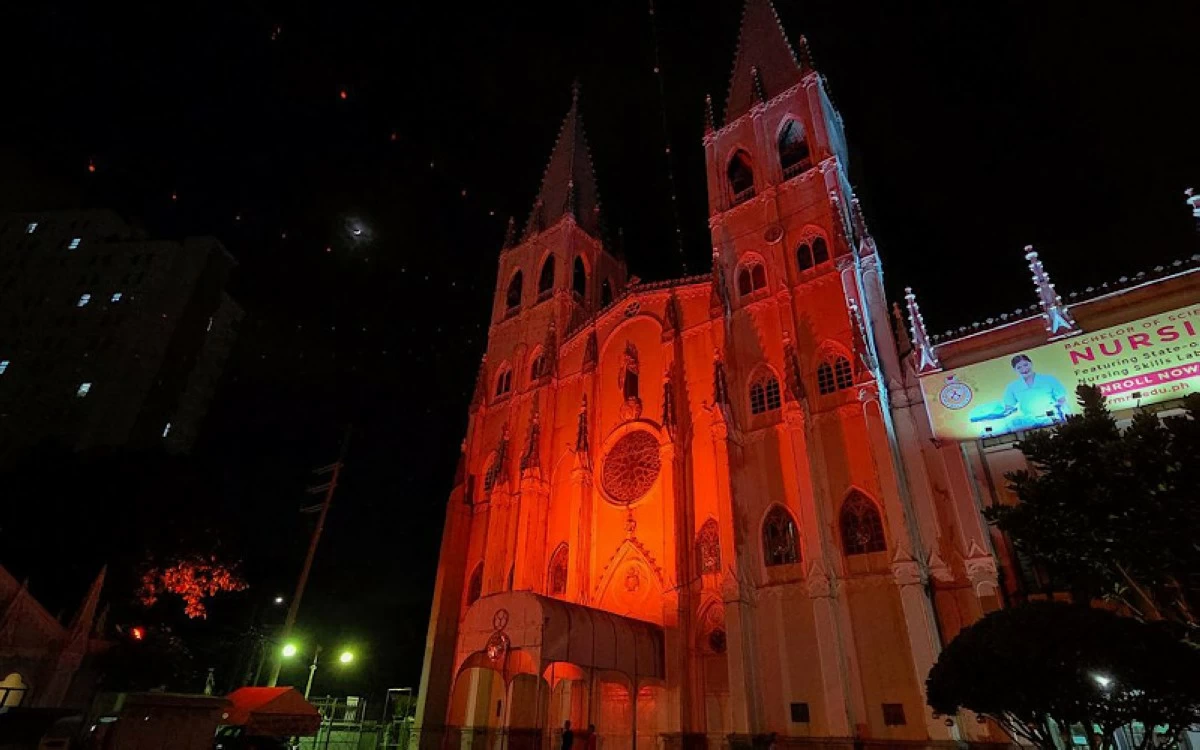
The Minor Basilica of San Sebastian in Quiapo, Manila, is illuminated in red on Nov. 26, 2025, as part of Aid to the Church in Need’s annual Red Wednesday campaign to raise awareness of the persecution of Christians worldwide. (CBCP News)
The Catholic Bishops' Conference of the Philippines (CBCP) is urging Catholic faithful to wear red on Nov. 25 as the Church marks Red Wednesday to draw attention to Christians persecuted because of their faith.
Hundreds of parishes, schools and Church organizations across the country have signified their intention to participate in this year's observance, which will include special Masses and a second collection to support Christians suffering from religious persecution.
The Archdiocese of Cagayan de Oro will host the national celebration, which will start with a Mass at 5:30 p.m. at the St. Augustine Metropolitan Cathedral.
Archbishop José Araneta Cabantan will preside over the Mass, followed by a candlelighting ceremony in remembrance of Christians who have suffered persecution because of their religious beliefs.
Aid to the Church in Need (ACN) Philippines also called on the faithful to wear red and pray for persecuted Christians.
“Let us stand in solidarity with our persecuted brothers and sisters in faith by wearing red and offering our prayers,” ACN Philippines said.
This year's observance carries the theme “Wear Red. Stand in Faith,” which highlights the plight of persecuted Christians and the call to uphold religious freedom.
The Philippines first joined the international campaign in 2017, while the CBCP formally adopted Red Wednesday as an annual Church observance in January 2020.
The observance is held on the Wednesday after the Solemnity of Christ the King.
The campaign began in 2015 when ACN illuminated Brazil's Christ the Redeemer statue in red to call attention to the persecution of Christians in Iraq.
Since then, churches and public buildings in various countries have been illuminated in red as a gesture of solidarity with persecuted Christians.
ACN estimates that around 220 million Christians worldwide face persecution because of their faith.

Bea Millan-Windorski brings Cordillera heritage to Miss Universe stage


Published Nov 23, 2026 01:48 pm

At A Glance

  • Bea Millan-Windorski showcases indigenous traditions, Kalinga heritage, and a call for clean water through her "Diwa ng Kordilyera" national costume at Miss Universe 2026.
For Bea Millan-Windorski, representing the Philippines at Miss Universe 2026 was an opportunity to bring more than a beautiful costume to the international stage. She also wanted to put the spotlight on the people, traditions, and heritage behind it.
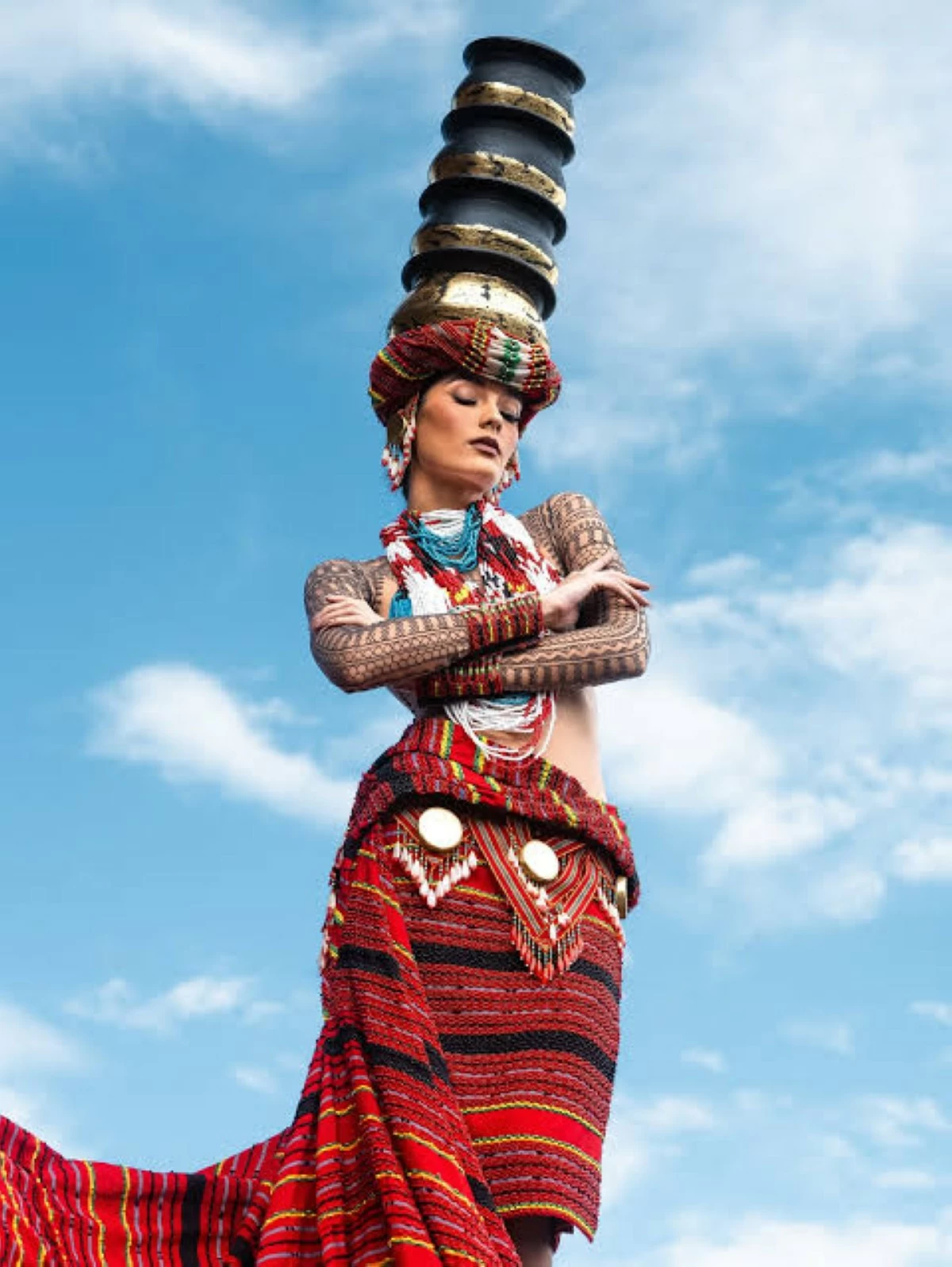
The Philippine representative did exactly that during the National Costume Show in San Juan, Puerto Rico, where she presented “Diwa ng Kordilyera,” a creation inspired by the indigenous communities of Kalinga and Mountain Province.
Designed by Anthony Ramirez, the ensemble brought together several elements of Cordilleran culture, including traditional weaving, intricate beadwork, and tattoo patterns inspired by Kalinga traditions.
Its most distinctive feature was the arrangement of clay pots that formed part of the costume.
The detail was inspired by Banga Salidsid, a traditional Kalinga dance that reflects the everyday experiences of women who carry and balance pots on their heads.
Bea also wanted the costume to carry a message relevant beyond the pageant.
In an Instagram post, she shared that the team hoped to raise awareness about the need for clean and reliable water, especially in remote Philippine communities that face growing threats from climate change.
The beauty queen also highlighted the importance of protecting ancestral lands, which remain central to the identity and cultural heritage of indigenous Filipinos.
Her message resonates with ongoing discussions about indigenous land rights in the Philippines. In particular, the proposed Pax Silica semiconductor hub in Capas, Tarlac, has drawn scrutiny from Human Rights Watch over concerns about the potential displacement of Aeta communities and farmers.
Note, the Bases Conversion and Development Authority, however, has disputed claims that the project would encroach on ancestral domains.
While there is no indication that Bea's costume was specifically intended as a statement on the Pax Silica project, its emphasis on indigenous heritage and the protection of natural resources gives the presentation added relevance.
“Proud to carry the spirit of the unconquered Cordilleras across the Universe,” Bea wrote.
The Miss Universe 2026 grand coronation night is scheduled for November 25, at 8 a.m. Philippine time.

Manibela strike disrupts travel


Manibela strike disrupts travel, opposes LTO chief replacement

Members of transport group Manibela gather at around 7 a.m. at Philcoa in Quezon City on Monday, Sept. 14, as they stage another two-day nationwide strike. (Photo by Trixee Rosel)

A two-day transport strike led by Manibela disrupted travel in parts of Metro Manila on Monday, Nov. 23, as the group opposed the reported replacement of Land Transportation Office (LTO) chief Assistant Secretary Markus Lacanilao, saying it could derail ongoing reforms. Read more

If you want to become mentally tough, read this:

1. Be patient. But never wait.

2. The more you're hesitating, the more it matters.

3. You won't be happy until you truly know what you want.

4. When clarity hits you, take the hit.

5. The work no one sees is the reason you get seen.

6. Do the rational thing with irrational intensity.

7. Don't look for secrets when what you really need is reps.

8. Surround yourself with people whose ambition makes you uncomfortable.

9. If you're aiming at nothing, you'll always hit it.

10. The harder you train, the easier you live.

11. Don't look for work-life balance. Look for work-life harmony.

12. The happiest people are making money and art at the same time.

13. To do hard things, fall in love with the hard part.

14. If you're good, they tell you. If you're great, they tell others.

15. Freedom isn't decades away. It's decisions away.

16. Extreme constraints, over extreme timelines, create extreme outcomes.

17. When you're creating something, work backwards from a feeling.

18. If you don't have normal goals, don't expect to feel normal all the time.

19. If you want to win, help others people win.

20. "Luck" is the result of compounded obsession.

Unleash Your Inner Strength

1. You are the greatest project you will ever get to work on. Take your time. Create magic.

2. A way to stop killing your soul: Stop Being afraid to change your mind once things no longer feel right.

3. Give up attachment to having it all figured out.

4. You've carried fear for so long you've forgotten what you feel like without it. Go and find out.

5. Love yourself enough to remove yourself from spaces where you are not valued or appreciated.

What things do you need to know before moving to the Philippines?


My girlfriend move here in the Philippines from Japan and I could tell you she hates almost everything.

  1. Most foods are oily and has strong flavor due to seasonings. If your stomach is strong and can adapt quickly then there would be no problem but in my gf's case, she can't stand eating it and we already went around 4–5 times to the hospital in less than a year because of stomach related problems especially acid reflux.
  2. Transportation is bad (In Metro Manila). A 10km ride might take you 1–2 hours depending on where you will pass, but due to the worst traffic here getting around will be a pain in the ass.
  3. Cost of living is cheap. You could buy a meal for around 50–100 pesos which is only 1–2 dollars. But like in 1., if you can't stand local food, you need to pay more to eat. Essentials as well are cheap if you buy local.
  4. Don't expect a tropical paradise if you will be living in the city like Metro Manila. People tend to think that the Philippines is a tropical island with lots of beaches and people are relaxed all day.
  5. Toilets don't usually have toilet paper or even a lid to sit on. If you go to high end places there is a big chance that toilets are clean and necessities are provided since tourist and rich people tend to go there. But if you would go to places other than that, don't expect to see toilet paper or sometimes a lid to sit on. Water as well is sometimes lacking. Better to bring wetwipes and portable alchohol to clean yourself in case.
  6. Never drink tap water even in hotels or high end places. Better buy water from a reputable water station or buy at the supermarket.
  7. Never trust taxi drivers and better yet use Grab (like Uber). Taxi drivers tend to trick foreigners into paying more than what the right fare is. Great examples are the ones in the Airport which charges you 1000 pesos or 20 dollars for a trip that if they use the taxi meter will only cost 100–200 pesos or 2–4 dollars. Not all taxis are like this, but best to avoid them to avoid being scammed or worst.
  8. Never put your bag behind you if you are walking especially in crowded places since pickpocket are common in some areas. If you will be living in places such as BGC it will be fine since it's much safer but outside the metro, better secure your things and be alert at all times.

Living here is difficult especially if you are from a developed country. Like I said earlier, my GF is from Japan and most of the time complains about the way we ran things in the Philippines. It all goes down to if you can adjust to a less comfortable livestyle or not.