You plan to move to the Philippines? Wollen Sie auf den Philippinen leben?

There are REALLY TONS of websites telling us how, why, maybe why not and when you'll be able to move to the Philippines. I only love to tell and explain some things "between the lines". Enjoy reading, be informed, have fun and be entertained too!

Ja, es gibt tonnenweise Webseiten, die Ihnen sagen wie, warum, vielleicht warum nicht und wann Sie am besten auf die Philippinen auswandern könnten. Ich möchte Ihnen in Zukunft "zwischen den Zeilen" einige zusätzlichen Dinge berichten und erzählen. Viel Spass beim Lesen und Gute Unterhaltung!


Visitors of germanexpatinthephilippines/Besucher dieser Webseite.Ich liebe meine Flaggensammlung!

free counters

Total Pageviews

Showing posts with label Ben Arnold de Vera. Show all posts

Wednesday, November 18, 2026

Philippines among Southeast Asia's largest Chinese solar buyers amid energy vulnerability


By Ben Arnold de Vera

Published Nov 17, 2026 06:09 pm


The Philippines is among Southeast Asia’s largest buyers of solar products from China amid its vulnerability to imported energy supply disruptions.

In a Nov. 16 report obtained by Manila Bulletin, British banking giant Barclays cited data from energy think tank Ember showing that Southeast Asian imports of Chinese solar products reached around $4.1 billion during the first seven months of 2026, nearly 90 percent higher than a year ago.

The Philippines was among the region’s largest buyers, alongside Indonesia, Malaysia, Thailand, and Vietnam.

In all, Southeast Asian countries purchased more than $20 billion worth of clean-energy and electrification products from China during the seven-month period, up 50 percent year-on-year.

Barclays said the region’s purchases covered batteries, grid equipment, electric vehicles (EVs), solar systems, as well as heating and cooling equipment.

It noted that Southeast Asian nations were increasing investments in renewable energy (RE) and electrification partly to lessen their dependence on imported fossil fuels.

According to Barclays, the Philippines remains among Asia’s most vulnerable economies to disruptions in imported energy supplies, yet its transition toward cleaner power sources continues to lag amid weak implementation and mixed policy signals.

The bank classified the Philippines’ energy-transition outlook as “opportunistic,” assessing its energy import dependence as high, demand pressure as medium, transition execution as weak, and policy momentum as mixed.

This assessment comes amid the prolonged war in the Middle East, which has heightened energy-security concerns across Asia as economies grapple with their reliance on imported fossil fuels.

The report assessed Asian economies based on four factors: dependence on imported energy, additional electricity demand from emerging sectors such as artificial intelligence (AI), historical progress in shifting toward cleaner energy, and policy developments since the Middle East war began late last February.

Barclays gave stronger energy-transition outlooks to Australia, China, India, Japan, Malaysia, South Korea, Taiwan, and Thailand, which together account for nearly 90 percent of the region’s energy demand.

For other economies, including the Philippines, Barclays said the transition outlook remained more opportunistic, depending on implementation and greater policy clarity.

The report also identified the Philippines, Japan, Pakistan, Singapore, South Korea, and Taiwan as the Asian markets most vulnerable to Middle East energy-supply disruptions.

This assessment was based on each economy’s energy mix, dependence on imported fuels, and sourcing from the Middle East.

Barclays noted that the Philippines was among Asia’s most import-dependent energy markets in 2025, alongside Japan, Singapore, South Korea, and Taiwan.

The bank nonetheless distinguished overall energy vulnerability from electricity-sector exposure, noting that domestically sourced coal provides some protection against imported fuel disruptions in several Asian economies.

The report showed that Philippine energy demand reached 2.6 exajoules in 2025, representing about one percent of the regional total.

It also found that the Philippines and Taiwan lagged other Asian economies in increasing the contribution of non-fossil fuels to electricity generation over the past decade.

Barclays attributed the two economies’ lagging performance largely to nuclear plant retirements, although the Philippines has never operated a commercial nuclear power plant.

In comparison, Australia and Pakistan recorded increases of about 27 to 28 percentage points (ppts) in the non-fossil share of power generation, while China, Japan, Thailand, and Vietnam registered double-digit gains.

Despite the Philippines’ relatively weak transition track record, Barclays pointed to the country’s stronger climate commitments.

The report noted that the Philippines submitted its updated nationally determined contribution (NDC) early last September, retaining its target of a 75-percent reduction or avoidance of cumulative greenhouse gas (GHG) emissions against business-as-usual levels through 2035.

The country also increased the unconditional portion of its emissions-reduction commitment to seven percent, which Barclays considered a sign of stronger climate ambition.

Also, Barclays identified the Philippines among Southeast Asian markets offering higher-growth RE opportunities, together with Indonesia, Malaysia, and Thailand.

The bank said local energy and utility companies in these four markets could provide investment exposure as RE capacity expands.

Across Asia, Barclays identified RE, power transmission and distribution, nuclear energy, battery storage, as well as data center solutions as technologies offering some of the strongest investment opportunities.

According to the bank, Asia’s clean-energy transition investments reached around $1 trillion in 2025, with the region accounting for 59 percent of global RE capital expenditures (capex) and 38 percent of spending on power transmission.

Still, Barclays classified the Philippines alongside Pakistan and Vietnam as economies sending mixed energy-transition policy signals following the Middle East war. These three countries accounted for a combined four percent of Asia’s energy demand.

For the Philippines, the bank cited renewed consideration of joint oil and gas exploration in South China Sea, approval of new EV incentives, and more ambitious emissions-reduction commitments.

Saturday, November 7, 2026

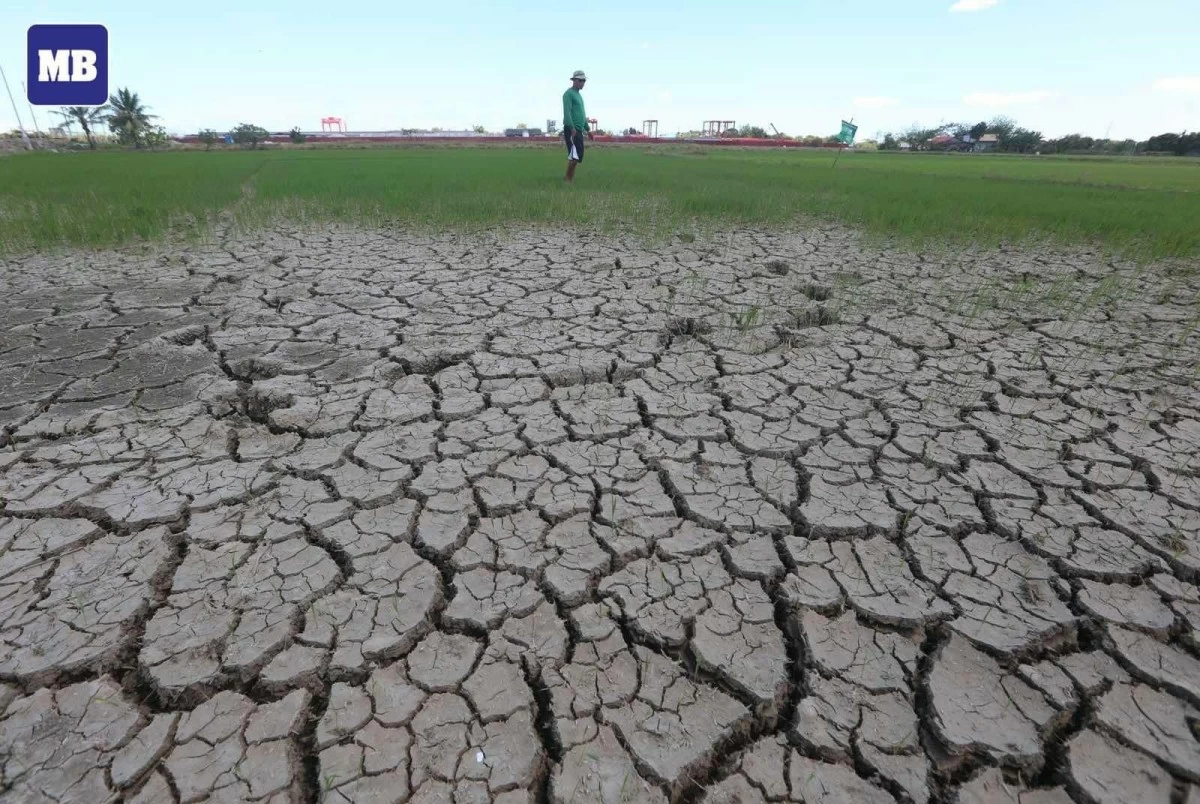
Philippines most vulnerable to El Niño trade, inflation shocks—Capital Economics


Published Nov 6, 2026 03:45 pm
The Philippines faces the greatest combined risks from El Niño-related trade disruptions, currency pressures, as well as inflation among major emerging markets (EMs), with the weather phenomenon potentially weakening the peso and triggering further interest rate hikes, according to think tank Capital Economics.
In a report last Thursday, Nov. 5, Capital Economics chief EMs economist William Jackson said that the Philippines stands out as particularly vulnerable because of its already-large current account deficit and elevated inflation.
Capital Economics warned that the current El Niño could become a very strong event, peaking toward the end of 2026 and persisting into the second quarter of 2027.
The think tank’s analysis of the 2015-2016 and 2023-2024 El Niño episodes showed that the Philippines experienced weaker agricultural production as well as deteriorating trade balances, with the weather phenomenon also posing risks to food prices.
Based on the two previous episodes, agricultural trade balances in the Philippines and several other Asian economies typically deteriorated by 0.5 to one percent of gross domestic product (GDP) compared with pre-El Niño levels.
In the Philippines, the deterioration was driven by higher agricultural imports, which could put additional pressure on the peso given the country’s already-wide current account deficit.
Capital Economics nonetheless noted that previous El Niño episodes did not establish a consistent relationship between agricultural trade balances and exchange rate movements, partly because other factors influence currencies.
Beyond the external sector, the think tank identified the Philippines, alongside Colombia and Pakistan, as particularly vulnerable to an El Niño-related food inflation shock, as inflation in these economies is already well above their respective central banks’ targets.
Its analysis showed that Philippine food inflation increased significantly relative to the EM median during the 2023-2024 El Niño episode, although a similar pattern was not observed in 2015-2016.
Capital Economics warned that the inflationary environment is more challenging this time because of higher agricultural input costs, including fertilizers and diesel, associated with the war in Iran, alongside disruptions to Black Sea shipping.
According to the think tank, an additional food inflation shock could prompt further monetary tightening by the Bangko Sentral ng Pilipinas (BSP).
Although its current forecasts do not anticipate additional interest rate hikes by the BSP, Capital Economics said further increases would become possible if El Niño pushes inflation higher.
Also, the think tank noted that agricultural growth weakened during both the 2015-2016 and 2023-2024 El Niño episodes in the Philippines as well as several other EMs.
Across most EMs studied, agricultural gross value added (GVA) growth slowed by an average of 0.3 to 2.5 percentage points (ppts) during the previous episodes compared with pre-El Niño conditions.
Capital Economics estimated that weaker agricultural production generally reduced overall GDP growth by only 0.05 to 0.3 ppt, although the impact varied depending on the importance of agriculture to each economy.
The think tank also highlighted the Philippines’ dependence on imported rice, making the country vulnerable to disruptions in agricultural production and international food markets.
The report cited the Philippines’ reduction of rice import tariffs in 2024 as an example of a government policy response intended to contain food inflation.
Capital Economics said tariff reductions could help lower domestic prices but could also widen trade and government budget deficits, hurt domestic farmers, as well as increase global demand for imported agricultural products.
Other policy responses, including food stock releases, subsidies, and price controls, could limit the immediate impact on consumers but shift the financial burden to governments, producers, or distributors, it cautioned.
The think tank said the overall economic consequences of El Niño would also depend on global energy market developments.
An easing of the energy crisis associated with the war in the Middle East could offset some of the effects on inflation and trade balances, while prolonged disruptions could amplify the economic impact.
Capital Economics cautioned that its findings were based on comparisons of the two previous El Niño episodes with pre-El Niño conditions and should be treated as indicative assessments of economic risks rather than precise forecasts.