
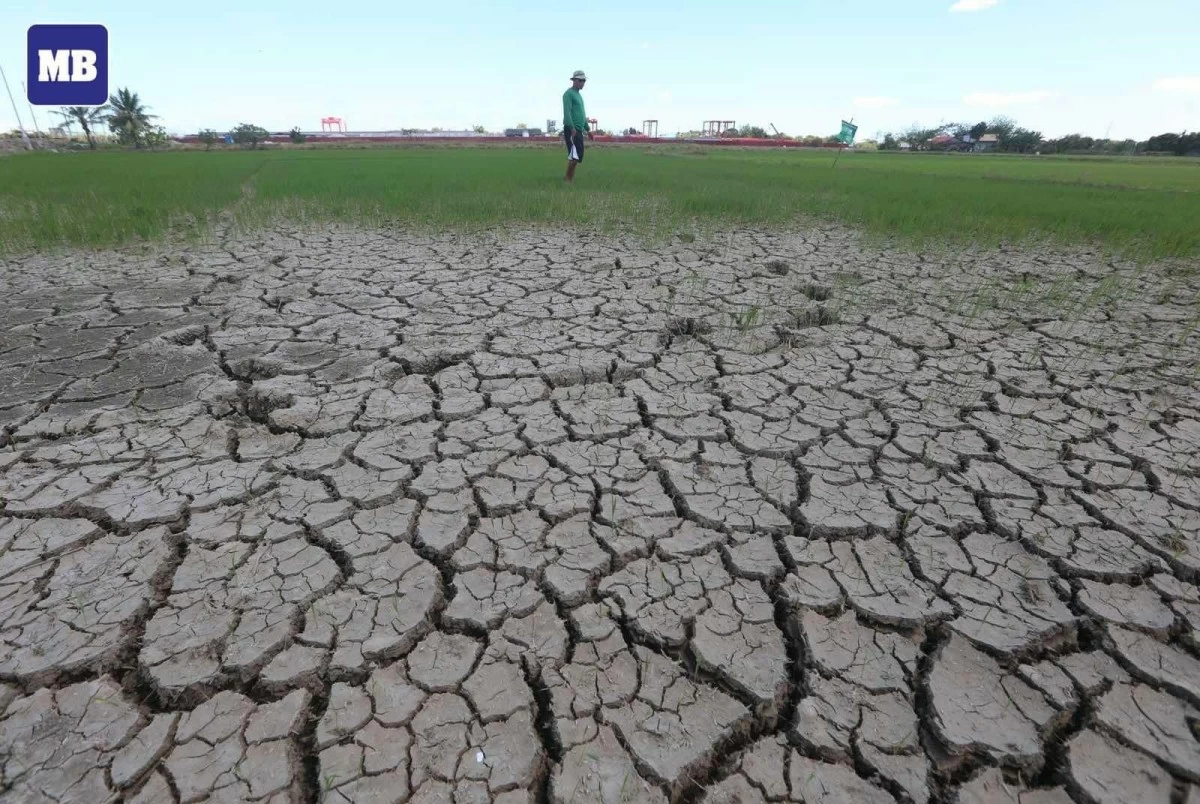
The Philippines faces the greatest combined risks from El Niño-related trade disruptions, currency pressures, as well as inflation among major emerging markets (EMs), with the weather phenomenon potentially weakening the peso and triggering further interest rate hikes, according to think tank Capital Economics.
In a report last Thursday, Nov. 5, Capital Economics chief EMs economist William Jackson said that the Philippines stands out as particularly vulnerable because of its already-large current account deficit and elevated inflation.
Capital Economics warned that the current El Niño could become a very strong event, peaking toward the end of 2026 and persisting into the second quarter of 2027.
The think tank’s analysis of the 2015-2016 and 2023-2024 El Niño episodes showed that the Philippines experienced weaker agricultural production as well as deteriorating trade balances, with the weather phenomenon also posing risks to food prices.
Based on the two previous episodes, agricultural trade balances in the Philippines and several other Asian economies typically deteriorated by 0.5 to one percent of gross domestic product (GDP) compared with pre-El Niño levels.
In the Philippines, the deterioration was driven by higher agricultural imports, which could put additional pressure on the peso given the country’s already-wide current account deficit.
Capital Economics nonetheless noted that previous El Niño episodes did not establish a consistent relationship between agricultural trade balances and exchange rate movements, partly because other factors influence currencies.
Beyond the external sector, the think tank identified the Philippines, alongside Colombia and Pakistan, as particularly vulnerable to an El Niño-related food inflation shock, as inflation in these economies is already well above their respective central banks’ targets.
Its analysis showed that Philippine food inflation increased significantly relative to the EM median during the 2023-2024 El Niño episode, although a similar pattern was not observed in 2015-2016.
Capital Economics warned that the inflationary environment is more challenging this time because of higher agricultural input costs, including fertilizers and diesel, associated with the war in Iran, alongside disruptions to Black Sea shipping.
According to the think tank, an additional food inflation shock could prompt further monetary tightening by the Bangko Sentral ng Pilipinas (BSP).
Although its current forecasts do not anticipate additional interest rate hikes by the BSP, Capital Economics said further increases would become possible if El Niño pushes inflation higher.
Also, the think tank noted that agricultural growth weakened during both the 2015-2016 and 2023-2024 El Niño episodes in the Philippines as well as several other EMs.
Across most EMs studied, agricultural gross value added (GVA) growth slowed by an average of 0.3 to 2.5 percentage points (ppts) during the previous episodes compared with pre-El Niño conditions.
Capital Economics estimated that weaker agricultural production generally reduced overall GDP growth by only 0.05 to 0.3 ppt, although the impact varied depending on the importance of agriculture to each economy.
The think tank also highlighted the Philippines’ dependence on imported rice, making the country vulnerable to disruptions in agricultural production and international food markets.
The report cited the Philippines’ reduction of rice import tariffs in 2024 as an example of a government policy response intended to contain food inflation.
Capital Economics said tariff reductions could help lower domestic prices but could also widen trade and government budget deficits, hurt domestic farmers, as well as increase global demand for imported agricultural products.
Other policy responses, including food stock releases, subsidies, and price controls, could limit the immediate impact on consumers but shift the financial burden to governments, producers, or distributors, it cautioned.
The think tank said the overall economic consequences of El Niño would also depend on global energy market developments.
An easing of the energy crisis associated with the war in the Middle East could offset some of the effects on inflation and trade balances, while prolonged disruptions could amplify the economic impact.
Capital Economics cautioned that its findings were based on comparisons of the two previous El Niño episodes with pre-El Niño conditions and should be treated as indicative assessments of economic risks rather than precise forecasts.
