
Impacts likely to persist until first half of 2027
At A Glance
- PAGASA said the El Niño is expected to reach its peak before the end of 2026, while its impacts are likely to persist until the first half of 2027.
- In its latest drought assessment, PAGASA reported that five provinces experienced meteorological drought in October 2026, while 11 provinces were under dry spell and 10 others experienced dry conditions.
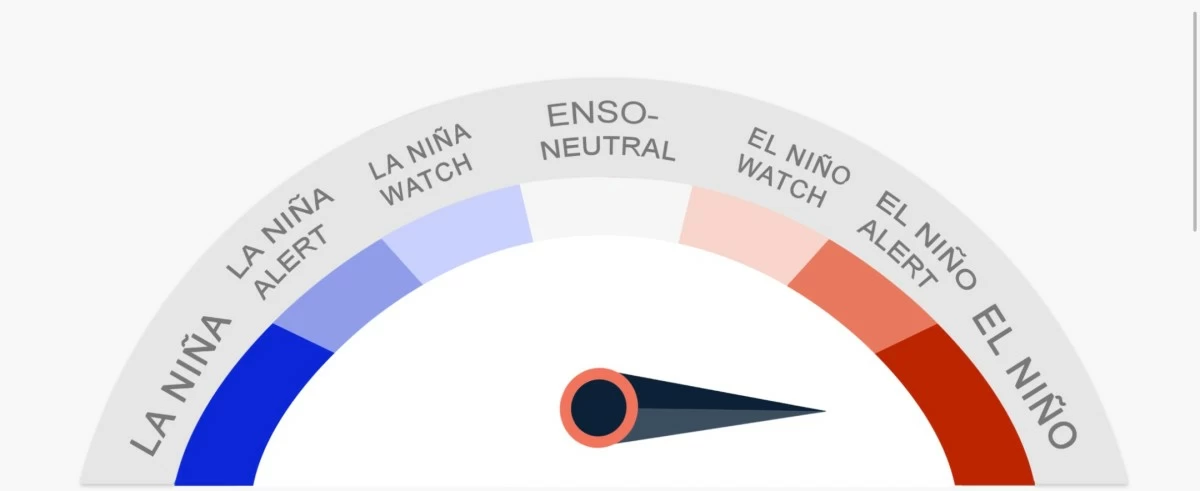
PAGASA El Niño-Southern Oscillation Alert Status
The El Niño phenomenon over the tropical Pacific has reached “very strong” intensity, increasing the likelihood of rainfall shortages and drought in several parts of the Philippines, the Philippine Atmospheric, Geophysical and Astronomical Services Administration (PAGASA) said.
In a statement on Thursday, Nov. 5, PAGASA said the climate phenomenon is expected to reach its peak before the end of 2026, while its impacts are likely to persist until the first half of 2027.
According to the weather bureau, El Niño increases the likelihood of below-normal rainfall, which could lead to dry spells and drought in affected areas.
However, the agency said episodes of heavy rainfall may still occur due to tropical cyclone passages and other rain-bearing weather systems.
In its latest drought assessment, PAGASA reported that five provinces experienced meteorological drought in October 2026, while 11 provinces were under dry spell and 10 others experienced dry conditions.
For November, below-normal to way-below-normal rainfall is expected across most parts of the country.
Several provinces are likely to experience meteorological drought or dry spell conditions by the end of the month.
Warmer-than-average mean air temperatures are also expected across most parts of the country in November.
PAGASA urged the public and concerned government agencies to implement appropriate interventions, conservation measures, and mitigation efforts to minimize the potential impacts of El Niño.
The weather bureau particularly emphasized water conservation and the efficient management of water resources.
