You plan to move to the Philippines? Wollen Sie auf den Philippinen leben?

There are REALLY TONS of websites telling us how, why, maybe why not and when you'll be able to move to the Philippines. I only love to tell and explain some things "between the lines". Enjoy reading, be informed, have fun and be entertained too!

Ja, es gibt tonnenweise Webseiten, die Ihnen sagen wie, warum, vielleicht warum nicht und wann Sie am besten auf die Philippinen auswandern könnten. Ich möchte Ihnen in Zukunft "zwischen den Zeilen" einige zusätzlichen Dinge berichten und erzählen. Viel Spass beim Lesen und Gute Unterhaltung!


Visitors of germanexpatinthephilippines/Besucher dieser Webseite.Ich liebe meine Flaggensammlung!

free counters

Total Pageviews

Thursday, November 5, 2026

PLDT, Creamline clash with PVL winning streaks at stake


Games Thursday, Nov. 5

(Philsports Arena)

1 p.m. – ZUS Coffee vs. Farm Fresh

3:30 p.m. – AFP vs. Alpha Insurance

6 p.m. – PLDT vs. Creamline


PLDT and Creamline head into their much-awaited showdown Thursday carrying impressive momentum, renewed confidence and a compelling score to settle in the Premier Volleyball League (PVL) All-Filipino Conference Siklab Series.

The High Speed Hitters have won back-to-back matches and gained a psychological boost from their bronze medal victory over the Cool Smashers in the recent PVL Invitational Conference.

But standing in their way at 6 p.m. at the Philsports Arena in Pasig is a Creamline side that has been virtually unstoppable, winning its first four matches in the tournament.

The 11-time league champions have barely broken a sweat in building their unbeaten run, posting straight-set victories over Akari and Capital1 before disposing of Galeries Tower and ZUS Coffee in four sets.

Despite Creamline’s imposing start, head coach Sherwin Meneses is taking nothing for granted, fully aware of PLDT’s firepower, experience and growing confidence following its recent victories.

“We really have to prepare, especially we’ll be facing PLDT. May momentum na sila, so doon muna kami magfo-focus ulit,” Meneses said.

The Creamline mentor also stressed the importance of making necessary adjustments as the tournament progresses, particularly with the series’ all-to-play format, which puts a premium on consistency, bench depth and quick adaptation.

“Number one, yung balance ng game kasi, yun nga, all-to-start, yun yung talagang number one na pino-problema namin. Pabor naman sa amin, pero siyempre, yung momentum change medyo mabilis,” he said.

Under the Siklab Series’ all-to-play rule, teams are required to give every player on their declared roster an opportunity to see action, making lineup management and bench readiness crucial.

Fortunately for Meneses, Creamline’s deep bench has given him the flexibility to respond to changing situations on the court.

“Buti na lang yung mga players namin, pag pinasok mo, ready. Yun yung number one. Then siyempre, yung basics, dapat limit yung errors namin. Hanggang doon lang muna kami. Yun nga, every game, iba yung makakalaban; every set, iba yung makakalaban,” he added.

PLDT, meanwhile, appears to be hitting its stride at the right time, coming off a four-set triumph over Capital1 and a straight-set romp over ZUS Coffee.

Savi Davison has rediscovered her scoring touch after a shaky start, drawing solid support from Kim Dy, Alleiah Malaluan and the formidable middle-blocking trio of Mika Reyes, Majoy Baron and Dell Palomata.

New recruit Jessa Ordiales has also earned a place in the rotation with a string of impressive performances, while veteran Kim Fajardo and Angge Alcantara have provided steady playmaking.

The matchup looms as a significant test for both sides, with Creamline looking to sustain its unbeaten run and PLDT eager to prove it can measure up against one of the league’s most formidable teams.

Another victory would strengthen Creamline’s bid for a semifinal berth, while a PLDT upset could further tighten the race to the Final Four, with seven teams still in contention and only three weeks remaining in the single-round elimination phase.

Under the tournament format, the top four teams will advance to the semifinals, with the top two seeds enjoying a twice-to-beat advantage.

The 1 p.m. encounter between Farm Fresh and ZUS Coffee also carries major implications, particularly for the Foxies, who are desperate to break a stretch of three grueling five-set matches that produced just one victory.

Like PLDT, Farm Fresh needs another win to remain firmly in the semifinal hunt, but ZUS Coffee is equally determined to break through after dropping its first four matches.

With Galeries Tower finally ending its four-game slide through a five-set upset of Akari on Tuesday, the ZUS Coffee Thunderbelles are also feeling the pressure to secure a breakthrough victory and keep their slim semifinal hopes alive.


A better calling in my life?


By Klaus Döring


What is a calling? Your life’s calling is what makes you feel that life is meaningful. It helps you live a purposeful life. Callings look different for everybody. Some people, for example, want to help others as part of their calling.

A career is rapid motion. A course of action. Sure! A professional path in life. Even progress through life. Here we are! That means a careerist is one who rushes wildly and makes personal advancement his or her aim in life!

What can we do if “career doubts” won’t go away? First, allow me to quote my Bible, especially Jude (Watch out! Sound the alarm!), who writes in the style of a teacher watching a freight train bear down on a student driver. Yes, bells ring out: “Be merciful to those who doubt.” (Jude 1:22).

What does my calling in life mean? Your calling can be thought of as the urge to share your gifts with the world. When you express your gifts for the sake of others, you often experience the joy of being fully alive.

A true calling is a career or walk of life that a person feels compelled or meant to pursue. Finding meaning in life is something people often spend a lot of time contemplating. Some individuals, however, may feel a passion so strong that they quickly know in their hearts what they were born to do.

“The way that people pick up careers is incredibly primitive,” said Nicholas Lore, founder of the Rockport Institute, a career coaching firm, and author of “The Pathfinder.” Strong tobacco, indeed. That’s why so many people are dissatisfied with their jobs.

Believe me, I have always thought about finding a true calling for myself. Sure, people whose careers aren’t the right fit often feel like impostors, as Professor Robert I. Sutton, an organizational psychologist at Stanford University in Palo Alto, said. Very, very well said, sir.

Notice dreams and signs. Prioritize creative expression. Think about what you used to love. Notice what feels good. Turn down the distractions. Pay attention to what keeps coming back. Try new things regularly.

How about you, my dear reader of this column? Are you also placing too high a value on the external rewards of a job, like money, prestige and power? Of course, for many of us (most?), these things are indeed important. Hold on, please! The work you do, the skills your job requires and the value of your work are really more vital to fulfillment. Paperwork or not … You think you’ve found a better career fit? Go ahead, but don’t expect it to be your life’s calling!

I waited for my “better calling” (what a terrible term!) while experiencing many other wonderful moments in life. I also realized that several professional things I did in the past were not very compatible with me. But I gained many valuable experiences.

Today, I am what I am. And I am proud of it. Almost 72. A retiree with so many opportunities still available in the Philippines.  


+++


Questions, comments or suggestions? Email me at doringklaus@gmail.com, follow me on Facebook or LinkedIn, or visit one of my websites: www.germanexpatinthephilippines.blogspot.com or www.klausdoringsclassicalmusic.blogspot.com.

Hubert Aiwanger ist tot: Bayerns Wirtschaftsminister leblos im Hotel entdeckt – „zutiefst geschockter“ Söder


Stand:


Nach Informationen der Bild-Zeitung starb der Freie-Wähler-Chef, bayerische Vize-Ministerpräsident und Wirtschaftsminister Hubert Aiwanger am Mittwoch.
Nach Informationen der Bild-Zeitung starb der Freie-Wähler-Chef, bayerische Vize-Ministerpräsident und Wirtschaftsminister Hubert Aiwanger am Mittwoch. (Archivbild) © Lennart Preiss/dpa

Bayerns Wirtschaftsminister Hubert Aiwanger ist im Alter von 55 Jahren verstorben. Das bestätigen die Berliner Polizei und die bayerische Staatsregierung.

Berlin – Der bayerische Wirtschaftsminister Hubert Aiwanger ist tot. Das berichtet die Bild-Zeitung zuerst unter Berufung auf Quellen aus der bayerischen Staatsregierung und der Berliner Polizei. Auch dem Münchner Merkur von Ippen.Media wurde Aiwangers Tod aus Regierungskreisen bestätigt.  

Wednesday, November 4, 2026

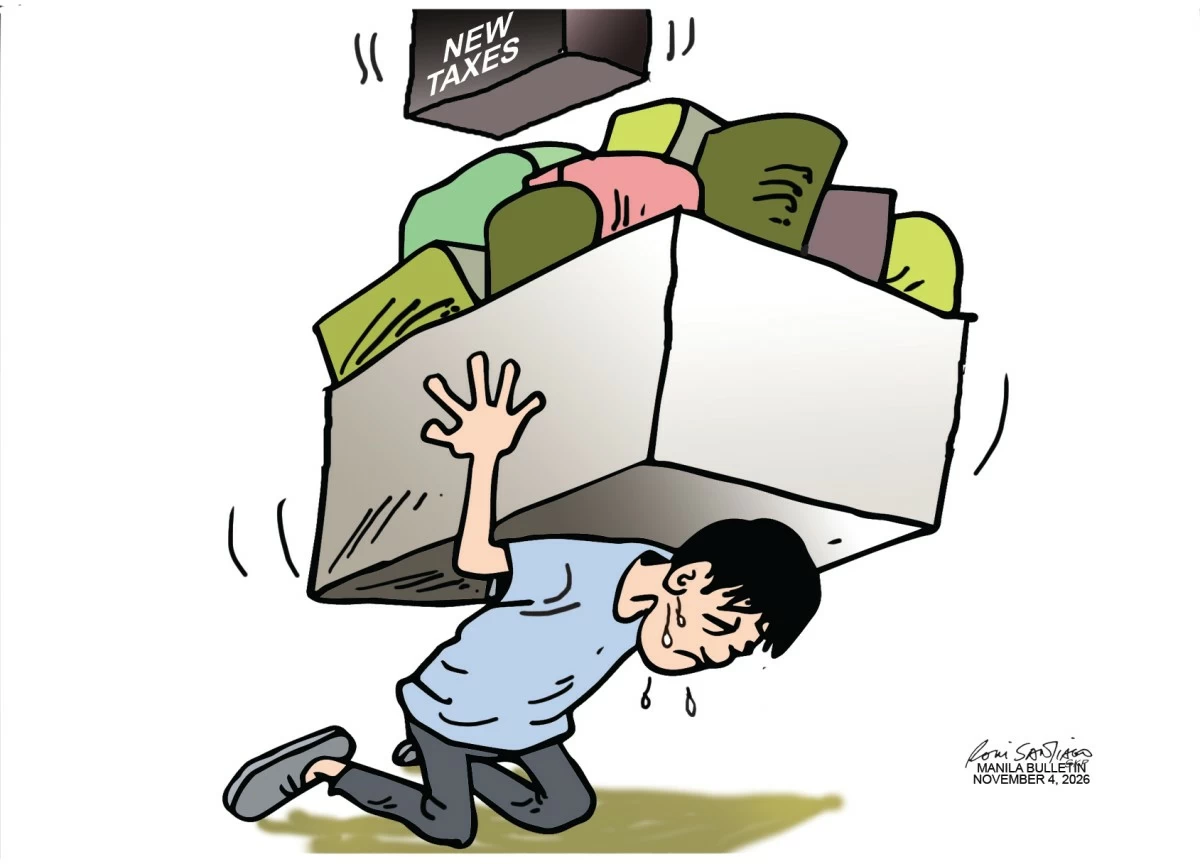
New taxes, but at what cost to Filipinos?


By Manila Bulletin Newsroom

Published Nov 4, 2026 12:05 am | Updated Nov 3, 2026 06:20 pm
The government’s pursuit of additional revenues is a crucial test for the country. Will plugging tax leakages strengthen the Philippine economy, or will ordinary Filipinos once again shoulder the cost of fiscal consolidation?
The Department of Finance (DOF) is currently examining the removal of the ₱10,000 de minimis import threshold and an additional tax on online gambling. While both proposals promise potential revenue gains, their consequences deserve scrutiny beyond the government’s collection targets.
Under Section 423 of Republic Act 10863, or the Customs Modernization and Tariff Act, imported goods valued at ₱10,000 or below are exempt from customs duties and taxes. The DOF argues that this exemption disadvantages local manufacturers, whose products are generally subject to taxation, particularly as cross-border e-commerce expands.
There is merit in addressing this imbalance. Requiring imported goods to bear appropriate taxes could level the competitive playing field, encourage consumers to consider locally manufactured alternatives, protect domestic enterprises, and potentially support jobs. Additional collections could also finance infrastructure, education, healthcare, and other public services.
But eliminating the threshold is not automatically equitable. Many Filipinos use online platforms to purchase affordable clothing, household necessities, school supplies, and other goods unavailable or more expensive locally. Import duties and applicable taxes could increase their prices, disproportionately affecting low-income households already struggling with inflation and limited purchasing power.
Moreover, taxing inexpensive imports will not automatically revive local manufacturing. Domestic producers must also address production costs, infrastructure constraints, productivity, and competitiveness. Without stronger local industries and efficient customs administration, consumers could simply pay more without receiving better alternatives.
The proposed online gambling tax presents a different opportunity. Former Finance Secretary Ralph Recto had estimated that an additional 10-percentage-point levy on gross gaming revenues, on top of the approximately 38 percent currently collected through existing government charges and taxes, could generate another ₱20 billion annually.
Such revenue could finance public hospitals, addiction-treatment programs, education, and social protection. A higher tax could also discourage excessive gambling if operators pass some of the additional cost to players. However, this outcome is not guaranteed. Excessive taxation could push some bettors toward illegal platforms, undermining regulation and collections. Effective enforcement, responsible-gambling safeguards, and monitoring must accompany any new levy.
Could this become another sin-tax success story?
The comparison with tobacco and alcohol taxation is instructive, but not exact. Philippine sin-tax laws demonstrate how excise collections can support public health financing. Republic Act 11346 and related legislation allocate portions of tobacco and alcohol tax revenues to PhilHealth and health programs. An online gambling levy could adopt a similar earmarking mechanism, directing a defined share toward addiction prevention, mental-health services, and treatment.
However, unlike tobacco and alcohol taxes, gambling taxation must contend with rapidly evolving digital platforms and potentially offshore operators. Collection and enforcement therefore require specialized capabilities.
The government's simultaneous consideration of travel-tax abolition and general tax amnesty further complicates the revenue equation. Removing the travel tax could ease expenses for departing Filipinos, while a carefully designed amnesty might encourage tax compliance. Yet foregone collections must be matched by credible alternative revenues.
Ultimately, revenue generation should not be measured solely by how much the government collects, but by how effectively those taxes improve people’s lives.
Before imposing new taxes, policymakers must establish who pays, who benefits, how much is collected, and whether the promised economic gains outweigh the added burdens. Transparency, impact assessments, and measurable public benefits should be non-negotiable.
Filipinos need a government that closes genuine tax loopholes without turning every economic activity into another revenue opportunity. The real test of fiscal policy is not whether government coffers grow, but whether public welfare grows with them.

Someone is Jealous of You

1. Gives you less eye contact.

2. Very curious to know your bad news.

3. They include criticism with any compliment.

4. Competes with you always, trying to turn everything into a competition and outdo you in every possible way.

5. He or she will start copying your ideas, style, or behavior, trying to achieve the same success as you.

6. They appear bored or absent when you report to them some joyful news or celebrate achievements.

7. They initiate or spread false stories with your information to harm your reputation.

Thank you for reading..

 The phrase "Character is power"—famously attributed to educator and author Booker T. Washington—means that a person's inner moral strength, integrity, and values provide a truer, longer-lasting form of influence than physical force, money, or social status alone.

Core Meanings
• True Authority Over Force:
External power (like wealth, title, or physical might) can force compliance, but character commands genuine respect and loyalty without coercion.
• Who You Are in the Dark:
True character is defined by your choices when no one is watching, when consequences seem hidden, and when you do not stand to gain applause.
• Sustaining Success:
Talent can open doors and education can create opportunities, but character is what sustains long-term success.
• Character Shapes How Power is Used:
Power acts as an amplifier. If a person has a weak or corrupt character, power leads to abuse; if they have a strong, ethical character, power is used to build and protect others.
Why Character Acts as Power
• Builds Trust:
People naturally follow and trust those whose actions match their spoken values.
• Creates Resilience:
Character is forged through trial and suffering, giving individuals the inner fortitude to handle setbacks and pressure.
• Leaves a Lasting Legacy:
Titles fade and fortunes change, but the reputation of a person's integrity remains remembered long after they are gone.
See less
Shared post

ARE YOU ALONE?


It’s possible to be by yourself and feel perfectly fine. It’s also possible to be surrounded by people and feel profoundly alone. Those two experiences—being alone and feeling lonely—are often treated as the same thing, but science tells us they’re very different.

Being alone is a physical state: you’re by yourself, perhaps working, resting, or intentionally choosing solitude. Loneliness, on the other hand, is a psychological experience. It’s the feeling that your relationships aren’t meeting your need for connection. You can be alone without being lonely, and lonely without being alone.

This distinction matters more than we might think.

Loneliness isn’t just an emotion; it’s a signal. Social psychologists often describe it as similar to hunger or thirst: an internal cue that something essential is missing. From an evolutionary perspective, humans survived by staying connected to others. Feeling lonely was a prompt to reconnect, to move back toward the group. Loneliness isn’t a personal failure. It’s a deeply human response.

Loneliness is about “the gap between the connection you want and the connection you have”. Not the number of people in your life. Or how busy your calendar is. But whether you feel seen, understood, and valued.

This helps explain why modern loneliness can feel so confusing. Many of us are more “connected” than ever—texting, scrolling, reacting, replying, yet report higher levels of loneliness. A recent poll suggests that one in five U.S. adults reported feeling lonely. Social interaction isn’t the same as social connection. Quantity doesn’t automatically lead to quality.

Loneliness can also subtly change how we interpret the world. Studies suggest that when people feel lonely, they become more sensitive to social threats—reading neutral interactions as rejection, hesitating to reach out, pulling back to protect themselves. Over time, this can make loneliness self-reinforcing, even when opportunities for connection exist.

So, how do we tell the difference between healthy solitude and loneliness?

One question to ask yourself is: Do I feel restored or depleted after time alone? Solitude that restores you—helps you think clearly, regulate your nervous system, or reconnect with yourself—is generally healthy. Loneliness doesn’t fill the cup; it drains it.

Studies show the ability to tolerate alone time has been linked to increased happiness, better life satisfaction, and improved stress management. People who enjoy alone time experience less depression.

Short-term tips to get you started to avoid comparing yourself to others are easy to be said:

Take a step back from social media. …
Take a phone break. …
Carve out time to let your mind wander. …
Take yourself on a date. …
Get physical. …
Spend time with nature. …
Lean into the perks of being alone.

I can be a reluctant socializer. I’m sometimes secretly pleased when social plans are called off. I get restless a few hours into a hangout. Maybe, I’ll not be invited any more. Or not so often… . I even once went on a free 10-day silent meditation retreat – not for the meditation, but for the silence.

So I can relate to author Anneli Rufus, who recounted in Party of One: The Loners’ Manifesto: “When parents on TV shows punished their kids by ordering them to go to their rooms, I was confused. I loved my room. Being there behind a locked door was a treat. To me a punishment was being ordered to play Yahtzee with my cousin Louis.”
Several years ago in one of my write-ups, I wrote about loneliness or in other words splendid isolation.

Asocial tendencies like these are often far from ideal. Abundant research shows the harms of social isolation, considered a serious public health problem in countries that have rapidly ageing populations (though talk of a ‘loneliness epidemic’ may be overblown). In the UK, the Royal College of General Practitioners says that loneliness has the same risk level for premature death as diabetes. Strong social connections are important for cognitive functioning, motor function and a smoothly running immune system.

This is especially clear from cases of extreme social isolation. Examples of people kept in captivity, children kept isolated in abusive orphanages, and prisoners kept in solitary confinement all show how prolonged solitude can lead to hallucinations and other forms of mental instability.

But these are severe and involuntary cases of loneliness. For those of us who just prefer plenty of alone time, emerging research suggests some good news: there are upsides to being reclusive – for both our work lives and our emotional well-being.

Social anxiety is the single most common psychological problem according to innumerable survey results worldwide. The magnificent, gorgeous and excellent isolation, resulting from being nervous when meeting people is really the opposite. The state of being isolated reminds me of being in a hospital with an infectious disease.

Does the project of giving a speech or going to a social gathering give you the willies? Relax, there are always ways and solutions to help you but teaching you “never to be nervous again”.

I have always been the most silent pupil in elementary and high school. I was ashamed even to talk to or with my teachers. Several terrible school records have been the result. But, I wanted to become a journalist. I am still one.

During college times and while writing my first articles, I learned from my first boss, a daily news publisher, to avoid being nervous while meeting people. I was always prepared. Preparation for any communicating situation is a must. I have been invited to many parties and gatherings. I always asked for the guest list. I scanned all the newspapers and browsed the net.

One key benefit is improved creativity. Gregory Feist, who focuses on the psychology of creativity at California’s San Jose State University, has defined creativity as thinking or activity with two key elements: originality and usefulness. He has found that personality traits commonly associated with creativity are openness (receptiveness to new thoughts and experiences), self-efficacy (confidence), and autonomy (independence) – which may include “a lack of concern for social norms” and “a preference for being alone”. In fact, Feist’s research on both artists and scientists shows that one of the most prominent features of creative folks is their lesser interest in socializing.

A recent vindication of these ideas came from University at Buffalo psychologist Julie Bowker, who researches social withdrawal. Social withdrawal usually is categorized into three types: shyness caused by fear or anxiety; avoidance, from a dislike of socializing; and insociability, from a preference for solitude.

There is gender and cultural variation, of course. For instance, some research suggests that unsociable children in China have more interpersonal and academic problems than unsociable kids in the West. Bowker says that these differences are narrowing as the world becomes more globalized.

Still, it turns out that solitude is important for more than creativity. Since ancient times, meanwhile, people have been aware of a link between isolation and mental focus. After all, cultures with traditions of religious hermits believe that solitude is important for enlightenment.

Recent research has given us a better understanding of why. One benefit of unsociability is the brain’s state of active mental rest, which goes hand-in-hand with the stillness of being alone. When another person is present, your brain can’t help but pay some attention. This can be a positive distraction. But it’s still a distraction.
Daydreaming in the absence of such distractions activates the brain’s default-mode network. Among other functions, this network helps to consolidate memory and understand others’ emotions. Giving free rein to a wandering mind not only helps with focus in the long term but strengthens your sense of both yourself and others. Paradoxically, therefore, periods of solitude actually help when it comes time to socialize once more. And the occasional absence of focus ultimately helps concentration in the long run.

I learned, if your personality tends toward insociability, you shouldn’t feel the need to change. Of course, that comes with caveats. But as long as you have regular social contact, you are choosing solitude rather than being forced into it, you have at least a few good friends and your solitude is good for your well-being or productivity, there’s no point agonizing over how to fit a square personality into a round hole.

So feel free to de-clutter your social calendar. It’s psychologist-approved.