
By Derco Rosal
At A Glance
- Improved market sentiment anchored on the United States (US) midterm election results strengthened the peso, bringing it back to the ₱62.00 levels just six trading days after sliding to a record low of ₱64.17 on Oct. 27.
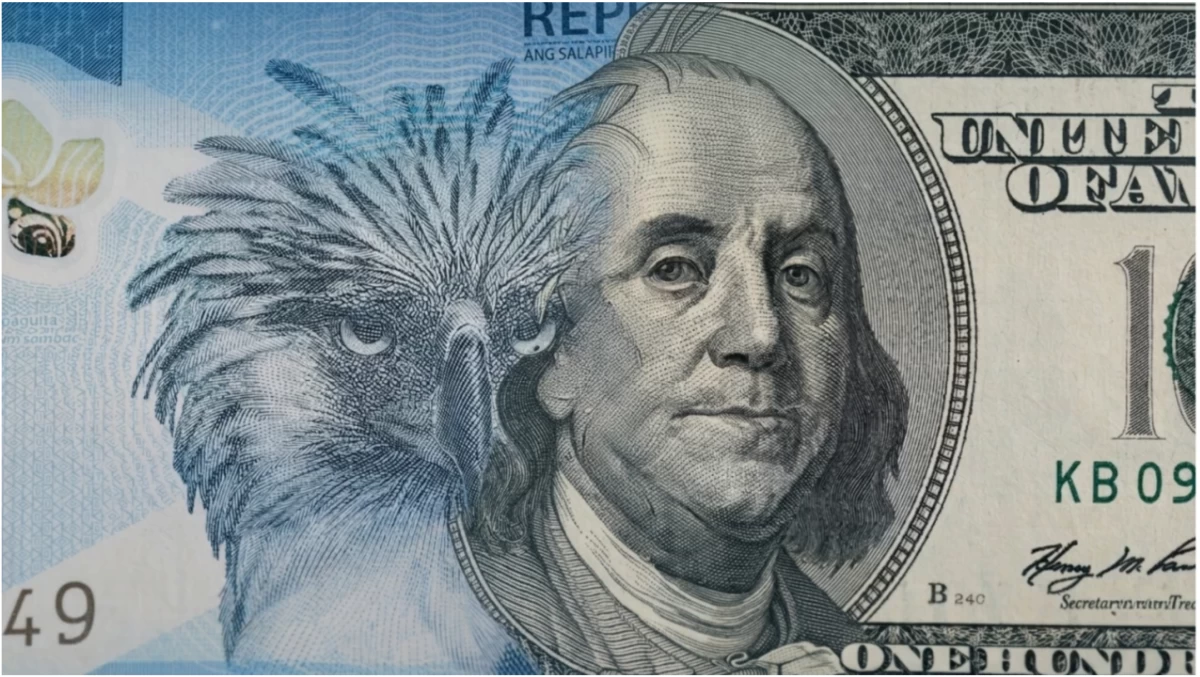
Improved market sentiment anchored on the United States (US) midterm election results strengthened the peso, bringing it back to the ₱62.00 levels just six trading days after sliding to a record low of ₱64.17 on Oct. 27.
On Thursday, Nov. 5, the peso continued to gain footing against the US dollar, closing at ₱62.97 from ₱63.535 last Wednesday, Nov. 4.
Data from the Bankers Association of the Philippines (BAP) showed that this was the first time the peso returned to the ₱62 levels since its recent record lows above ₱64.00. It was also the peso's strongest closing level in more than two weeks, since Oct. 14, when it closed at ₱62.87.
According to the BAP, the local currency hit an intraday high of ₱62.90 and a low of ₱63.35 after opening at ₱63.333. Total trading volume surged to $2.005 billion from Wednesday’s $1.324 billion.
Local economists attributed the peso’s recovery to the outcome of the US midterm elections, which weakened the greenback and reduced the likelihood of further attacks on Iran.
“I’d credit a good part of the rebound to the US midterms,” Alyssa Nuñez, a former economist at the University of Asia and the Pacific (UA&P) who currently works for a private commercial bank, said.
“With Democrats now in control of Congress, it will be harder for the US government to spend more, so the dollar lost some of its strength,” said Nuñez.
Aside from the spending constraints, Nuñez also pointed to market expectations that Iran would not face further US strikes. “Markets also see less chance of new US attacks on Iran, which helped bring oil prices down,” she said.
Since the Philippines is a net-importing economy, lower oil prices mean the country would need fewer dollars to purchase its oil requirements, consequently benefiting the local currency.
Brent crude, the international benchmark for oil prices, traded below $100 for the first time in quite a while. Brent crude prices hovered at $95 per barrel on Thursday after plunging nearly nine percent a day earlier to a two-month low.
Crude prices plunged as a Democratic-controlled US Congress could pressure Trump to put an end to America’s prolonged war with Iran. Trump, however, has yet to announce immediate plans to ramp up strikes against Iran.
China Banking Corp. (Chinabank), SM Investment Corp. (SMIC), and Union Bank of the Philippines (UnionBank) cited similar factors behind the peso’s rebound.
Chinabank chief economist Domini Velasquez said the US Federal Reserve’s decision to keep interest rates unchanged, improving peace efforts in the Middle East, and “Democratic gains in the US midterm elections have all contributed to a more favorable external environment.”
According to Velasquez, the greenback weakened following the Democratic sweep of both chambers of Congress. This came as “markets anticipate greater political gridlock that could constrain the Trump administration’s spending and policy agenda.”
“This has reinforced expectations of moderating US fiscal pressures and contributed to the dollar’s recent weakness,” said Velasquez.
SMIC group economist Robert Dan Roces said the local currency’s rebound was driven by improved market sentiment. “Lower oil prices and profit-taking on dollar positions may have also helped,” he said.
UnionBank chief economist Ruben Carlo O. Asuncion said the Democratic sweep had pushed both oil prices and US Treasury yields lower. Combined with a weakening dollar, these developments benefit the Philippines as a net energy importer.
Other support also came from President Ferdinand Marcos Jr.’s reassurance that the government has tools to arrest the peso’s depreciation, according to Nuñez. However, she believes the US dollar-peso pair may not sustain its downward trend.
“I would not count on peso to keep climbing,” Nuñez said, as the risk of renewed tensions between the US and Iran remains, with Congress unable to fully prevent US President Donald Trump from ordering further military strikes.
She added that the new Congress is set to assume office only in January 2027, keeping the door open for another flare-up, which could push oil prices higher and consequently erode the peso’s recent gains.
Roces echoed a similar view: “For now, this looks more like a relief rally than a sustained reversal, but it gives the peso some breathing room.”
Asuncion also noted the rapid appreciation of the local currency, warning that the quick rebound could pause or even reverse. “The move has been quite rapid, however, so some near-term consolidation would not be surprising,” he said.
Looking ahead, Nuñez said the US dollar could gain support from an expected increase in US interest rates in December.
Dutch financial giant ING wrote in a Nov. 5 report that the US dollar experienced an immediate post-midterm decline, which the lender had expected. However, ING said the initial decline was not expected to escalate into a free fall for the greenback unless interest rate differentials moved against the US dollar.
ING explained that a massive decline in the US dollar would require either a shift in central bank dynamics or significant underperformance in US assets.

No comments:
Post a Comment