
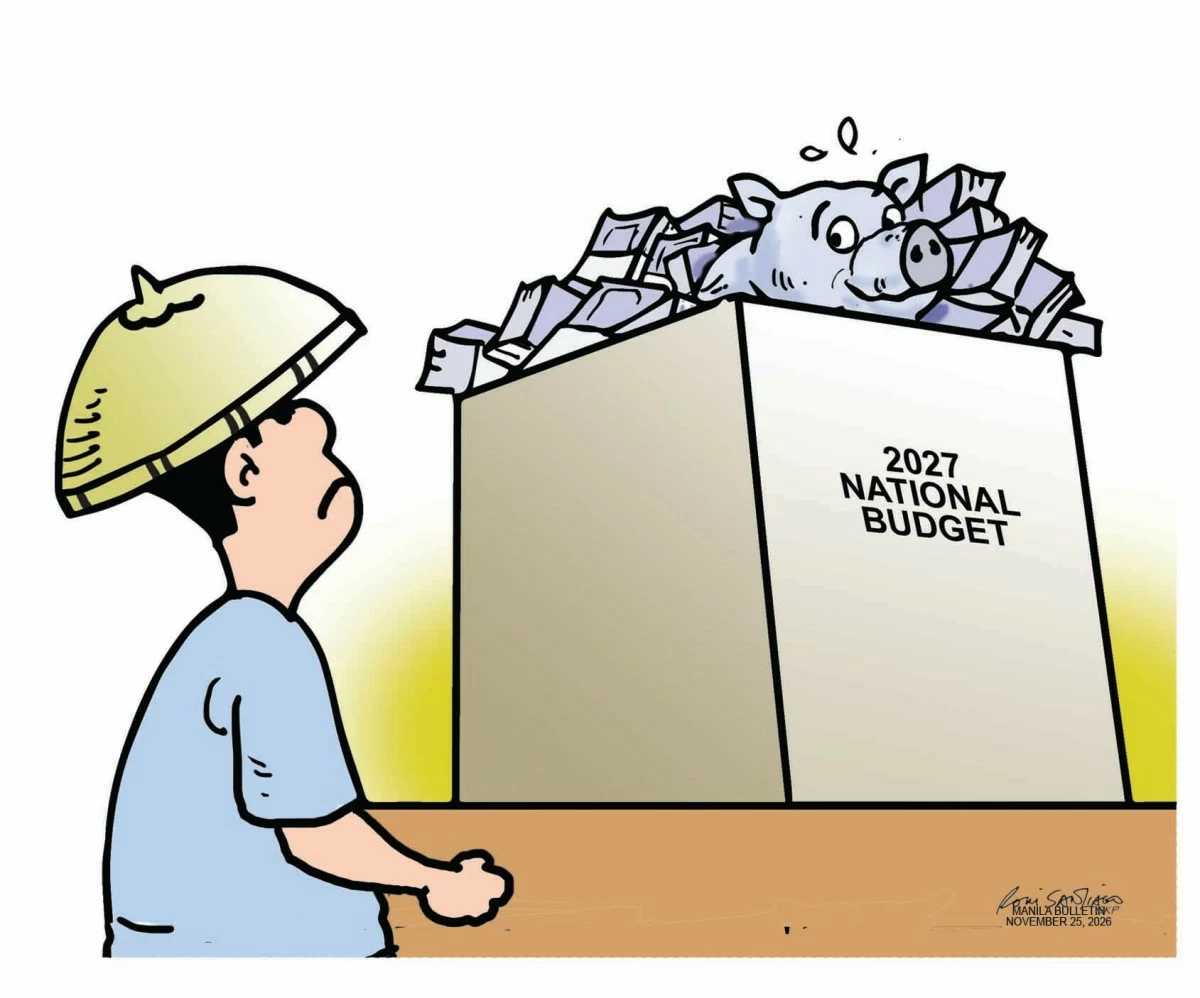
The revelations of alleged duplicate appropriations for flood control projects and questionable allocations for multipurpose buildings (MPBs) in the proposed 2027 General Appropriations Bill (GAB) are deeply disturbing. More than budgetary irregularity, they raise fundamental questions about the integrity of public spending, the accountability of elected officials, and the government's commitment to national development. Have those responsible for these allocations learned absolutely nothing from the massive flood control scandal that exposed the appalling consequences of corruption, political patronage and the apparent plunder of public resources?
Senator Panfilo “Ping” Lacson's Nov. 23 disclosure that certain flood control projects appear to have received duplicate or multiple appropriations demands immediate and uncompromising scrutiny. Equally alarming is his identification of at least 30 allegedly unbuilt MPBs that had received funding in previous years. His observation that commissions in these projects could reach 10 percent, although still subject to investigation, makes the matter even more troubling.
These are not trivial accounting discrepancies. Every questionable allocation represents public money that could otherwise finance classrooms, hospitals, agricultural support, irrigation systems, disaster preparedness and essential infrastructure. If projects are repeatedly funded without corresponding physical accomplishments, who benefits from the arrangement? Certainly not the taxpayers.
The economic circumstances make such apparent profligacy particularly indefensible. Philippine Statistics Authority figures for the third quarter of 2026 showed a 4.8-percent contraction in agriculture, forestry and fishing, while general government construction declined by 15.1 percent. At a time when productive investment and economic recovery are imperative, the national budget must be an instrument of development, not a vehicle for political accommodation or private enrichment.
The Senate must exercise its constitutional power of the purse with exceptional vigilance. It should subject every questionable allocation to project-by-project verification, comparing proposed appropriations with previous funding, disbursements, contracts, implementation reports and actual accomplishments. Lawmakers must demand the identities of project proponents, sponsoring officials, implementing agencies and contractors. Any allocation lacking credible justification or evidence of necessity should be stricken off from the bill.
Nor should the bicameral conference committee become a convenient avenue for restoring questionable provisions or inserting new pork-barrel arrangements. Its proceedings, amendments and justifications must be transparent and accessible to the public.
The executive branch must likewise demonstrate that accountability is not purely rhetoric. President Ferdinand Marcos Jr. should direct the Department of Budget and Management and the Department of Public Works and Highways to audit potentially duplicated projects, validate their physical existence and suspend the processing of questionable allocations pending verification. The Commission on Audit, the Office of the Ombudsman, and other competent investigative bodies must pursue evidence of irregularities and recommend appropriate administrative, civil, or criminal proceedings.
Most importantly, those responsible must be identified, regardless of political affiliation, position or influence. Legislators who proposed questionable allocations, officials who endorsed them, and individuals who facilitated or benefited from fraudulent arrangements must not be shielded by political connections. Evidence, not political convenience, must determine accountability.
The country has endured enough scandals involving public infrastructure. It is intolerable that, after the flood control controversy, substantially similar questions about duplications, nonexistent projects, and possible commissions should again confront the nation.
A national budget is not a political wish list, a source of patronage, or an instrument for rewarding allies. It is a solemn commitment to the Filipino people.
Now, the question is whether those entrusted with public office understand that distinction. If they do not, they must realize that they have no business treating taxpayers’ money as though it were their own.
