
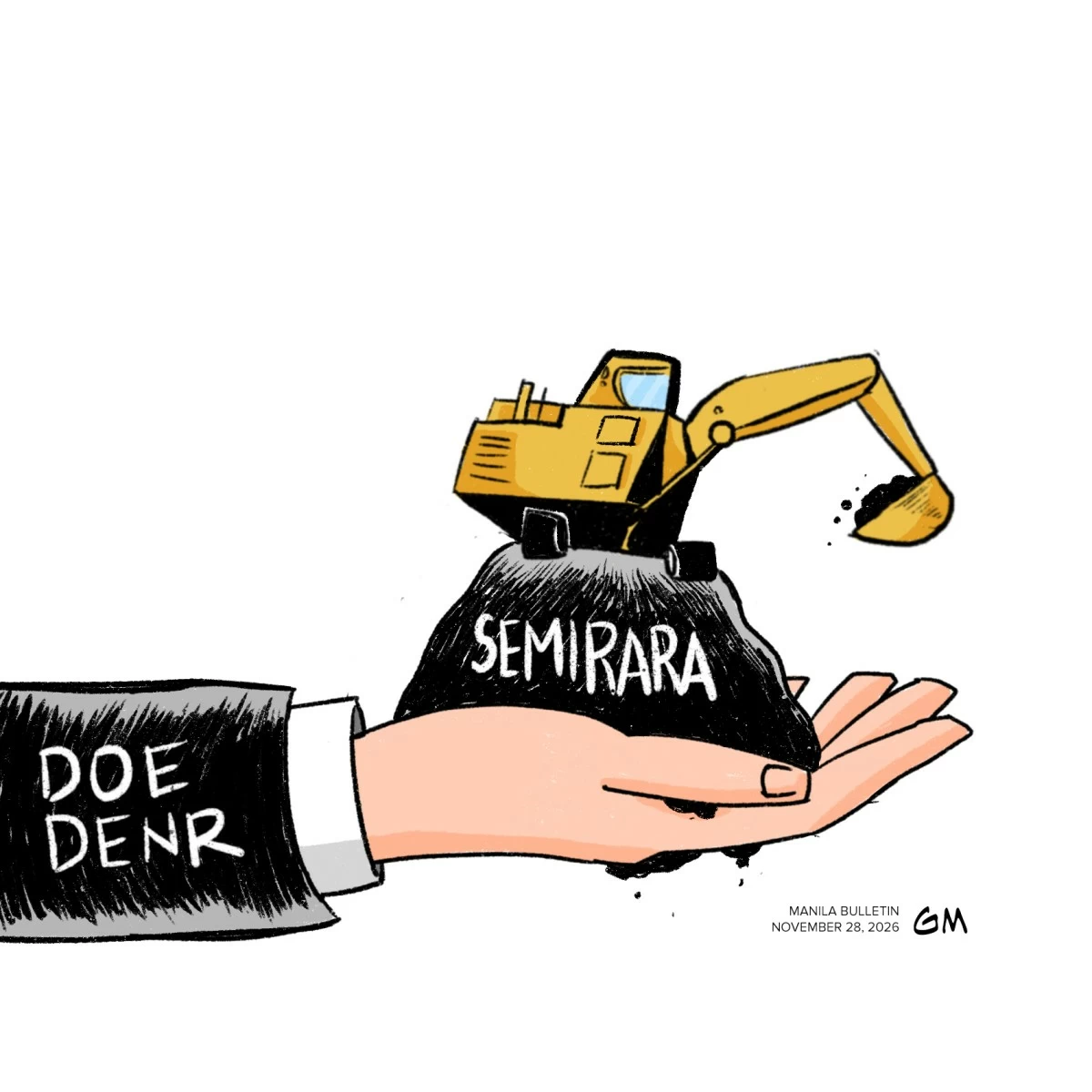
The ongoing dispute over bidding rules for the country’s largest coal mine has now turned into a broader warning about investor confidence in the Philippines.
Ahead of the Dec. 11 auction for the Semirara coal blocks in Antique, where the incumbent operator’s 50-year contract expires in July 2027, business groups and industry players have pushed back against a joint administrative order from the Department of Energy (DOE) and the Department of Environment and Natural Resources (DENR).
At issue is whether the government can compel operators to hand over privately built equipment and infrastructure during contract succession, a fight that now threatens to spill from coal into critical minerals and broader industrial plans.
In capital-intensive sectors like mining and energy, investors commit money over decades based on predictable rules and clear property rights. Rewriting terms midstream or blurring the line between recovering costs and surrendering ownership creates risk that capital providers price in quickly. Local and foreign business groups have already warned the government that the disputed order lacks a clear statutory basis under existing coal and mining laws, which give outgoing operators a one-year window after contract termination to remove equipment and improvements. When companies face uncertainty over whether private assets, including power facilities, piers, or technical data, must be turned over or whether bidding requires waiving court challenges, the cost of doing business rises.
The fallout is already visible on the ground and in the market. The incumbent producer has cut its capital spending budget this year to ₱1.9 billion from ₱5.9 billion in 2025, slashed its coal production target by more than one-third, and carried out workforce reductions at the mine site.
Meanwhile, the tender puts more than ₱55 billion in existing company assets into contention alongside a ₱1 billion signature bonus, and public pension and state funds holding shares in the listed operator have seen ₱7.2 billion in cumulative share value losses following the auction push.
Energy officials say the incumbent must still meet its contractual duties, including environmental restoration, through July 2027, and insist that asset lists are needed for fair competition and domestic power supply.
Fair competition and steady domestic fuel supply are valid goals for energy and mining regulators. Still, setting up a level playing field does not require casting doubt on private property rights or statutory timelines. If operators are asked to surrender assets built with their own private capital without explicit legal authority, prospective bidders of any size may hesitate to step in, leaving the government with fewer qualified contenders and more disputes.
For President Ferdinand Marcos Jr. and his economic team, the stakes extend well beyond coal.
The Marcos administration wants to promote the Philippines as a hub for critical minerals, clean-tech supply chains, and regional industrial corridors, including the broader vision for critical minerals and technology manufacturing. Those ambitions depend on attracting long-term foreign direct investment, such as the $19.06 billion in approved foreign investments from Japan in 2025, and keeping domestic capital anchored at home.
With economic growth at 2.1 percent in the third quarter of the year and power reliability already under strain in many parts of the country, regulators cannot afford this self-inflicted friction.
Before moving ahead with disputed turnover provisions, the DOE and DENR officials should issue clear written guidance grounding every requirement in existing law, hold real consultations with industry stakeholders, and align tender rules with statutory rights.
Protecting contract stability is not a favor to any single operator; it is the basic price of keeping serious long-term capital in the country.

No comments:
Post a Comment