
At A Glance
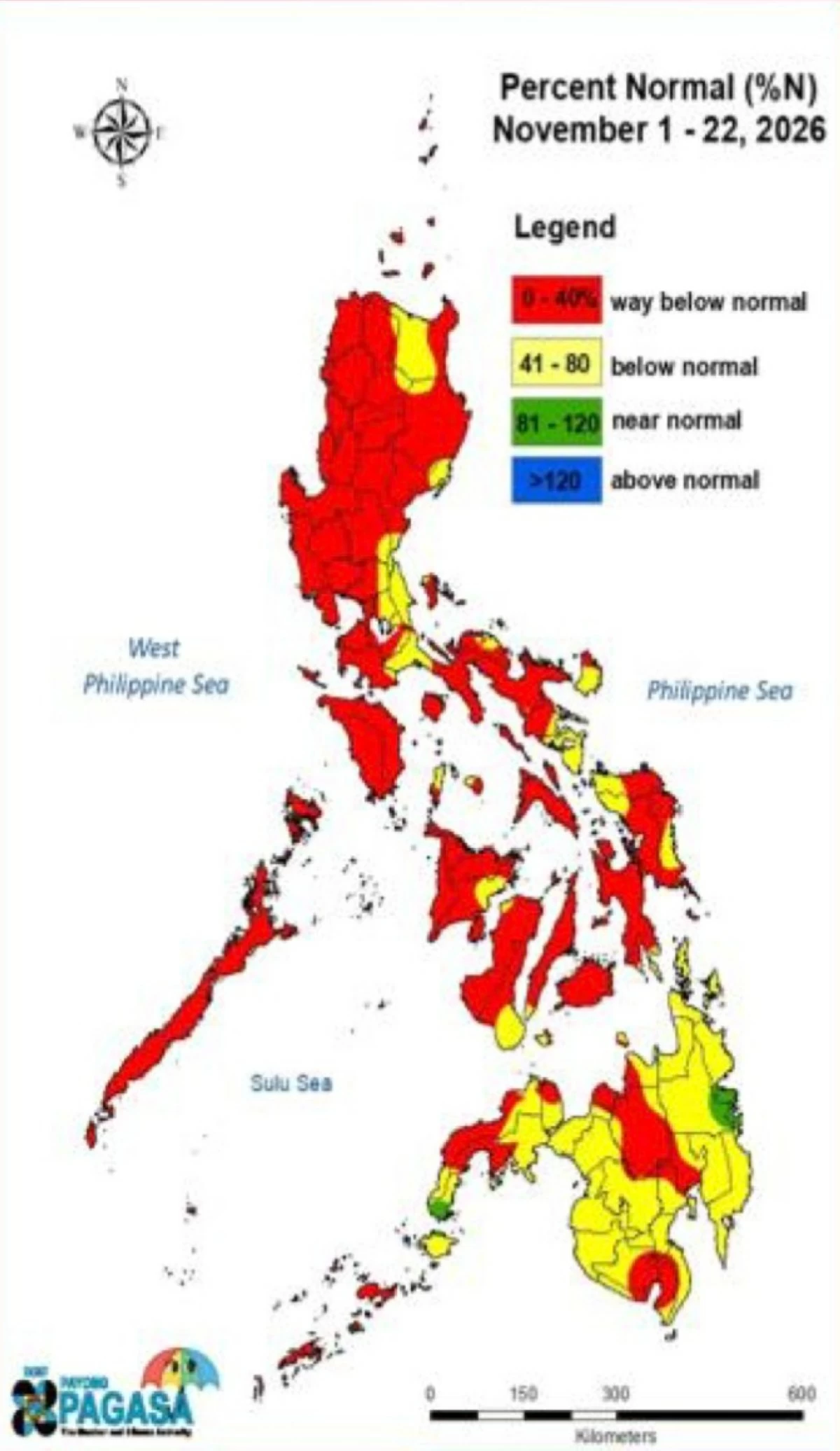
- Sixty areas recorded way-below-normal rainfall, while 27 areas had below-normal rainfall as of Nov. 22.
- Way-below-normal rainfall refers to a reduction of more than 60 percent from average rainfall, while below-normal rainfall represents a 21 percent to 60 percent reduction.
- Fifty-one areas are currently experiencing drier-than-usual conditions, up from 26 areas in October.
PAGASA
The number of areas experiencing drier-than-usual conditions increased to 51 in November from 26 in October as the prevailing very strong El Niño continued to affect rainfall across the country.
During its climate outlook forum on Wednesday, Nov. 25, PAGASA weather specialist Dr. Joseph Basconcillo presented the latest assessment of the country's climate conditions over the past two months, which showed that most parts of the country experienced below-normal to way-below-normal rainfall as of Nov. 22.
He said 60 areas recorded way-below-normal rainfall, while 27 areas had below-normal rainfall during the period.
Way-below-normal rainfall refers to a reduction of more than 60 percent from average rainfall, while below-normal rainfall represents a 21 percent to 60 percent reduction.
Basconcillo said this differed from October when Mindanao still experienced near-normal to above-normal rainfall, while Luzon had way-below-normal to below-normal rainfall and the Visayas had below-normal to near-normal rainfall.
He also reported that 51 areas were experiencing drier-than-usual conditions as of Nov. 22, up from 26 areas in October.
Of the 51 areas, 13 were under dry condition, 29 were experiencing dry spell, and nine were under drought.
Areas under dry condition were Metro Manila, Aurora, Bulacan, Palawan (Kalayaan), Laguna, Nueva Ecija, Nueva Vizcaya, Occidental Mindoro, Pampanga, Pangasinan, Rizal, and Eastern Samar.
Those experiencing dry spell were Abra, Apayao, Bataan, Batanes, Batangas, Benguet, Cagayan, Cavite, Ifugao, Ilocos Norte, Ilocos Sur, Isabela, Kalinga, La Union, Marinduque, Masbate, Mountain Province, Oriental Mindoro, Quezon, Quirino, Sorsogon, Zambales, Aklan, Iloilo, Northern Samar, Southern Leyte, Agusan del Norte, Dinagat Islands, and Surigao del Norte.
Meanwhile, the nine areas under drought were Albay, Catanduanes, Biliran, Capiz, Negros Occidental, Negros Oriental, Samar (Western Samar), Siquijor, and Sarangani.
PAGASA classifies dry condition as two consecutive months of below-normal rainfall, equivalent to a 21 percent to 60 percent reduction from average rainfall.
A dry spell occurs when below-normal rainfall persists for three consecutive months, while drought refers to three consecutive months of way-below-normal rainfall, or a reduction of more than 60 percent from average rainfall.
Basconcillo also reported that most parts of the country continued to experience hotter-than-usual conditions due to the prevailing El Niño.
The highest air temperature recorded nationwide this month was 36.9 degrees Celsius in Echague, Isabela on Nov. 17, while Pasay City registered Metro Manila’s highest at 35 degrees Celsius on Nov. 2.
Despite the very strong El Niño, surges of the northeast monsoon or “amihan” still brought colder-than-usual temperatures in some areas, he said.
La Trinidad, Benguet recorded the country’s lowest air temperature this month at 7 degrees Celsius on Nov. 17, while the Science Garden monitoring station in Quezon City logged Metro Manila’s lowest at 20.6 degrees Celsius on Nov. 5.
PAGASA confirmed on Nov. 4 that the El Niño event had strengthened into a “very strong” episode.
