
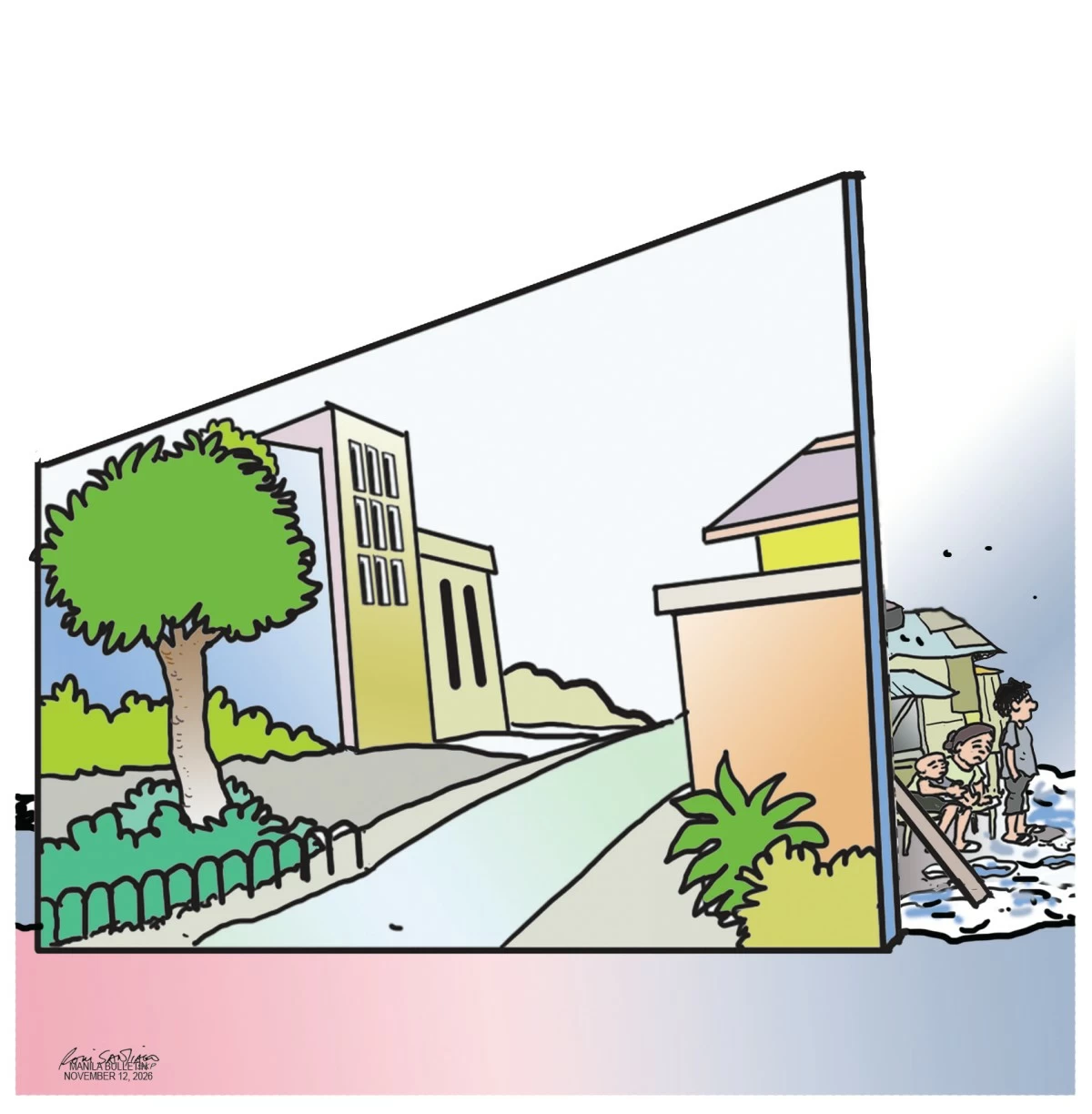
In a few days, world leaders will descend on Metro Manila for the 49th ASEAN Summit and related meetings. For three days beginning Nov. 16, the Philippines will present its best in diplomacy, cuisine, culture, talent, and the hospitality for which Filipinos are known.
Naturally, we want to put our best foot forward. Streets must be clean, public spaces orderly, and routes safe for visiting dignitaries. This is not up for debate. But when preparing for an international gathering means concealing what we would rather not show, a question emerges: Are we cleaning up Metro Manila, or simply covering it up?
Along J.W. Diokno Boulevard in Pasay, large barriers displaying works by Filipino National Artists have been installed. Critics say the partitions hide poverty and homelessness from foreign visitors. There are also reports of street dwellers being moved away and vendors being told to stop operating around summit venues.
Malacañang insists the clearing operations are necessary security and traffic measures, not merely cosmetic improvements. Palace Press Officer Claire Castro has pointed to the responsibility of protecting nearly 20 visiting heads of state and their delegations. That responsibility is real. Hosting leaders of several nations requires precautions, and security officials cannot simply ignore potential risks.
To be fair, this administration is hardly the first to spruce up the capital before a major international event. Previous governments also cleaned roads, repainted walls, removed obstructions, and presented the city in its most flattering light. The impetus to impress visitors has long been part of hosting.
But temporary order comes at a cost when it interrupts livelihoods. Small vendors in Pasay have been required to suspend operations. The Department of Social Welfare and Development has provided food packs and financial assistance to affected vendors. That is welcome, but assistance should not become an excuse to overlook the difficulties of people who depend on daily earnings.
There is also a glaring observation circulating online: If roads can be cleaned, sidewalks cleared, and public spaces improved for foreign delegates, why can this not be done consistently for areas in Metro Manila that need it the most?
Surely, Filipino commuters deserve safe walkways even when no president or prime minister is visiting. Families deserve clean neighborhoods long after the summit banners have been taken down. Street vendors deserve organized, lawful spaces where they can earn a living without the constant risk of sudden displacement.
And those living on the streets deserve something more substantial than a temporary transfer beyond the cameras' reach. Poverty is not an unsightly object that can be hidden behind plywood, canvas, or attractive murals. It is a condition that calls for housing, employment, social services, and sustained attention.
The proper response, therefore, is not to abandon cleanliness or security. It is to make both permanent and humane. City governments must coordinate regular sanitation, waste management, sidewalk maintenance, public housing, and livelihood arrangements. National agencies must support programs that address the causes—not merely the appearance—of urban blight.
Summit guests will eventually fly home. The barricades will come down, traffic will return, and the people whose lives were disrupted will still be here.
The success of the summit should be measured not only by diplomatic agreements and impressive ceremonies, but also by what remains afterward.
May this gathering become an occasion to finally improve Metro Manila for the long term. When another international event descends on our shores, we should have no reason to mask the city's real face because we have worked to make it truly cleaner, safer, and better.

No comments:
Post a Comment