You plan to move to the Philippines? Wollen Sie auf den Philippinen leben?

There are REALLY TONS of websites telling us how, why, maybe why not and when you'll be able to move to the Philippines. I only love to tell and explain some things "between the lines". Enjoy reading, be informed, have fun and be entertained too!

Ja, es gibt tonnenweise Webseiten, die Ihnen sagen wie, warum, vielleicht warum nicht und wann Sie am besten auf die Philippinen auswandern könnten. Ich möchte Ihnen in Zukunft "zwischen den Zeilen" einige zusätzlichen Dinge berichten und erzählen. Viel Spass beim Lesen und Gute Unterhaltung!


Visitors of germanexpatinthephilippines/Besucher dieser Webseite.Ich liebe meine Flaggensammlung!

free counters

Total Pageviews

Sunday, November 1, 2026

How do you tell if the relationship is heading somewhere?


This is a good question…

Aside from relationships which never should have formed, I don't think couples need to overthink long-term compatibility during a first year. Beyond this point is dependent upon circumstances.

Twenty years olds with plenty of life ahead verses couples in their forties starting out with remaining hopes of becoming parents face completely different relationship timeframes. Career focuses affect young adults while extra commitments like parenting for older individuals factor into how they progress within relationships.

I've lived the in-between scenario (27-35, eight year relationship, married and one daughter) while now in a relationship with a nearly forty year old girlfriend that wants children. Being forty-three with a daughter, my intentions weren't to have more children and now I'm open to such possibility.

The journey has been perhaps a little unorthodox. We haven't met each other's people and sporadically told individuals we're in a relationship, meaning our lives have remained somewhat compartmentalised.

My general feeling regarding long-term relationships is that when you reach a second Christmas together while continuing to remain seperate (not spending it together, yet to introduce each other to family) - it may be a sign of relationship stagnation. This appears likely for us in a few months, even without my daughter's presence at Christmas...

How do I feel regarding our progress?

Beginning from three years after divorce, I've felt like years left from then until I'm about fifty-five will be most precious to experience happiness within my lifespan. Furthermore, I'm not confident about potentially having mortality longevity. This has resulted in a mindset nearing existential nihilism which values now more than unpromised future.

Being motivated for causing my girlfriend's happiness and not heavily factoring in potential eventual risks that come with any long-term relationships involving procreation and/or living together (perhaps involving marriage) - I have become willing to endeavour. Initially my suggestions were doing proper steps, like renting together, seeing how we'd go living together while combining our lifestyles. She originally wanted to instead jump in head first which I gradually became on board with doing and now most recently, her perspective has fallen somewhere between my original position and her wanting to jump in making how exactly we'll proceed currently unclear 🫠

My only real certainty is loving her, providing the happiness she deserves and potentially wishing for us to see each other more frequently (including additional sleepovers). There's no confusion in our mutual feelings, just working out how to progress within the relationship.

Her level of independence, commitment to helping parents, busy work lifestyle and dogs for company makes our routine living seperately with a few weekly visits quite manageable. But from my perspective, I'm somewhat co-dependent, live alone, not passionate regarding employment, mostly experience fulfilment through company and writing is the closest example of a passion. We have very different life experiences for our relationship. I'm somewhat lonely while she's distracted.

Needing to deeply think regarding our relationship trajectory is mostly associated with her desire to have children and secondly for my wishes to see each other more frequently (both suited for potentially living together). Otherwise we'd have no motivation for rushing anything, like in most younger people's circumstances.

Now what?…

Hopefully without ever sinking! 💞

What are some unique Filipino traditions or customs that are often misunderstood by foreigners?

In the Philippines, a loud "psst" and pursed lips aren't rude catcalls. They are perfectly polite ways to get someone's attention across a room or point out directions.

These daily habits belong to a set of uniquely Filipino customs that are deeply communal at home, but often translate poorly to outsiders.

Because pointing with an index finger is considered aggressive, locals instead point out objects by pursing their lips and tilting their head toward the target. To a foreigner, this sudden gesture can look like an unexpected attempt to blow a kiss or a sarcastic smirk.

A similar disconnect happens vocally. While making a "psst" sound in the West is usually a patronizing demand for silence, in the Philippines, it is the standard, non-confrontational way to catch someone's eye. It allows people to get a waiter's or a friend's attention without shouting, even though visitors often feel they are being rudely shushed.

Food traditions also clash with Western norms. Filipino dining is deeply communal, best exemplified by kamayan—the practice of eating with bare hands. During a communal feast known as a "boodle fight," a mountain of rice, grilled meats, and seafood is laid out symmetrically on long banana leaves.

During a boodle fight, diners stand shoulder-to-shoulder and eat with their bare hands from a shared spread of rice, seafood, and grilled meats arranged on banana leaves. Photo by Ej Afable is licensed under CC BY-SA 4.0.

Foreigners sometimes view eating without utensils as unhygienic or primitive. In reality, it is a highly structured tradition that symbolizes equality and closeness. Diners wash their hands thoroughly before eating and use only one hand to neatly compress the food into bite-sized mounds.

Physical greetings carry their own cultural weight. When younger Filipinos greet their elders, they perform pagmamano. They take the elder’s offered hand and gently press the back of it against their own forehead to receive a blessing. Visitors often mistake this for an old-world attempt to kiss their hand or a display of extreme subservience, but it is simply the standard gesture of familial warmth and respect.

Rezept mit Tradition: Martinsgans, Blaukraut und Knödel im Herbst


Stand:


Gans ist der perfekte Festtagsbraten – ob klassisch oder modern zubereitet.
Gans ist der perfekte Festtagsbraten für den Martinstag. (Symbolbild) © Copyright: xalexrathsx via imago

Der St.-Martinstag wäre nur halb so schön ohne den Laternenumzug und ohne das klassische Festtagsessen: die Martinsgans. Mit diesem Rezept bereiten Sie Gans, Blaukraut und Knödel einfach selbst zu.

Die Martinsgans gehört für viele Familien zum St.‑Martinstag am 11. November, zwischen Laternenumzug und den ersten frostigen Nächten. Für die Festtagsgans brauchen Sie keine Profiküche oder einen Michelinstern, sondern einfach nur Vorbereitung und Geduld. Mit einer Schritt-für-Schritt-Anleitung und allen Mengenangaben auf einen Blick, gelingt auch Ihnen ein Festschmaus, der Familie und Gäste in Feiertagsstimmung versetzt.     

Warum gehört die Gans zum St. Martinstag?

Eine Gans zum St.-Martinstag ist eine alte Tradition, die Brauchtum und Jahreszeit zusammenbringt. Die Überlieferung führt ins Jahr 371 zum heiliggesprochenen Martin von Tours. Der bescheidene Mann sollte zum Bischof geweiht werden, wollte diese Ehre aber nicht und versteckte sich in einem Gänsestall. Die Gänse schnatterten jedoch so laut, dass sein Versteck aufflog und er doch zum Bischof ernannt wurde. Der Volkssage nach landen die Gänse seither am Gedenktag des Heiligen im Bräter, als „Strafe“ für ihren Verrat.   

Ein klassisches Gericht ist die Gans mit Blaukraut und Knödeln. Wie Sie die Gans würzen, füllen und im Ofen zubereiten, ist im Rezept ausführlich beschrieben.

Gans mit Blaukraut & Knödeln

Genießen Sie eine feine Weihnachtsgans mit Knödel und Blaukraut.
Genießen Sie eine feine Gans mit Knödel und Blaukraut. © Imago Images/Panthermedia

Laden Sie sich das Rezept für die Martinsgans mit Blaukraut HIER gratis herunter

Warum Sie die Planung schon Anfang November starten sollten

Da die Gans in diesem Gericht im Mittelpunkt steht, sollten Sie am besten eine frische Gans vom Metzger bestellen. Da es für frische Ware oft Warte- und Lieferzeiten gibt, sollten Sie schon mit Vorlauf vor dem Martinstag planen. Für die Gans sollten Sie mindestens vier Kilo einrechnen, wenn sechs Leute mitessen.  

Das vollständige Rezept mit allen Mengenangaben, Garzeit und Tipps finden Sie kostenlos in unserer Mediathek. Registrieren Sie sich dafür einfach mit dem Login-Service USER.ID. Dort warten außerdem zahlreiche weitere inspirierende Inhalte auf Sie, die Sie ebenfalls kostenlos herunterladen können.

Auch interessant


Saturday, October 31, 2026

FAMILY AS SACRAMENT


By Klaus Döring

Living in the Philippines since 1999 for good, I found out about this. I learned so many things being a part of a Philippine family.  I was born in a parish house in Germany  but experienced years later how to survive in a broken family.


My Philippine mentor, Hermogenes E. Bacareza, former Chaplain of the Philippine community in Berlin and author of German-Philippine Relations,  taught me in 1988: The Christian family is also called to be a sacrament. They are called, like the Church, to be Christ to one another, as well as to the broader community. By becoming what they are called to be, the family lives the sacramental life, and the sacred can bubble up through the ordinary things of everyday life.

What on earth can be more of a sign of God’s grace than the authentic self-giving love of a fully committed married couple whose love for each other brings life and spills out upon their children and with them onto those beyond the family? This, I believe, is the new vision of the Christian family for the 21st century. 

Authority, stability, and a life of relationships within the family constitute the foundations for freedom, security, and fraternity within society. The family is the community in which, from childhood, one can learn moral values, begin to honor God, and make good use of freedom.

Families are central to God's plan for His children. They are the fundamental building block of strong societies. Families are where we can feel love and learn how to love others. Life is tough, and we need people we can lean on.

What's the purpose of family? These bonds are important because family helps us get through the most disastrous times and the best times. Family is important because they can offer support and security coupled with unconditional love; they will always look to see and bring out the best in you even if you cannot see it for yourself.

Since residing in the Philippines, I experienced that family is important to Christians because family is about witnessing to the Lord’s faithful love for the Church and for the whole of humanity; family is about making present, in a concrete and daily manner, the reciprocity and beauty of the love that characterizes God’s life. Family is a rich school where we learn to be humane and generous, to be patient and steadfast, to be just and merciful, to be faithful and committed, to be together and to connect.

Single parented or mother-father; childless or fertile; in big cities or in the countryside; in harmony or in conflict/domestic violence; in home country or refugees; at peace or at war, married or cohabitating, separated or remarried; healthy or in illness/addiction, free or in prison, in a house or homeless, able or disabled, working locally or away from home, with or without pets; whatever the family… all families are precious in the eyes of God.


Email: doringklaus@gmail.com or follow me on Facebook, Linkedin or X -Twitter or visit www.germanexpatinthephilippines.blogspot.com or www.klausdoringsclassicalmusic.blogspot.com .

After 'ghost roads' flagged in sea coordinates, DA invites watchdogs to audit billions in farm projects


Published Oct 30, 2026 05:22 pm
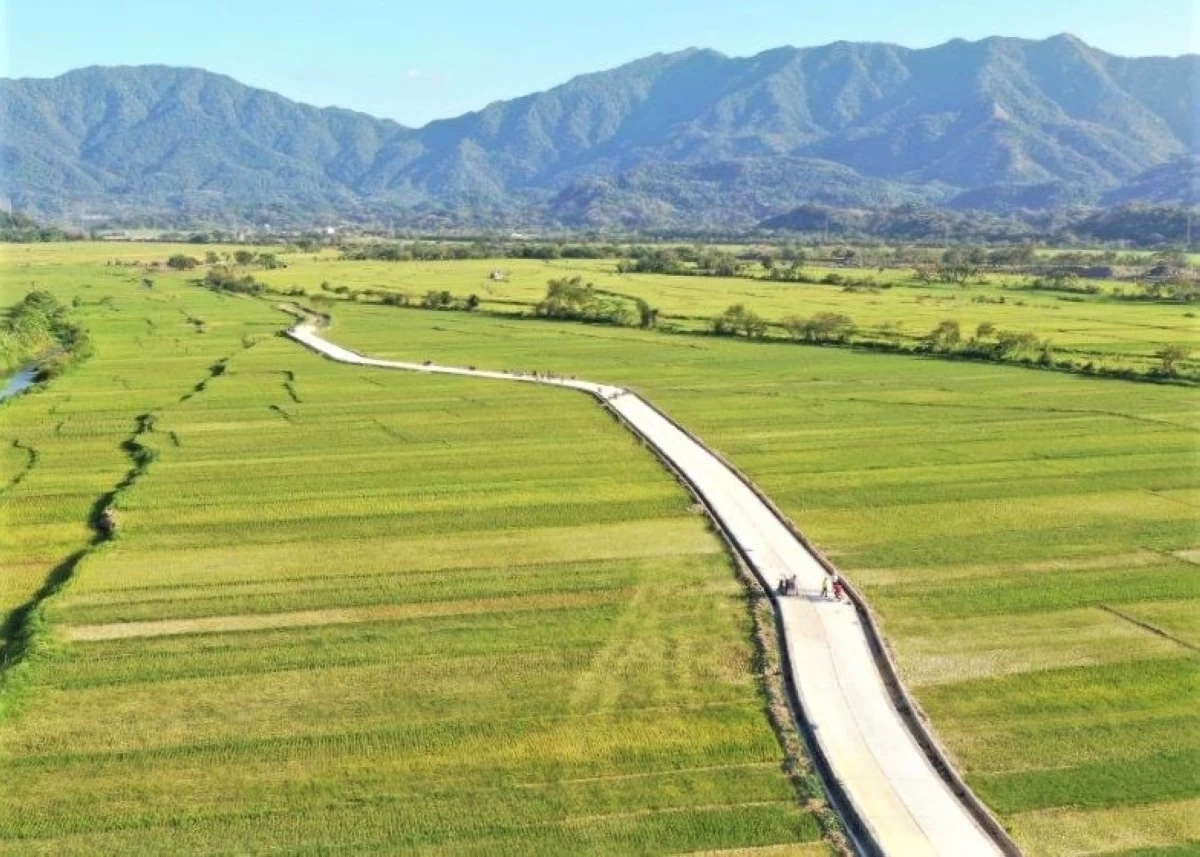
The Department of Agriculture (DA) is teaming up with civil society groups to help promote transparency in the development of farm-to-market road (FMR) projects.
The DA said in a statement on Friday, Oct. 30, that it has partnered with citizen watchdogs the People’s Budget Coalition (PBC), BetterGov.PH, and Bisto Proyekto for a comprehensive review of its FMR projects.
The scrutiny of the projects is expected to range from planning and budget preparation to construction and post-implementation monitoring, according to Agriculture Secretary Francisco Tiu Laurel.
The agency has agreed to share project documents and conduct joint monitoring under its partnership with the civil society groups.
This comes amid questions over FMR coordinates, which were earlier flagged in a recent Senate hearing due to inconsistencies, including entries that appeared to be located in the sea.
Civil society groups have likewise raised concerns over more than 350 FMR projects worth nearly ₱6 billion that were inserted in the proposed national budget due to the lack of publicly available documents.
Agriculture Undersecretary Arrey Perez said the DA’s partnership with citizen watchdogs is crucial to ensuring that every infrastructure project is completed for its intended purpose.
“We welcome the extra hands and eyes offered by these civil society groups to audit these projects and ensure they are executed properly,” Perez said.
“By completing these projects as intended, we bring greater development to our farmers, fisherfolk, other food producers, and more rural areas,” he added.
In line with efforts to uphold transparency, the DA earlier launched the FMR Watch online portal, which publishes detailed engineering designs, programs of work, and validation
reports of ongoing projects.
The department is also pursuing third-party audits involving state universities and colleges, where their engineers and faculty could independently assess FMR projects before contractors receive payment.
With these safeguards, the DA said it is making sure that FMRs are constructed to connect farms to trading centers, effectively reducing logistics costs and limiting post-harvest losses.
The DA has identified the need for 131,000 kilometers (km) of FMRs nationwide, with about 55,000 km still unbuilt. By 2028, it plans to develop roughly 10,000 km, or about 18 percent of the infrastructure backlog.
The DA said its partnership with watchdogs and civil society groups would not be limited to this year, indicating that the initiative would continue beyond the current budget cycle.
“Its ultimate measure will not be the number of documents published or projects inspected, but whether scrutiny helps prevent waste, improves construction quality and ensures roads reach the farming communities that need them most,” it said. (Dexter Barro II)


BSP can't fight inflation alone


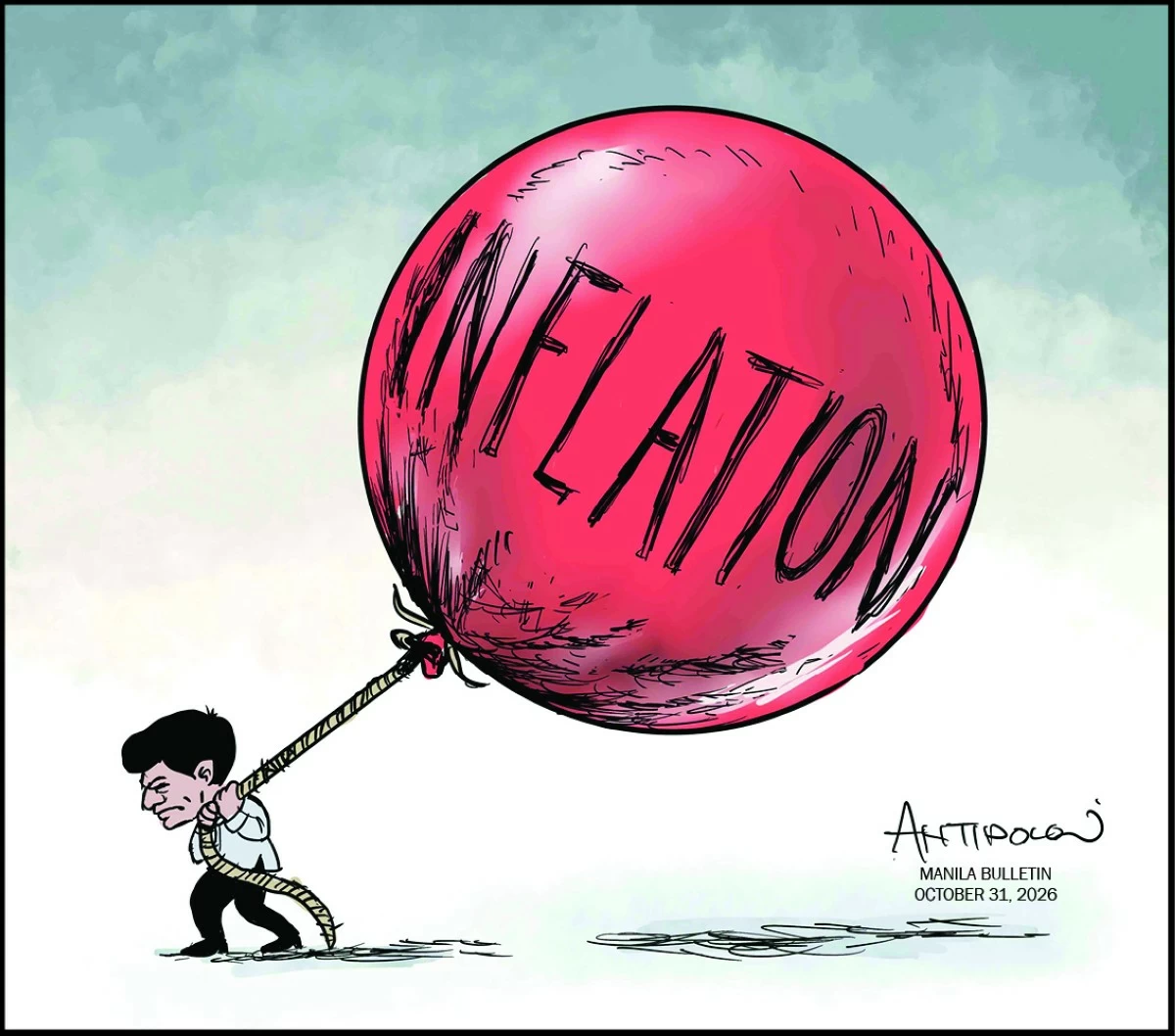
The peso breaking past 64 against the United States dollar may have signaled that monetary policy has reached its limit. The Bangko Sentral ng Pilipinas (BSP) has already pushed the benchmark interest rate to 5.50 percent, with market analysts bracing for another hike toward six percent if inflation keeps climbing. Now, it seems President Marcos is expecting the central bank to single-handedly defend the currency and stabilize the economy, which is a serious mistake.
Higher interest rates are an indiscriminate mechanism because while they can curb currency speculation and cool down aggregate demand, they cannot produce more rice, repair broken irrigation networks, or move goods smoothly through crowded ports.
The primary drivers behind domestic price hikes are structural supply shortages and high transport costs. Treating a supply problem strictly with interest rate hikes is squeezing local businesses and families already struggling to pay for basic necessities.
This is where the Marcos administration must step in with serious fiscal solutions. Yet, the current handling of government funds shows the continued disconnect between fiscal spending and economic priorities.
According to the latest national government disbursement report from the Department of Budget and Management (DBM), capital outlays and public infrastructure spending dropped sharply to ₱522 billion at end-September from ₱798.4 billion in the same period last year, a ₱276.4 billion contraction.
The DBM attributed the slump to reduced disbursements by the Department of Public Works and Highways, driven by stricter payment conditions, enhanced project verification, and heightened oversight. In August alone, infrastructure spending fell 16.9 percent year-on-year. While safeguards on public spending are necessary, allowing essential capital investments to stall during an economic slowdown weakens the very foundation the country needs to sustain growth.
Instead of fixing these spending bottlenecks and directing capital where it is needed most, the proposed ₱7.2 trillion national budget for 2027 looks like business as usual. The House of Representatives added over ₱180 billion in unvetted infrastructure insertions for thousands of local projects, including multi-purpose buildings and bypass roads with little technical justification. To make room for these additions, heavy cuts were made to essential areas: ₱130 billion stripped from foreign-assisted projects, ₱9.5 billion taken from calamity funds, nearly ₱5 billion removed from health programs, and vital funding cut from mass transit like the EDSA Busway.
A coalition of 35 major business and civil society groups recently called out these insertions, pointing out that shifting national resources into vague local projects while cutting disaster preparation, healthcare, and infrastructure undermines investor confidence.
If the government wants to ease price pressures and support the peso, public spending must be directed toward real economic bottlenecks. That means prioritizing repairs to existing irrigation systems before El Niño conditions worsen, lowering logistics costs for food producers, streamlining customs clearance, and accelerating domestic energy investments to reduce reliance on expensive imported oil. Spending public money on well-planned supply solutions builds long-term productive capacity; spending it on discretionary local line items simply strains public finances.
There is also a direct fiscal cost to leaving the fight against inflation entirely to the central bank. With national debt standing at ₱19.61 trillion, every rate hike by the central bank increases the government’s own borrowing costs. Meanwhile, foreign direct investment has dropped as international investors weigh higher interest rates against weak execution and infrastructure gaps.
Government assurances that the country holds enough foreign exchange reserves to protect the peso offer temporary comfort, but those reserves are not bottomless. Gross international reserves have already dipped to a three-year low of $100 billion. The central bank cannot spend its dollar buffers indefinitely while fiscal policy pulls in the opposite direction.
Interest rate hikes can buy temporary time, but they cannot fix underlying structural weaknesses. Until the Marcos administration cleans up the 2027 budget, removes politically motivated insertions, and puts public money into projects that actually expand supply and lower business costs, the central bank will be left fighting a lonely and expensive battle to protect the Philippine economy.