You plan to move to the Philippines? Wollen Sie auf den Philippinen leben?

There are REALLY TONS of websites telling us how, why, maybe why not and when you'll be able to move to the Philippines. I only love to tell and explain some things "between the lines". Enjoy reading, be informed, have fun and be entertained too!

Ja, es gibt tonnenweise Webseiten, die Ihnen sagen wie, warum, vielleicht warum nicht und wann Sie am besten auf die Philippinen auswandern könnten. Ich möchte Ihnen in Zukunft "zwischen den Zeilen" einige zusätzlichen Dinge berichten und erzählen. Viel Spass beim Lesen und Gute Unterhaltung!


Visitors of germanexpatinthephilippines/Besucher dieser Webseite.Ich liebe meine Flaggensammlung!

free counters

Total Pageviews

Saturday, November 7, 2026

What is the most innocent thing a person ever asked you?


Not to me, but to his mom.

So, my neighbour has a little cute kid. He is kinda mischievous kind of kid who keeps doing unpredictable things.

It was that day, he and his mom were there at our home. We were having a discussion on the daily topics. And this kid was playing with the clay kept at our home.

I got bored with the conversation and started TV to listen some good music.

There was this "Vaaste" song started playing on the TV.

As soon as kid saw that, he immediately hold the hand of his mom and asked her to dance with him. (That kid always make her mom dance along with him whenever his favourite songs plays)

That kid was showing great enthusiasm. He was trying to copy each possible steps he can. As they were dancing, suddenly this scene came,

That kid immediately lifted his t-shirt. His mom didn't do that. He kept asking her to do that but his mom started laughing hard and keep on saying, "No! No! Son.."

That particular situation made all of us busted out in a huge laughter, including me. His mom patted on my mom's hand while laughing.

But that kid seems to be in confusion why his mom didn't do that. He was literally enjoying that step as he lifted up 2-3 times his t-shirt. And our laughter didn't stopped for a good time.

The Kingdom of God is in our midst


By Fr. Roy Cimagala

Chaplain


Center for Industrial Technology and Enterprise (CITE)


Talamban, Cebu City

Email: roycimagala@gmail.com


THE Gospel for Thursday of the 32 nd Week in Ordinary Times (Luke 17:20-25)

invites us to see God's kingdom with fresh eyes. The Pharisees asked Jesus when the

Kingdom of God would come. They expected something dramatic and unmistakable.

Christ answered that the Kingdom was already in their midst because he himself was

present among them.

The same misunderstanding can affect us today. We sometimes think God acts

only through extraordinary events, overwhelming emotions, or spectacular miracles. We

wait for something remarkable while overlooking the quiet but real ways he is already

working in our daily lives.

Jesus says that God's kingdom does not come with outward display. It begins

wherever people welcome his grace, obey his word, and allow him to reign in their

hearts. Before transforming the world, God first transforms the human heart.

This truth changes how we look at ordinary life. Every honest day's work, every

hidden sacrifice, every sincere prayer, and every act of kindness becomes a place

where God's reign quietly grows. Holiness is not built through rare achievements but

through ordinary duties carried out with love.

Jesus also speaks about his glorious return. He warns his disciples not to follow

those who say, "Look, here he is," or "There he is." The Lord discourages unhealthy

curiosity about the end of the world and instead teaches faithful perseverance in the

present.

That lesson is especially relevant today. We are surrounded by sensational news,

alarming predictions, and voices claiming special knowledge about the future. The

Gospel calls us to remain calm, grounded, and focused on living faithfully each day

instead of being distracted by speculation.

When Christ comes again, no one will need to announce it. His return will be as

unmistakable as lightning flashing across the sky. Rather than trying to predict that day,

we should make sure our hearts are always ready to welcome him.

Before speaking of his glory, Jesus reminds his disciples that the Son of Man

must first suffer and be rejected. This pattern also shapes every Christian life. The

Cross always comes before the crown. Growth in holiness often requires sacrifice,

patience, and perseverance.


This truth brings hope during life's trials. Difficulties do not mean God has

abandoned us. United with Christ, every burden can become an offering of love, every

disappointment an occasion to trust him more deeply, and every hardship a step toward

lasting joy.

The Gospel also reminds us that we help extend God's kingdom wherever we

are. Families become stronger when forgiveness replaces resentment. Workplaces

improve when honesty overcomes compromise. Communities flourish when generosity

triumphs over selfishness. God's reign spreads quietly through faithful people.

Several practical resolutions naturally follow. Begin each day by asking Christ to

reign in your thoughts, words, and actions. Spend a few moments daily in silent prayer

to recognize his presence. Carry out your ordinary duties with love and care. Refuse to

be distracted by sensational claims about the future, and remain firmly rooted in the

Church's faith. Accept daily crosses with confidence, knowing they prepare you for

greater union with Christ.

The Kingdom of God is not far away. It is already growing wherever Christ is

welcomed. If we allow him to reign in our hearts today, we will face the future with peace

instead of fear, faithfully walking with him until the day he returns in glory.

WHEN I THINK BACK SOMETIMES


Messenger_creation_E41F7F7C-1FD6-4A3A-85B2-AD9A3D3A5328.jpeg


by Klaus Döring

Not long ago, I passed a milestone marking 55 years since I began writing my first published article in a newspaper. I began keeping all the clippings since then. Time changed. Yes. I have my only online-archive. Believe me, it's like a book. As I reread my first articles, I was amazed, I ever kept them  up.

Back to my clippings. Can you imagine that there are some benefits from keeping them? From life experiences, I see that progress and failure are both parts of my journey. My columns are mostly a view into a mirror. I am reminded of God's grace when I read (and wrote before) how He helped me to find solutions to problems. I also gained insight from past struggles that help with issues I am currently facing. I remember one of my previous columns entitled "If failures get results".

God has indeed been faithfully working in my life.

I read a story by Dennis Fisher, who didn't keep publishing clippings but a spiritual journal. He advised: "Journaling may be useful to you too. It can help you see more clearly what God is teaching you on life's journey. To begin a journal, record your struggles, reflect on a verse that is especially comforting or challenging, or write a prayer of thankfulness for God's faithfulness."

Our brains prioritize rewarding memories over others, and reinforce them by replaying them when we are at rest.
It may help strengthen bonds with friends and family. It makes me optimistic. Optimism is having the ability to think positively of the future, and recalling moments that made you feel courageous, happy, successful, or any other positive emotion gives you an optimistic lens to see the future through.This can help us live each day to the fullest or even help us see the beauty that is in everyday life.

Yes, I am 73 now. I will complete my biography during these days in the middle of my wonderful Philippine family.

+++

Email: doringklaus@gmail.com or follow me on Facebook, LinkedIn or X -Twitter or visit www.germanexpatinthephilippines.blogspot.com .

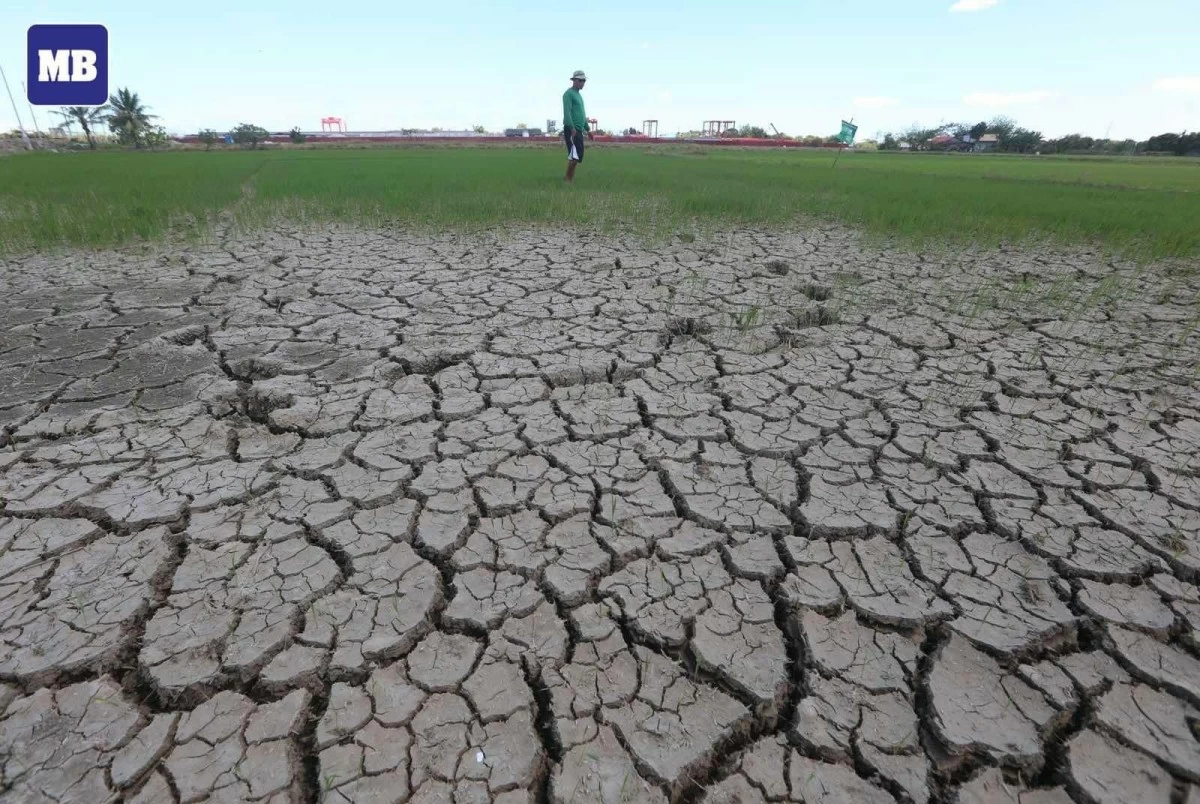
Philippines most vulnerable to El Niño trade, inflation shocks—Capital Economics


Published Nov 6, 2026 03:45 pm
The Philippines faces the greatest combined risks from El Niño-related trade disruptions, currency pressures, as well as inflation among major emerging markets (EMs), with the weather phenomenon potentially weakening the peso and triggering further interest rate hikes, according to think tank Capital Economics.
In a report last Thursday, Nov. 5, Capital Economics chief EMs economist William Jackson said that the Philippines stands out as particularly vulnerable because of its already-large current account deficit and elevated inflation.
Capital Economics warned that the current El Niño could become a very strong event, peaking toward the end of 2026 and persisting into the second quarter of 2027.
The think tank’s analysis of the 2015-2016 and 2023-2024 El Niño episodes showed that the Philippines experienced weaker agricultural production as well as deteriorating trade balances, with the weather phenomenon also posing risks to food prices.
Based on the two previous episodes, agricultural trade balances in the Philippines and several other Asian economies typically deteriorated by 0.5 to one percent of gross domestic product (GDP) compared with pre-El Niño levels.
In the Philippines, the deterioration was driven by higher agricultural imports, which could put additional pressure on the peso given the country’s already-wide current account deficit.
Capital Economics nonetheless noted that previous El Niño episodes did not establish a consistent relationship between agricultural trade balances and exchange rate movements, partly because other factors influence currencies.
Beyond the external sector, the think tank identified the Philippines, alongside Colombia and Pakistan, as particularly vulnerable to an El Niño-related food inflation shock, as inflation in these economies is already well above their respective central banks’ targets.
Its analysis showed that Philippine food inflation increased significantly relative to the EM median during the 2023-2024 El Niño episode, although a similar pattern was not observed in 2015-2016.
Capital Economics warned that the inflationary environment is more challenging this time because of higher agricultural input costs, including fertilizers and diesel, associated with the war in Iran, alongside disruptions to Black Sea shipping.
According to the think tank, an additional food inflation shock could prompt further monetary tightening by the Bangko Sentral ng Pilipinas (BSP).
Although its current forecasts do not anticipate additional interest rate hikes by the BSP, Capital Economics said further increases would become possible if El Niño pushes inflation higher.
Also, the think tank noted that agricultural growth weakened during both the 2015-2016 and 2023-2024 El Niño episodes in the Philippines as well as several other EMs.
Across most EMs studied, agricultural gross value added (GVA) growth slowed by an average of 0.3 to 2.5 percentage points (ppts) during the previous episodes compared with pre-El Niño conditions.
Capital Economics estimated that weaker agricultural production generally reduced overall GDP growth by only 0.05 to 0.3 ppt, although the impact varied depending on the importance of agriculture to each economy.
The think tank also highlighted the Philippines’ dependence on imported rice, making the country vulnerable to disruptions in agricultural production and international food markets.
The report cited the Philippines’ reduction of rice import tariffs in 2024 as an example of a government policy response intended to contain food inflation.
Capital Economics said tariff reductions could help lower domestic prices but could also widen trade and government budget deficits, hurt domestic farmers, as well as increase global demand for imported agricultural products.
Other policy responses, including food stock releases, subsidies, and price controls, could limit the immediate impact on consumers but shift the financial burden to governments, producers, or distributors, it cautioned.
The think tank said the overall economic consequences of El Niño would also depend on global energy market developments.
An easing of the energy crisis associated with the war in the Middle East could offset some of the effects on inflation and trade balances, while prolonged disruptions could amplify the economic impact.
Capital Economics cautioned that its findings were based on comparisons of the two previous El Niño episodes with pre-El Niño conditions and should be treated as indicative assessments of economic risks rather than precise forecasts.

What are some unwritten social rules everyone should know?


  1. Try not to fart in closed premises like meeting rooms, elevators, vehicles etc. if there are other people around.
  2. While using public transport, avoid asking those seated 'thoda adjust karo bhai' (please adjust a bit). Seats are designed for a specific number of people. Three people trying to sit on a seat designed for two, will make the journey painful for all the three.
  3. If you are sitting on an aisle seat in a flight, don't lean towards the passage to rub your shoulders against the cabin crew members.
  4. When you are in a multilingual group, use a language that everyone in the group understands.
  5. When you make a phone call to someone who does not know you, start the conversation by introducing yourself instead of Hello.. Hello...Hello....Hello.
  6. Don't be rude to telemarketing executives. Politely say 'No' if you are not interested in what they are trying to sell. You have the option of not answering such calls with the help of applications like True Caller.
  7. To Telemarketing Executives: if the customer refuses the credit card or insurance policy you are trying to sell, don't keep on asking WHY. You can still try to convince him.
  8. Leave people from the workplace on time: You may be a workaholic. You are free to be one. But, don't call for meetings at 5.00 and make people sit impatiently. Such meetings are not productive at all. Leave people free by 5. You may continue beyond with those things you can do on your own.
  9. When you opt for carpool, book it only after you are ready to leave. And, do not expect the car to pick you up from your doorstep. You may walk to the main lane/road nearby and save the time of your fellow passengers.
  10. While car-pooling, it is not necessary to occupy the backseat that is diagonally opposite the driver to establish your importance. You should be willing to move to the other side for other passengers to get in.
  11. When a colleague is leaving the organization, don't ask 'where are you joining?'
  12. Being vegetarian or non-vegetarian is purely an individual choice. Don't ask anyone why it's so.
  13. When a friend/colleague offers you some food, you can politely say No. But, don't do this after tasting or smelling it. It's an insult to the one who has offered it to you.
  14. Eating with hands is perfectly fine. Don't stare at someone for doing it as if (s)he is a barbarian.
  15. When someone starts talking about their ailments, don't start talking about yours

Friday, November 6, 2026

Jillian Ward confirms she's now in a relationship


By Carissa Alcantara

Published Nov 6, 2026 10:30 am
Kapuso actress Jillian Ward (Facebook)
Actress Jillian Ward is officially off the singles market!
In her guest appearance on "Fast Talk with Boy Abunda" recently, the 21-year-old actress opened up about her love life while keeping the identity of her partner private.
Jillian shared that her current relationship is like her newest single, "Lowkey."
“Gusto ko po, parang ma-capture ko ‘yong 20s ko sa isang song. Kasi kumbaga, ‘yon po ‘yong story ng aking love life ngayon,” she said.

Being under the spotlight at an early age, Jillian is quite mindful when it comes to keeping her personal tlife private.
"Ako po kasi, Tito Boy, super private po talaga ako pagdating sa matters of the heart, sa family ko, sa friends ko. Lowkey po talaga ako magmahal. Buong-buo po ako magmahal, pero pagdating sa public, gusto kong nilu-lowkey ko ‘yung personal life,” Jillian explained.
Jillian shared that her relationship has inspired her to find balance in life beyond work, making more time for family, friends, and enjoying her 20s.
“Mas inspired po ako ngayon. Yung life po pala hindi lang po puro work. Kumbaga, sa 20s ko, mabalanse yung sa family life ko,” she said.
She also described her partner as caring and expressive in showing appreciation for her and the people around him.
“Super caring and hindi siya takot i-express yung appreciation niya sa akin whether sa friends niya 'yun or sa family niya. Sa iba’t ibang tao na nakakasalamuha niya,” she said.
Jillian also revealed during the interview that she had already experienced her first kiss.

Peso bounces back to ₱62 vs US dollar, but economists warn it may not last


Published Nov 5, 2026 06:30 pm

At A Glance

  • Improved market sentiment anchored on the United States (US) midterm election results strengthened the peso, bringing it back to the ₱62.00 levels just six trading days after sliding to a record low of ₱64.17 on Oct. 27.
Improved market sentiment anchored on the United States (US) midterm election results strengthened the peso, bringing it back to the ₱62.00 levels just six trading days after sliding to a record low of ₱64.17 on Oct. 27.
On Thursday, Nov. 5, the peso continued to gain footing against the US dollar, closing at ₱62.97 from ₱63.535 last Wednesday, Nov. 4.
Data from the Bankers Association of the Philippines (BAP) showed that this was the first time the peso returned to the ₱62 levels since its recent record lows above ₱64.00. It was also the peso's strongest closing level in more than two weeks, since Oct. 14, when it closed at ₱62.87.
According to the BAP, the local currency hit an intraday high of ₱62.90 and a low of ₱63.35 after opening at ₱63.333. Total trading volume surged to $2.005 billion from Wednesday’s $1.324 billion.
Local economists attributed the peso’s recovery to the outcome of the US midterm elections, which weakened the greenback and reduced the likelihood of further attacks on Iran.
“I’d credit a good part of the rebound to the US midterms,” Alyssa Nuñez, a former economist at the University of Asia and the Pacific (UA&P) who currently works for a private commercial bank, said.
“With Democrats now in control of Congress, it will be harder for the US government to spend more, so the dollar lost some of its strength,” said Nuñez.
Aside from the spending constraints, Nuñez also pointed to market expectations that Iran would not face further US strikes. “Markets also see less chance of new US attacks on Iran, which helped bring oil prices down,” she said.
Since the Philippines is a net-importing economy, lower oil prices mean the country would need fewer dollars to purchase its oil requirements, consequently benefiting the local currency.
Brent crude, the international benchmark for oil prices, traded below $100 for the first time in quite a while. Brent crude prices hovered at $95 per barrel on Thursday after plunging nearly nine percent a day earlier to a two-month low.
Crude prices plunged as a Democratic-controlled US Congress could pressure Trump to put an end to America’s prolonged war with Iran. Trump, however, has yet to announce immediate plans to ramp up strikes against Iran.
China Banking Corp. (Chinabank), SM Investment Corp. (SMIC), and Union Bank of the Philippines (UnionBank) cited similar factors behind the peso’s rebound.
Chinabank chief economist Domini Velasquez said the US Federal Reserve’s decision to keep interest rates unchanged, improving peace efforts in the Middle East, and “Democratic gains in the US midterm elections have all contributed to a more favorable external environment.”
According to Velasquez, the greenback weakened following the Democratic sweep of both chambers of Congress. This came as “markets anticipate greater political gridlock that could constrain the Trump administration’s spending and policy agenda.”
“This has reinforced expectations of moderating US fiscal pressures and contributed to the dollar’s recent weakness,” said Velasquez.
SMIC group economist Robert Dan Roces said the local currency’s rebound was driven by improved market sentiment. “Lower oil prices and profit-taking on dollar positions may have also helped,” he said.
UnionBank chief economist Ruben Carlo O. Asuncion said the Democratic sweep had pushed both oil prices and US Treasury yields lower. Combined with a weakening dollar, these developments benefit the Philippines as a net energy importer.
Other support also came from President Ferdinand Marcos Jr.’s reassurance that the government has tools to arrest the peso’s depreciation, according to Nuñez. However, she believes the US dollar-peso pair may not sustain its downward trend.
“I would not count on peso to keep climbing,” Nuñez said, as the risk of renewed tensions between the US and Iran remains, with Congress unable to fully prevent US President Donald Trump from ordering further military strikes.
She added that the new Congress is set to assume office only in January 2027, keeping the door open for another flare-up, which could push oil prices higher and consequently erode the peso’s recent gains.
Roces echoed a similar view: “For now, this looks more like a relief rally than a sustained reversal, but it gives the peso some breathing room.”
Asuncion also noted the rapid appreciation of the local currency, warning that the quick rebound could pause or even reverse. “The move has been quite rapid, however, so some near-term consolidation would not be surprising,” he said.
Looking ahead, Nuñez said the US dollar could gain support from an expected increase in US interest rates in December.
Dutch financial giant ING wrote in a Nov. 5 report that the US dollar experienced an immediate post-midterm decline, which the lender had expected. However, ING said the initial decline was not expected to escalate into a free fall for the greenback unless interest rate differentials moved against the US dollar.
ING explained that a massive decline in the US dollar would require either a shift in central bank dynamics or significant underperformance in US assets.

Very Strong El Niño, Present in the Tropical Pacific

A Very Strong El Niño is currently present in the tropical Pacific and is expected to persist until the first half of 2027, potentially reaching its peak by the end of 2026.
El Niño increases the likelihood of rainfall deficits, which may result in dry spells and drought in several areas of the country. However, above-normal rainfall conditions may still occur due to the passage of tropical cyclones and other rain-bearing weather systems.
Based on the latest drought assessment, five (5) provinces experienced meteorological drought, eleven (11) provinces were under dry spell, and ten (10) provinces experienced dry conditions in October 2026.
Shared post
11.3K
434
3.7K