
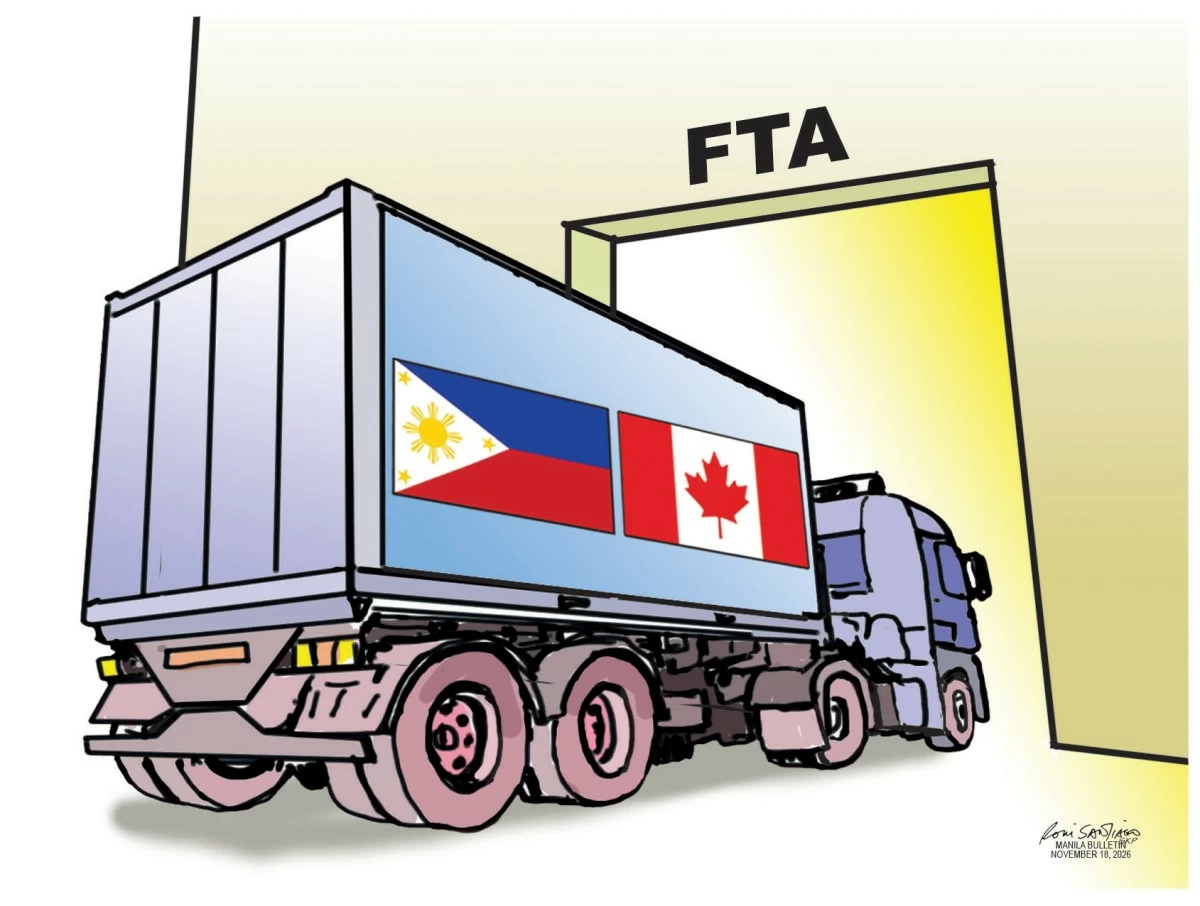
The Philippines-Canada Free Trade Agreement (FTA), with negotiations now concluded and the signing targeted for 2027, is a powerful statement about the possibilities of economic partnership across unequal economies—and an opportunity for the Philippines to demonstrate that its businesses, entrepreneurs, and workers deserve a bigger place in global commerce.
Announced by President Ferdinand Marcos Jr. and Canadian Prime Minister Mark Carney following their Nov. 14, 2026 meeting on the sidelines of the 49th ASEAN Summit, the proposed agreement could open an important new chapter in Philippine economic development. Covering goods, services, investment, digital trade, and small and medium-sized enterprises (SMEs), it promises to connect Filipino producers and service providers to a wealthy, sophisticated market with considerable purchasing power.
For the Philippine economy, the potential benefits extend well beyond increased exports. Better access to Canadian markets could encourage local manufacturers, agricultural producers, technology companies, and service providers to improve competitiveness, expand operations, and attract investment. Filipino entrepreneurs who have traditionally struggled to penetrate overseas markets could find new customers, while digital professionals and online service providers could gain opportunities in an economy where demand for specialized skills and services is substantial.
The greatest opportunity, however, may lie in empowering small businesses. Large corporations generally have the resources, networks, and financial capacity to pursue international markets. Small enterprises rarely enjoy the same advantages. An effectively implemented FTA could help narrow that divide by giving smaller Filipino businesses a more predictable framework for competing internationally. That is where trade policy can become a genuine instrument of inclusive economic growth.
Canada’s willingness to negotiate a comprehensive free trade agreement with a developing economy such as the Philippines also delivers a strong message to all economies, big or small. Economic strength should not be measured solely by a country’s wealth, industrial sophistication, or global influence, but also by its willingness to build mutually beneficial relationships with less-developed partners.
For the world's leading economies, this partnership demonstrates that meaningful trade need not be confined to countries of comparable economic standing. It challenges the notion that smaller economies should remain peripheral participants in global commerce. Instead, it affirms that developing countries can be legitimate trading partners, investment destinations, and contributors to international economic growth.
This is particularly significant for the Philippines, which needs commercial opportunities that translate into jobs, technology transfer, higher productivity, and improved household incomes. Canada’s engagement offers a pathway toward these objectives, provided the Philippines can compete effectively and negotiate implementation that protects legitimate domestic interests.
The proposed Luzon Economic Corridor further strengthens this prospect. Canadian participation in transportation, infrastructure, agri-food, logistics, and cold-chain development could help address longstanding constraints on Philippine productivity. Such investments can reduce the cost of moving goods, improve agricultural supply chains, and make locally produced commodities more competitive. The investment commitments announced during Marcos’ July visit to Canada, including Canada's initial CA$2-million commitment to the corridor, provide a foundation for deeper cooperation.
Nevertheless, optimism must be matched by preparation. An FTA does not automatically produce prosperity. Filipino enterprises need financing, modern infrastructure, reliable energy, skilled workers, and regulatory support to capitalize on market access. The government must also ensure that local industries, farmers, and vulnerable sectors can adjust to greater competition.
Ultimately, the Philippines-Canada FTA is an opportunity whose significance reaches beyond bilateral trade. It sends a strong message to wealthy economies that developing nations are not merely markets to sell into; they are partners capable of creating shared prosperity.
The challenge now is to turn concluded negotiations into a meaningful agreement—and an agreement into measurable improvements in Filipino lives. If successfully implemented, this partnership could prove that a country’s economic stature need not determine the size of its ambitions or the reach of its opportunities.
With red tape and corruption limited to its bare minimum, the Philippines can attract more trade

No comments:
Post a Comment