- Life is not a straight line. The sooner you realize this, the happier you become.
- Nothing is permanent. Money isn't permanent. Your dog isn't permanent, and you're certainly not permanent. Even truth evolves.
- You were designed to adapt to change so as to allow evolution to occur with little or no resistance.
- Adapt to nature, and live longer.
- Argument yields no fruit even if you win.
- Even the perfect answer doesn't solve the world's problems.
- Death is certain, regardless of how we feel about it or how we try to resist it.
- No one is perfect, therefore everything created by human is not perfect.
- There are certain things we can't explain, and there are certain things that need no explanation.
- Life is constantly fighting you because you're subconsciously fighting life and have never found the perfect harmony with the universe.
- You cannot maintain perfection using only a single digit, just as you cannot maintain equilibrium using only one eye, or one arm, or one leg.
- Each time you try to convince yourself that God doesn't exist, you are fighting a losing battle against your subconscious and denying yourself perfect peace.
Visitors of germanexpatinthephilippines/Besucher dieser Webseite.Ich liebe meine Flaggensammlung!

Saturday, October 24, 2026
What is the greatest truth in life?

NOBODY IS PERFECT?
NOBODY IS PERFECT?

“Nobody is perfect” is a common idiom meaning that all human beings make mistakes, have flaws, and are vulnerable to error
This famous line is spoken by Osgood Fielding III, played by Joe E. Brown in Some Like It Hot (directed by Billy Wilder, 1959).
Is it true that nobody is perfect? It’s true! No one is perfect, and everyone makes mistakes. It’s part of being human. If someone you know makes a mistake, try to be understanding and forgiving instead of immediately jumping to criticizing them.
Many of us believe perfectionism is a positive. You may count me in.
More often than I’d like to admit, something seemingly inconsequential will cause the same feeling to rear its head again. Something as small as accidentally squashing the makeup I was bringing my first girlfriend’s family for Christmas can tumble around in my mind for several days, accompanied by occasional voices like “How stupid!” and “You should have known better”.
Falling short of a bigger goal, even when I know achieving it would be near-impossible, can temporarily flatten me. When a former agent told me that she knew I was going to write a book someday but that the particular idea I’d pitched her didn’t suit the market, I felt deflated in a gut-punching way that went beyond disappointment. The negative drowned out the positive. “You’re never going to write a book,” my internal voice said. “You’re not good enough.” That voice didn’t care that this directly contradicted what the agent actually said. And, up to now, I haven’t finished my first book, yet… .
That’s the thing about perfectionism. It takes no prisoners.
If I’ve struggled with perfectionism, I’m far from alone. The tendency starts young – and it’s becoming more common. Thomas Curran and Andrew Hill’s recent meta-analysis of rates of perfectionism from 1989 to 2016, the first study to compare perfectionism across generations, found significant increases among more recent undergraduates in the US, UK and Canada. In other words, the average college student last year was much more likely to have perfectionistic tendencies than a student in the 1990’s or early 2000’s.
It’s heading toward an epidemic and public health issue. It’s a great quotation from Katie Rasmussen.
“As many as two in five kids and adolescents are perfectionists,” says Katie, who researches child development and perfectionism at West Virginia University. “We’re starting to talk about how it’s heading toward an epidemic and public health issue.”
The rise in perfectionism doesn’t mean each generation is becoming more accomplished. It means we’re getting sicker, sadder and even undermining our own potential.
Here is another great example: a perfectionist, French Claude Monet often destroyed his paintings in a temper while saying, ‘My life has been nothing but a failure’.
Perfectionism, after all, is an ultimately self-defeating way to move through the world. It is built on an excruciating irony: making, and admitting, mistakes is a necessary part of growing and learning and being human. It also makes you better at your career and relationships and life in general. By avoiding mistakes at any cost, a perfectionist can make it harder to reach their own lofty goals.
But the drawback of perfectionism isn’t just that it holds you back from being your most successful, productive self. Perfectionistic tendencies have been linked to a laundry list of clinical issues: depression and anxiety (even in children), self-harm, social anxiety disorder and agoraphobia, obsessive-compulsive disorder, binge eating, anorexia, bulimia, and other eating disorders, post-traumatic stress disorder, chronic fatigue syndrome, insomnia, hoarding, dyspepsia, chronic headaches, and, most damning of all, even early mortality and suicide.
“It’s something that cuts across everything, in terms of psychological problems,” says Sarah Egan, a senior research fellow at the Curtin University in Perth who specialises in perfectionism, eating disorders and anxiety.
Culturally, I learned, we often see perfectionism as a positive. Even saying you have perfectionistically tendencies can come off as a coy compliment to yourself; it’s practically a stock answer to the “What’s your worst trait?” question in job interviews. (Past employers, now you know! I wasn’t just being cute).
It is difficult to tell who is motivated and conscientious and who is a perfectionist. .
That inner voice criticises different things for different people – work, relationships, tidiness, fitness. My own tendencies may differ greatly from somebody else’s. It can take someone who knows me well to pick up on them. (When I messaged one of my friends I was writing this story, he immediately sent back a long line of laughing emojis).
Perfectionists can make smooth sailing into a storm, a brief ill wind into a category-five hurricane. At the very least, they perceive it that way. And, because the ironies never end, the behaviors perfectionists adapt ultimately, actually, do make them more likely to fail.
Thinking of perfectionism, makes me think of my own childhood peppered with avoiding (or starting and quitting) almost every sport there was. If I wasn’t adept at something almost from the get-go, I didn’t want to continue – especially if there was an audience watching. In fact, multiple studies have found a correlation between perfectionism and performance anxiety even in children as young as 10.
Mental health problems aren’t just caused by perfectionism; some of these problems can lead to perfectionism, too. One recent study, for example, found that over a one-year period, college students who had social anxiety were more likely to become perfectionists – but not vice versa.
When it comes to the most dramatic example, suicide, numerous studies also have found that perfectionism is a lethal contributor all on its own. One found that perfectionism made depressed patients more likely to think about suicide even above and beyond feelings of hopelessness. A recent meta-analysis, the most complete on the suicide-perfectionism link to date, found that nearly every perfectionistic tendency – including being concerned over mistakes, feeling like you are never good enough, having critical parents, or simply having high personal standards – was correlated with thinking about suicide more frequently. (The two exceptions: being organised or demanding of others).
Some of those criteria, particularly pressure from parents and perfectionistic concerns, also were correlated with more suicide attempts.
In many ways, poorer health outcomes for perfectionists aren’t that surprising. “Perfectionists are pretty much awash with stress. Even when it’s not stressful, they’ll typically find a way to make it stressful,” says Gordon Flett, who has studied perfectionism for more than 30 years and whose assessment scale developed with Paul Hewitt is considered a gold standard. Plus, he says, if your perfectionism finds an outlet in, say, workaholism, it’s unlikely you’ll take many breaks to relax – which we now know both our bodies and brains require for healthy functioning.
After all, many of us live in societies where the first question when you meet someone is what you do for a living. Where we are so literally valued for the quality and extent of our accomplishments that those achievements often correlate, directly, to our ability to pay rent or put food on the table. Where complete strangers weigh these on-paper values to determine everything from whether we can rent that flat or buy that car or receive that loan. Where we then signal our access to those resources with our appearance – these shoes, that physique – and other people weigh that, in turn, to see if we’re the right person for a job interview or dinner invitation.
Fear of failure is getting magnified in other ways, too. Take social media: make a mistake today and your fear that it might be broadcast, even globally, is hardly irrational. At the same time, all of those glossy feeds reinforce unrealistic standards.
In my opinion, and I am not alone with it, it’s the idea that you don’t have to be perfect to be lovable or to be loved. It’s a work in progress. And, what I’ve noticed too, is that, each time I’m able to replace criticizing and perfecting with compassion, I feel not only less stressed, but freer. Apparently, that’s not unusual.
How do you accept that nobody is perfect? If I could give you five tips to help you accept who you are, they would be this:
See your perceived flaws in a whole new light. Nothing is ever completely good or completely bad. …
Practice gratitude daily. …
Recognize that you are not your thoughts. …
Be vulnerable with others. …
Look after yourself.
Friday, October 23, 2026
Raye wins Mercury Prize for second album
Joe Jackson - Agence France-Presse
October 23, 2026 | 9:55am
Raye wins Mercury Prize for second album
Raye attends the MTV Video Music Awards at the Peacock Theater in Los Angeles, California on September 27, 2026.

How do you stop negative self-talk?

Anshu Bharti
The Author of Towards A Better Life.Oct 16
“I am destined to have all the troubles in my life,” I repeatedly told myself from 2016 to 2020. During this time, I went through a divorce, unemployment, sickness, and depression.
Whomever I talked to, I told them that I was worthless and had lost all interest in life. Things were worsening in every sphere of my life, and I was clueless about what to do.
I couldn't understand that my negative thoughts and self-talk were contributing to my misery.
“Oh, you look so beautiful!” someone said.
I immediately looked into the mirror and said to myself, “I am so thin.”
“You have a talent,” someone complimented me.
But I thought that writing about life experiences wasn't a talent because anyone could do it. After all, I wasn't writing a thesis in physics!
This was how I used to talk to myself. Gradually, however, I discovered that negative self-talk could ruin my life and damage my self-esteem.
If I can't say negative things to others, how can I say them to myself? How can I fail to recognise my own worth? I am the one who can love and respect myself the most.
So, I changed my mindset through treatment, counselling, and positive affirmations. Today, I am shaping my life in a positive direction by practising positive self-talk.
“I deserve all the good and abundance in this universe. I am a positive magnet, attracting positivity into my life from every corner of the world,” I say to myself hundreds of times a day. And I am experiencing positive results.
“I am beautiful, both inside and out,” I say aloud with a smile on my face whenever I look in the mirror.
Words are powerful. I have learnt that they deeply affect our lives, personalities, and health. That is why I am now very careful about the words I use when talking to myself.
Thank you for reading.
Stay Calm!
Anshu
Peaceful and Happy Mental Attitude
1. Think and act cheerfully
Our life is what our thoughts make it.
2. Don't try to get even with enemies
Don't hold grudges for your enemies.
3. Don't worry about ingratitude
Gratitude is a fruit of great cultivation. You do not find it among gross people.
4. Be thankful for everything
Count your blessings not your troubles.
5. Find yourself, Be yourself
There is no one else on earth like you.
6. When life gives you lemons, Make a lemonade
Don't capitalize only on what you gained. Instead, learn to make profit from your losses.
7. Be good and kind to others
Am Wochenende werden die Uhren zurückgestellt – drei Schritte, damit Sie die Umstellung auf kürzere Tage gut meistern
Am Wochenende werden die Uhren zurückgestellt – drei Schritte, damit Sie die Umstellung auf kürzere Tage gut meistern

Wenn Sie zu den 34 % der Briten gehören, denen vor der Zeitumstellung graut, erfahren Sie hier, was Sie ab heute Abend tun können, um den Übergang zu kürzeren Tagen problemlos zu meistern.
An diesem Sonntag, dem 25. Oktober 2026, werden die Uhren zurückgestellt. Damit endet die Sommerzeit. Um zwei Uhr nachts werden die Uhren um eine Stunde auf ein Uhr zurückgestellt, sodass wir eine zusätzliche Stunde im Bett verbringen können. Content-Partnerschaft
Dieser Artikel von Ruth Jones entstand in Kooperation mit Tom's Guide.
Studien legen jedoch nahe, dass 34 % von uns der Zeitumstellung mit Unbehagen entgegensehen, während 45 % Schwierigkeiten haben, sich an den plötzlichen Wechsel von der britischen Sommerzeit zur Greenwich Mean Time zu gewöhnen. Schlafstörungen, Leistungstiefs am Tag und Müdigkeit gehören zu den häufigen Auswirkungen der Zeitumstellung auf den Schlaf – doch das muss nicht sein. Um herauszufinden, wie wir die Zeitumstellung problemlos meistern können, haben wir mit Dr. Zoe Williams gesprochen, NHS-Hausärztin und hauseigene Schlafexpertin von Dreams. Erfahrungsgemäß sind die Tage nach der Zeitumstellung eine Phase erhöhter Müdigkeit, die sogar zu einem Anstieg der Zahl der Autounfälle führen kann. Einige Maßnahmen können Ihnen jedoch helfen, sich auf die neue Zeit vorzubereiten und sich daran zu gewöhnen.
So bereiten Sie sich auf die Zeitumstellung vor: 1. Gehen Sie etwas früher ins Bett
„Sie müssen Ihren Tagesablauf zur Vorbereitung nicht komplett umstellen“, sagt Dr. Williams. „Wenn Sie aber wissen, dass sich Veränderungen Ihres Schlafs häufig auf Ihr Befinden auswirken, versuchen Sie, Ihre Schlafenszeit und Ihre Aufstehzeit an einigen Tagen vor der Umstellung jeden Tag schrittweise um 15 Minuten nach hinten zu verschieben.“ Diese kleinen Veränderungen sind für Ihren Körper leichter zu verkraften als der abrupte Wechsel bei der Zeitumstellung. Im Frühjahr gehen Sie in die entgegengesetzte Richtung vor: Beginnen Sie damit, früher aufzustehen und früher ins Bett zu gehen.
2. Öffnen Sie morgens als Erstes die Vorhänge
Die Zeitumstellung beschert uns hellere Morgenstunden – nutzen Sie das aus. „Natürliches Sonnenlicht am Morgen kann helfen, Ihre innere Uhr neu einzustellen“, rät Dr. Tim Mercer, NHS-Hausarzt, Praxispartner und Hausarztausbilder bei Opera Beds. „Licht ist eines der stärksten Signale zur Regulierung des zirkadianen Rhythmus. Wenn Sie sich in den frühen Tageslichtstunden draußen aufhalten, kann das Ihrem Körper helfen, sich schneller anzupassen.“
Und wenn Sie sich am frühen Abend schläfrig fühlen, empfiehlt er, das Licht einzuschalten. Dadurch signalisieren Sie Ihrer inneren Uhr, dass noch Tag ist und Sie sich deshalb noch nicht auf das Schlafengehen vorbereiten müssen.
3. Behalten Sie Ihre gewohnte Abendroutine bei
„Es ist die plötzliche Veränderung des Tagesablaufs, die stärker auffallen kann als die Stunde selbst“, merkt Dr. Williams an. „Unsere inneren Uhren funktionieren am besten mit gleichbleibenden Abläufen. Deshalb kann selbst eine relativ kleine Verschiebung vorübergehend beeinflussen, wann wir uns schläfrig und wann wir uns wach fühlen.“ Um dem entgegenzuwirken, rät sie, die vertraute Routine vor dem Schlafengehen beizubehalten.

„Versuchen Sie, ungefähr zu Ihren gewohnten Zeiten zu essen, sich zu bewegen und zur Ruhe zu kommen, und nutzen Sie tagsüber das natürliche Licht so gut wie möglich“, sagt sie. „Vernachlässigen Sie auch Ihre Schlafumgebung nicht. Ein dunkles, kühles und behagliches Schlafzimmer kann dazu beitragen, die richtigen Bedingungen für einen erholsamen Schlaf zu schaffen.“
Super Typhoon Rosal to make closest approach to Batanes within 24 hours
Super Typhoon Rosal to make closest approach to Batanes within 24 hours | ||
| ||
Super Typhoon Rosal (international name: Champi) is expected to make its closest approach to Batanes within 24 hours, bringing potentially heavy rains that could trigger flooding and landslides in extreme Northern Luzon, the Philippine Atmospheric, Geophysical and Astronomical Services Administration (PAGASA) said on Thursday, Oct. 22. Read more |

You don't need milk for stronger bones
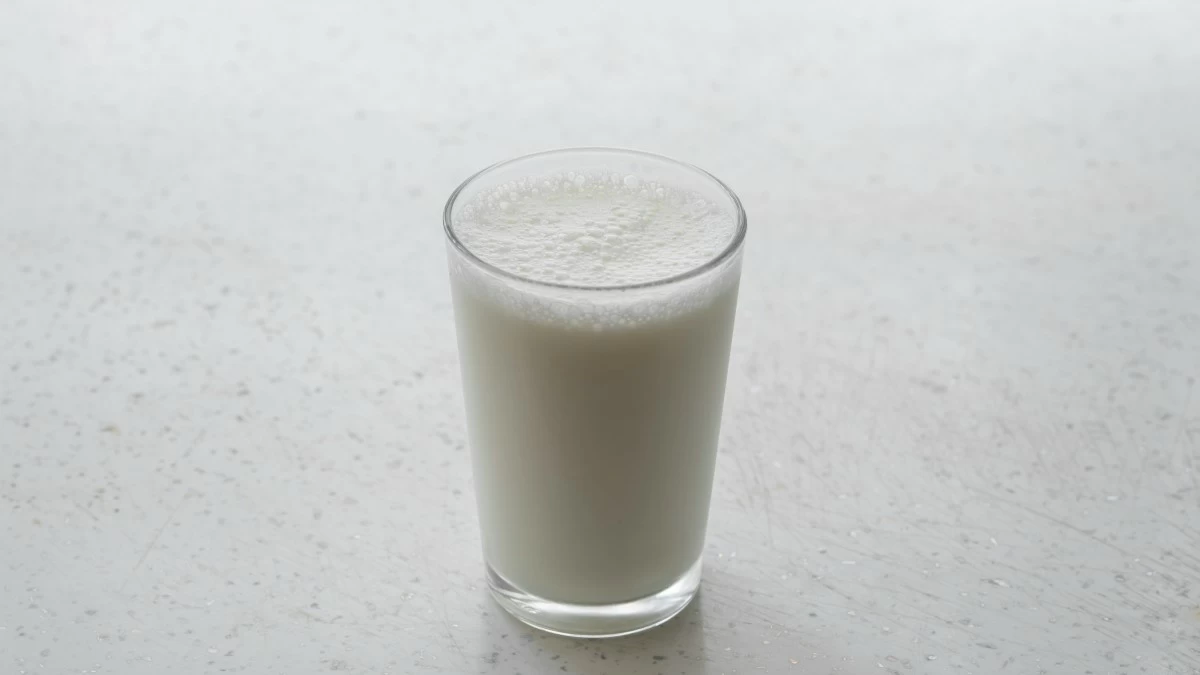
(Photo: Engin Akyurt/Unsplash)
What is the first thing that comes to your mind when you think of how to obtain stronger bones? Drink milk or consume dairy products, right? It has been ingrained in our minds that dairy, particularly cow’s milk, is the only rich source of calcium. Therefore, drinking milk every day from childhood until late adulthood is considered essential. This is a misconception—a big lie that has been told to shape our minds into making dairy products a staple in our daily diet, turning a blind eye to the health consequences brought about by excessive dairy consumption.
Walter Willett, a professor of epidemiology and nutrition at the Harvard T.H. Chan School of Public Health, explained that, based on previous clinical trials, adults and children with insufficient calcium intake were able to increase their bone density through the consumption of dairy products and supplements. However, the increase did not decrease the risk of bone fractures. This simply means that while dairy products and calcium supplements can increase calcium levels, they do not protect anyone from the risk of fractures.
According to Walter, “The idea that we need a lot of calcium is based primarily on very short-term studies looking at calcium balance over a few weeks.”
You do not need milk for stronger bones. In fact, high milk consumption has been shown by researchers to be associated with mortality and fractures among men and women. Swedish physician and medical researcher Karl Michaelsson and colleagues conducted two large cohort studies in three counties in central Sweden. One study had 61,433 female participants, and the other had 45,339 male participants. A mean follow-up was conducted 20.1 years after the study began. Their study concluded that “a higher consumption of milk in women and men is not accompanied by a lower risk of fracture and instead may be associated with a higher rate of death.”
Furthermore, their study, “Milk Intake and Risk of Mortality and Fractures in Women and Men: Cohort Studies,” published on Oct. 28, 2014, revealed that higher milk intake in men and women was associated with other conditions that are detrimental to health. Higher levels of oxidative stress and inflammatory biomarkers were observed with high milk consumption. However, this pattern was not observed with the intake of fermented milk products. Examples include yogurt, cheese, and kefir.
High oxidative stress and chronic inflammation in the body are associated with the risk of developing metabolic disorders, heart disease, cancer, autoimmune diseases, and more.
While we cannot totally avoid milk and other dairy products, especially when eating out or traveling, it is best to avoid them at home and consume very little when dining out. The less you consume, the better your chances of protecting your health.
How can you increase your bone strength without the detrimental effects of animal milk? The answer is to eat plant-based sources of calcium. Think about it. The cows and other animals that provide us with milk only eat plants. They don’t drink milk, nor do they eat animal products. They consume plants. Why don’t we get calcium from the same sources?
Did you know that you only get to absorb one-third of the calcium in one cup of milk (approximately 100 mg), while you absorb half, or 50 percent, of the calcium from one cup of leafy vegetables like bok choy (approximately 80 mg)? Moreover, getting calcium from plant sources has other added benefits, including fiber, antioxidants, and phytochemicals, or plant nutrients, that are all anti-inflammatory in nature. None of these can be obtained from animal milk.
To strengthen your bones, consume calcium-rich foods from plant sources like soy and soy products such as tofu, leafy greens, dark green vegetables such as broccoli, fortified plant milks like soy milk, oat milk, and more, fortified 100 percent orange juice, nuts, and seeds.
It is also important to avoid or keep the consumption of animal meats, such as pork, beef, eggs, chicken, lamb, and more, to a minimum. The breakdown of these animal meats increases the acid load in the body, thus causing bone resorption. This is the process of drawing calcium deposits from the bones into the blood to neutralize the acidity brought about by the consumption of animal protein.
Aside from food intake, sun exposure for at least 10 to 15 minutes a day is needed for vitamin D. This sunshine vitamin enhances the absorption of calcium from the food that we eat.
Lastly, strength and conditioning, bodyweight exercises, and exercise in general can stimulate osteoblasts, or bone-forming cells, to deposit calcium and build denser, stronger bones. Thus, these activities can decrease the risk of injuries and fractures.
Your first step toward stronger bones shouldn’t be drinking milk or taking calcium supplements. Increase your intake of calcium-rich plant sources, get sun exposure, and schedule exercise at least twice a week for strength training.
cheshireque@gmail.com
Foxies turn back Flying Titans in five
At A Glance
- Mylene Paat-Rezanova and Trisha Tubu anchored the Foxies particularly in the crunch, where they scored crucial hits en route to their second win in three games.

Mylene Paat-Rezanova. (PVL Images)
Farm Fresh dug deep from 0-2 set deficit and outhustled Choco Mucho, 20-25, 26-28, 25-23, 25-23, 15-13, in the PVL All-Filipino Conference Siklab Series at the Mall of Asia Arena on Thursday, Oct. 22.
Mylene Paat-Rezanova and Trisha Tubu anchored the Foxies particularly in the crunch, where they scored crucial hits en route to their second win in three games.
Farm Fresh also handed Choco Mucho its first loss after back-to-back wins.
Rezanova sizzled with 15 points highlighted by four blocks, while Tubu fired 14 points including 13 attacks -- none more important than the running spike that sealed the victory.
After dropping the first two sets, the Farm Fresh Foxies refused to fold, regaining their rhythm to force a deciding fifth set.
The Foxies seized early control of the decider, racing to a 6-3 lead, but Choco Mucho fought back to keep the match close.
A costly service error by Eya Laure handed Farm Fresh match point at 14-12, but the Choco Mucho star quickly redeemed herself with an off-the-block attack to keep the Flying Titans’ hopes alive.
But Tubu was there to the rescue.
Jonna Perdido also finished with 11 points for the Foxies, who overcame the Flying Titans’ rock-solid net defense of 17 blocks.
Sisi Rondina and Laure scored 22 and 18 points, respectively, in a losing cause for Choco Mucho.
Bea Millan Windorski flaunts bikini body after face card gets attention

At A Glance
Bea Millan Windorski turns heads in a red bikini as she shares new Instagram photos ahead of her Miss Universe 2026 journey in Puerto Rico.

Bea Millan Windorski is turning up the heat as she gears up for Miss Universe, trading her polished pageant headshot for a series of sizzling bikini photos.
The Miss Universe Philippines 2026 titleholder gave her Instagram followers a glimpse of her beach-ready look in a crimson-red two-piece swimsuit, which she paired with a matching sarong knotted at the hip.
The photos show Bea confidently working the camera, putting her toned physique on display as she gets ready for the international competition.
“All gas no brakes,” she wrote in the caption, adding, “See U in two weeks, Puerto Rico!”
The post adds to the buzz surrounding Bea, who first caught attention with her official Miss Universe headshot. In that portrait, she sported straight, dark hair and a strapless white top for a sleek, understated look.
Bea earned the right to represent the Philippines after winning the Miss Universe Philippines crown in May. Competing for La Union, she emerged victorious over 49 other candidates.
Now, the beauty queen is preparing to take the Philippine sash to the Miss Universe pageant in Puerto Rico this November.
Subscribe to:
Posts (Atom)