You plan to move to the Philippines? Wollen Sie auf den Philippinen leben?

There are REALLY TONS of websites telling us how, why, maybe why not and when you'll be able to move to the Philippines. I only love to tell and explain some things "between the lines". Enjoy reading, be informed, have fun and be entertained too!

Ja, es gibt tonnenweise Webseiten, die Ihnen sagen wie, warum, vielleicht warum nicht und wann Sie am besten auf die Philippinen auswandern könnten. Ich möchte Ihnen in Zukunft "zwischen den Zeilen" einige zusätzlichen Dinge berichten und erzählen. Viel Spass beim Lesen und Gute Unterhaltung!


Visitors of germanexpatinthephilippines/Besucher dieser Webseite.Ich liebe meine Flaggensammlung!

free counters

Total Pageviews

Wednesday, July 29, 2026

We need renewables, EVs and child safety online


March for the Martyrs photo

By Fr. Shay Cullen, Founder since 1974

The world is again facing a huge spike in oil prices and shortages of fertilizer and other oil-based commodities that are worsening world hunger and driving thousands more poor people to starvation in Africa as Iran continues to attack shipping in the Strait of Hormuz and block oil tankers. Twenty percent of the world’s total oil supply and 33 percent of global fertilizers essential for food production passed through the strait daily. Diesel and gasoline prices in the Philippines — and elsewhere — drastically increased this past week by over P10 and P3 per liter, respectively. This is because the United States continues to bomb nonstop Iranian infrastructure and military targets. Alleged war crimes, some say. In retaliation, Iran is attacking US bases in the Middle East.

With oil prices skyrocketing and the current energy crisis becoming more serious, Donald Trump’s administration could lose control of the Senate and House of Representatives in November’s midterm elections. He cannot find a diplomatic way out of the war with Iran, which the US and Israel launched on Feb. 28, and continues to try to bomb Tehran into submission. That is not going to succeed. The 49 years of hatred and loathing the Islamic republic has for the US will carry them to fight to the last man. There will be no surrender.

Countries are moving to expand and harness their renewable energy sources, such as wind, solar power, geothermal and biomass, to produce oil-free electricity. This is the way to secure and stable electric energy supply.

In the Philippines, solar energy has increased, propelled by high electricity rates and fuel price hikes. Roof-top solar panels have nearly doubled over the past year to 1,300 megawatts. But there is still a long way to go. According to the Department of Energy (DOE), the Philippines sources its energy from coal (40.6 percent), renewables (32.9 percent), natural gas (15.8 percent), and oil (10.8 percent). Fossil fuels still produce roughly 75 percent of the country’s electricity.

Transportation in the country is threatened by the war on Iran and high fuel prices. Electric vehicles (EVs) make up only 1 percent of cars on the road, unlike in Norway, where the figure is 90 percent. Here, EVs account for about 17 percent of new car sales. There are too few charging stations right now. Unless electric charging hubs are in every gasoline station and spread along our expressways, EVs will have few customers and generate low sales.

As an occasional driver of a new Wuling EV Starlight van used to bring children to school and elsewhere, this writer could say it is excellent in all respects, other than its weak battery and nonfunctional remote door lock. It cost P1.2 million, thanks to generous donors. However, the battery charge does not cover the 300 kilometers advertised. Road tests show that the maximum range is only 220 km for every full charge, which leaves Wuling open to complaints of false and misleading advertising, which is a violation of Republic Act (RA) 7394, or the Philippine Consumers Act.

If Wuling President and Chief Executive Officer Lloyd Lee and his wife Shamcey Supsup-Lee are the good people they are said to be, they will consider exchanging the low-performance Wuling EV sold to the Preda Foundation’s children’s home for a better Wuling van (for an addition payment of P200,000 that a donor is offering). This better model will enable us to bring children in our shelters on home visits to the provinces and to testify in court against their abusers. Our legal office is fighting for justice with good prosecutors, and together with the children, we win an average of 20 convictions every year from just and honest judges.

We pray and look forward to receiving this new Wuling EV model, which has an advertised 400-km range. More on this in future columns. EVs are so important for the environment; we need the best. Can Wuling provide it?

Terrible damage

Preda social workers and therapists see daily the terrible damage inflicted on young victims of sexual abuse by people influenced by corrupting child-abuse images on social media platforms that are supported by telecommunications companies (telcos). These firms and internet service providers (ISPs) have still not installed state-of-the-art blocking software as the law demands. The National Telecommunications Commission (NTC) is even more powerless to control the telcos and seems compromised.

Even President Ferdinand Marcos Jr., who was shocked by the horrific and notorious child abuse images on social media, is apparently powerless to make the telcos obey the law. They are a power unto themselves and seem to be above the law, making the Philippines a hub for international child abuse images to be accessed by anyone — including children — at any time, from anywhere.

We know this because sex offenders as young as 13 admitted to viewing child abuse images on the internet — which, again, were allowed to spread by the ISPs and telcos — with them saying these drove them to rape girls as young as six. Preda’s social workers and therapists are helping the victims, while the abusers are admitting how they were influenced by easily accessible sex videos proliferating on the internet.

Several countries have passed laws banning children 16 and younger from accessing social media platforms, including TikTok, Instagram, Facebook and YouTube, because of harmful content found in them, including explicit images of sexual abuse and exploitation. Among these countries are Australia, France, Malaysia, Indonesia, Turkey, the United Arab Emirates, and Brazil.

More countries are following suit, and our Congress is debating proposed laws banning minors from social media, which telcos and the American Chamber of Commerce of the Philippines oppose. Several groups are also against a total ban and advocate for targeted regulation, digital literacy, and platform accountability. However, the true answer is to strictly implement the law to control the telcos and ISPs.

The telcos are not obeying the law and are allegedly in cahoots with the NTC. That alleged blatant corruption is the root of the problem and the reason children are being sexually abused and trafficked online, and are viewing child sex abuse images and videos online.

The laws regulating the internet and mandating blocking software to stop child sexual abuse are RA 9775, or the Anti-Child Pornography Act of 2009, and RA 11930, or the Anti-Online Sexual Abuse or Exploitation of Children and Anti-Child Sexual Abuse or Exploitation Materials Act. These are being violated, and that is why new, tougher legislation is being proposed.

There is no greater need today than such a social media ban to wake up the telcos and the government to protect our children and teach them to protect themselves from such dangerous content and use the internet only for good.


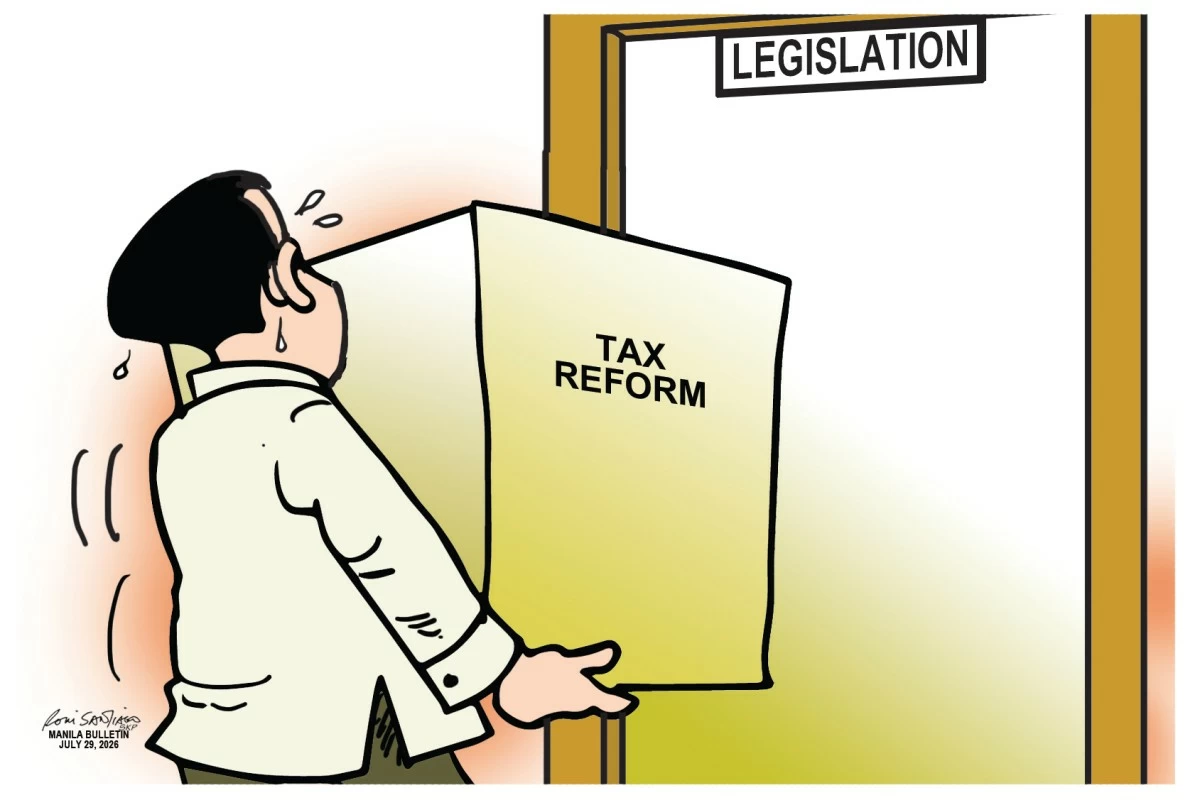
Bold tax relief unveiled, but where's the fiscal plan?


Published Jul 29, 2026 12:05 am | Updated Jul 28, 2026 04:16 pm
President Ferdinand R. Marcos Jr. deserves credit for placing tax relief at the heart of his administration's final two years. At a time when Filipino families continue to grapple with rising prices, geopolitical uncertainty triggered by the Middle East crisis, and slowing global growth, his proposal to ease the tax burden on workers and small businesses reflects both compassion and economic pragmatism.
The package is ambitious. It seeks to raise the personal income tax exemption from ₱250,000 to ₱350,000, exempt qualified small enterprises from corporate income tax, and grant a broad tax amnesty covering unpaid estate, income, donor's and value-added taxes, including associated penalties. These proposals, announced by President Marcos and subject to congressional approval, have the potential to put more money into the hands of ordinary Filipinos while giving struggling entrepreneurs much-needed breathing space.
The proposed increase in the income tax exemption alone could save a taxpayer earning exactly ₱350,000 in taxable income as much as ₱15,000 annually under the current tax schedule. That is money that could instead be spent on food, education, transportation or savings—precisely the kind of consumption that fuels domestic economic activity. Likewise, freeing qualified small businesses from corporate income tax could strengthen enterprises that generate the bulk of Philippine employment.
These are bold ideas deserving serious consideration.
Yet boldness alone does not balance fiscal health.
The missing piece in the President's announcement is an equally compelling roadmap for replacing the government's foregone revenues. Every peso of tax relief is a peso unavailable for infrastructure, healthcare, education, disaster preparedness and debt servicing unless offset by stronger collections, higher economic growth or disciplined spending.
The President has effectively entrusted Congress with designing the legislation that will make these reforms fiscally sustainable. That is both constitutionally appropriate and politically challenging. Under the National Internal Revenue Code, Congress—not Malacañang—must amend income tax brackets and enact permanent tax changes. The responsibility now shifts to lawmakers and the government’s economic managers to ensure that generosity today does not become a fiscal burden tomorrow.
Congress must therefore resist the temptation to view tax relief as an isolated political victory. It should instead package these reforms with equally robust revenue-enhancing measures. These may include intensifying the Bureau of Internal Revenue's digital transformation, expanding electronic invoicing, aggressively combating tax evasion and smuggling, rationalizing fiscal incentives, and improving collection efficiency before considering new taxes. The Department of Finance must likewise continue pursuing prudent expenditure management so that every public peso delivers measurable value.
The private sector also has a decisive role. Businesses benefiting from lower taxes should channel the savings into expansion, innovation, higher productivity and job creation rather than simply improving balance sheets. Responsible corporate citizenship means recognizing that tax relief is an investment by society, one that should yield broader economic gains.
Individual Filipinos, too, share responsibility. Paying taxes honestly, demanding accountability in government spending, supporting local enterprises and participating actively in the formal economy are indispensable contributions to fiscal stability. A stronger tax culture begins not only with fairer laws but with greater public trust that taxes are collected efficiently and spent wisely.
President Marcos has opened an important national conversation. His tax reform agenda recognizes that economic recovery must begin with people whose purchasing power has been eroded by inflation and uncertainty. That vision deserves applause. But compassion must always be paired with credible fiscal discipline.
Leadership is measured not only by the courage to give relief, but by the wisdom to sustain it. And the real measure of this reform will not be how much tax is reduced, but whether the Philippines emerges with stronger businesses, more resilient public finances and greater confidence in its institutions.

Davao City Council acts vs soaring power bills


Published Jul 29, 2026 09:48 pm
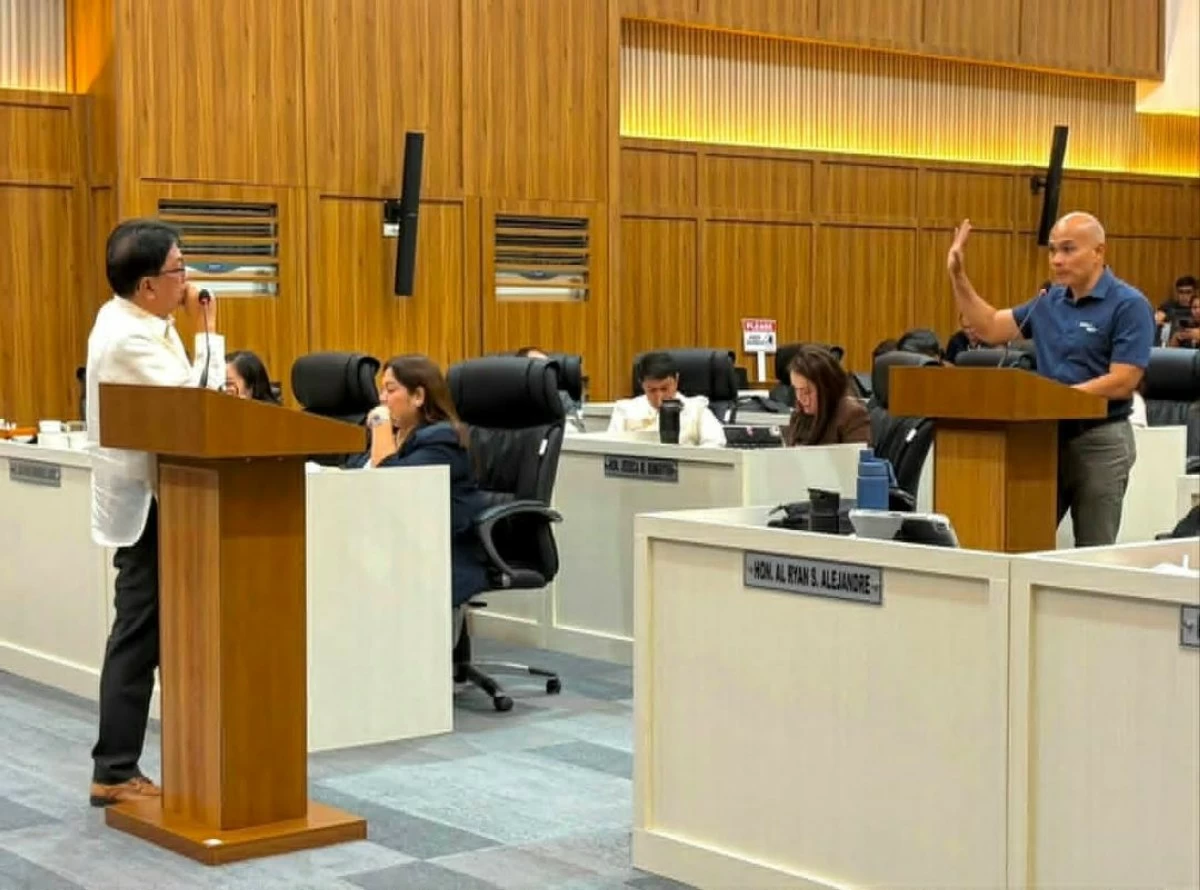
DAVAO City Council session
DAVAO CITY – Mounting public outcry over soaring electricity bills has pushed members of the Davao City Council to call for urgent regulatory interventions, rate rollbacks, and structural reforms to protect local consumers from severe price shocks.
In a privilege speech during Monday's session, Councilor Pamela Librado-Morata, chairperson of the Committee on Civil, Political, and Human Rights, and Labor and Employment, raised concerns about the city's rising power rates.
According to Morata, residential electricity rates from distribution utility Davao Light and Power Co. jumped nearly 35 percent in seven months, from P9.71 per kilowatt hour in December 2025 to P13.09 per kWh in July 2026.
"This concern comes at a time when families are already coping with rising fuel prices, increasing transportation costs, and the higher prices of basic commodities," Morata said, highlighting that the city's current daily minimum wage stands at P525.
Morata cited extreme cases reported by constituents, including one household whose monthly bill quadrupled from P3,294.42 in June to P16,982.40 in July despite no significant change in appliance usage.
She noted conflicting explanations for higher rates. DLPC blamed power plant outages and generation costs, while the Department of Energy Mindanao Field Office reported a stable power supply and enough reserves in the region.
To address the crisis, Morata urged the City Council to push for several immediate measures:
• Conducting a public hearing with DLPC, the Energy Regulatory Commission, DOE, National Grid Corp. of the Philippines, and local stakeholder groups.
• Passing a resolution urging the ERC to immediately roll back residential electricity rates pending a full regulatory review.
• Requesting DLPC to implement flexible, staggered payment schemes, strictly observe ERC disconnection moratoria, and remove standard 48-hour disconnection notices for covered accounts.
• Calling on Congress to review, repeal, and replace the Electric Power Industry Reform Act of 2001 to strengthen consumer protection and reduce pass-through costs.
Other city councilors moved to introduce structural and legislative fixes to safeguard residents from market volatility.
Councilor Ragde Niño Ibuyan, chairperson of the Committee on Government Enterprises and Privatization, announced the filing of a resolution urging DLPC and Therma South Inc. to study the feasibility of an Emergency Power Supply Agreement.
Ibuyan said the measure aims to establish backup power mechanisms to buffer Davao City against nationwide plant outages and spot market price spikes.
Councilor Danilo Dayanghirang, chairperson of the Committee on Finance, Ways and Means, proposed a four-point Middle Ground action plan:
1. A temporary rate pause: Suspending unusually high rate hikes for one billing cycle alongside a public review.
2. An independent billing review: Establishing a joint panel with representatives from DLPC, consumer groups, city officials, and the ERC to validate billing computations.
3. Flexible installment plans: Allowing penalty-free payment arrangements for severely affected consumers.
4. Maximizing localized bilateral supply: Increasing power allocations directly from sister company Therma South Inc. to minimize reliance on the volatile Wholesale Electricity Spot Market.

Denise Julia responds to criticism over Tondo-themed 'From the Block' performance


By Ian Ureta

Published Jul 28, 2026 04:32 pm


At A Glance

The 24-year-old artist performed her song "SPEECHLESS" on the U.S-based music performance series "From the Block,". Instead of unanimous praise, however, the video sparked debate online.

Filipina R&B singer Denise Julia just allowed global audiences a peek of Tondo, Manila.

Not everyone is convinced she did it the right way, though.

The 24-year-old artist recently became the first Filipina to appear on the US-based music performance series "From the Block," performing her song "SPEECHLESS" from her latest EP, "LOVE AGAIN."

Filmed in the streets of Tondo, Manila, the performance follows the series' signature format of artists performing live in neighborhoods closely tied to their roots.

Instead of unanimous praise, however, the video sparked debate online.  

Some social media users criticized its visual direction, with one fan calling it "poverty porn," while another argued that the portrayal felt inauthentic, saying, "Hindi naman ganyan itsura ng mga tao sa kalsada ng Pilipinas eh."

Denise addressed the criticism directly, explaining that the concept wasn't created simply for aesthetics; it reflects the premise of the platform itself.

"'From the Block' is an American platform built around artists showing the block they're from," she wrote. "I'm from Tondo. So I simply filmed in Tondo, brought my people out and worked with a Filipino director, crew, and designer, to show the place and culture that made me."

"At the end of the day, I will always represent where I come from because I know what it took for a girl from Tondo to accomplish the things she once thought were impossible," she added.

Launched in 2021, "From the Block" has featured performances from major artists including Cardi B, Chris Brown and Latto, and has recently expanded to include international acts. Denise is among the first non-American artists invited to participate. Now based in New York, the singer said representing her roots remains central to her career despite the backlash.   

Weather Advisory: El Niño and Tropical Cyclone Preparedness

El Niño conditions are currently present over the Pacific Ocean. During El Niño, weather patterns can change significantly, bringing hotter and drier conditions to some areas. At the same time, the western Pacific can still experience the development of tropical cyclones, including strong typhoons.
Everyone is encouraged to stay prepared and monitor official weather updates. Having emergency supplies, reviewing family emergency plans, and following the guidance of local authorities can help reduce the risks associated with severe weather.
The public is encouraged to start conserving water now. If El Niño conditions persist, rainfall across parts of Mindanao may decrease in the coming months, increasing the risk of water shortages and drought.
May be an image of one or more people and text that says 'EL ELN NIÑO SA MINDANAO'

How do contemporary German city dwellers perceive the Black Forest?


 · 
Following

Why do I love it here?

First, the climate. In winter, we have snow. The summers are warm, but never hot. Often, we are above the cloud layer, so we have sunshine while in the plains - e.g. in Freiburg - it is overcast, foggy or even rainy. Every time of the year, the air is fresh. And there is the scent of forst in the air - of fir, of resin, in winter of burnt wood.

Second, nature. The High Black Forest still has a lot of forest, also meadows, but no fields (too cold for growing crops). There is water everywhere - springs, mountain creeks, natural ponds, beaver ponds, swamps, moors, lakes. Yesterday, on our Christmas hike, we saw two deer and a beaver pond with a fine dam and a big lodge. We also see roe deer, hare, fox, marten, stoat (beautiful in winter fur), red kite, eagle, slowworm and from time to time a beaver. There are wild berries in the forests (blueberry, raspberry, blackberry, strawberry) and mushrooms. The creeks and lakes are full of fish.

Third, scenery. We have mild mountains and beautiful valleys.

Fourth, outdoor activities: hiking, hiking and hiking. Mountain biking, canoeing, sailing, swimming and other water-related activities. And skiing, downhill and cross-country. And snowshoe hiking.

Fifth, culture. We have picturesque villages with typical wooden farmhouses. We have small chapels in the forests. We have several fine monasteries. Clock museums (clockmaking was a big deal in the Black Forest). We have prehistoric sites. We have the largest Roman baths north of the Alps.

Sixth, food. There is Black Forest Ham, Black Forest Cake, trout, venison, fruit schnapps, Baden wine, one of the best German beers, brewed right in the Black Forest (Rothaus). And 400 metres from our home, we have a restaurant with two Michelin stars.

Would I live here permanently?

No, I am missing the urban vibe. So, we take the best of both worlds.

The price of diesel

 The price of diesel in some gasoline stations in the Davao region has risen by P100 per liter after another big oil price hike yesterday.

According to GMA Super Radyo Davao, the price of diesel has risen from P81 to P99.90 per liter, while the price of gasoline has risen from P75.50 to P82.20 per liter.
The local government of Tagum, Davao Del Norte, has also raised the price of diesel from P84.95 to P99.90 per liter, while the price of gasoline has risen from P75.30 to P95.61 per liter.
The Department of Energy-Oil Industry Management Bureau has already revealed that the price of petrol in the country may rise to P100, following the recent turmoil in the Middle East.
via I Jhesa Torrefranca, GMA Super Radyo Davao

May be an image of text that says 'c GMA SUPER SUPERRADYO RADYO Diesel MAX Xtra Advance DIE Presyo sa petrolyo sa Davao Region, subling mitungtung sa dul-an P100 matag litro f GMA Super Radyo Davao dxgmsrdagmail.com 297 2575 0985 041 489'

All reactions:
21

Don't be a spiritual workaholic


By Fr. Roy Cimagala

Chaplain

Center for Industrial Technology and Enterprise (CITE)

Talamban, Cebu City

Email: roycimagala@gmail.co


IF Martha were alive today, she would probably own three smartphones, answer emails during dinner, organize family reunions on spreadsheets, and remind everyone that she is "the only one doing any real work around here." Mary, meanwhile, would probably be accused of "just sitting there."


That, more or less, is the timeless lesson behind the Gospel story of Martha and Mary (Lk. 10:38-42). Martha deserves credit. She opened her home to Christ and spared no effort in making him comfortable. Hospitality is a beautiful virtue. 


The trouble began when she became so absorbed in serving that she forgot whom she was serving. Then came the complaint: "Lord, don't you care that my sister has left me to do all the work?"


Christ's answer must have sounded like cold water splashed on an overheated cook. "Martha, Martha, you are anxious and troubled about many things. Only one thing is necessary."


Ouch. Notice that Jesus did not criticize work. He criticized worry, agitation, and the illusion that busyness automatically equals holiness. Apparently, heaven does not give bonus points for looking stressed.


Many of us suffer from what might be called "holy multitasking syndrome." We rush from one obligation to another until we are too busy to remember why we are doing any of it. We can spend an entire day working for God without spending a minute with God.


That is like preparing a lavish birthday party and forgetting to greet the birthday celebrant. The secret is not to work less but to work differently. Work should become prayer.


How? Before attacking your inbox, washing the dishes, attending meetings, or fixing that mysterious office printer that always breaks at the worst possible moment, simply tell God: "Lord, this is for You."


That tiny offering changes everything. The task itself may remain ordinary, but its purpose becomes extraordinary. Typing reports, changing diapers, driving through traffic, or sweeping the floor can all become acts of love.


Of course, offering our work to God is not a magical excuse for doing it badly. Imagine telling your boss, "Yes, the report has seventeen mistakes, but I offered it to God."


Nice try. Love always seeks excellence. If we truly work for God, we avoid shortcuts, chronic procrastination, endless coffee breaks disguised as "important discussions," and the national pastime of waiting until the deadline develops fangs.


Doing little things well is itself a prayer. Another practical trick is to keep short conversations with God throughout the day. "Jesus, help me." "For You, Lord." "Give me patience." These little prayers are like spiritual Wi-Fi. They keep the connection alive even while the work continues.


And when distractions come—and they certainly will—we need not panic. Instead of becoming irritated because our mind wandered, simply smile and steer it back to God. Repeat as often as necessary. If smartphones need constant reconnecting, surely human souls do too.


Finally, don't waste the inevitable frustrations of work. Difficult colleagues, delayed flights, impossible deadlines, traffic jams, computer crashes, and projects that mysteriously disappear after three hours of work can all become offerings when accepted with faith instead of endless grumbling.


Martha and Mary are not rivals. They belong together. We need Mary's heart while having Martha's hands. The ideal Christian is not someone who chooses between prayer and work. It is someone who turns work into prayer and prayer into the strength to work.


That way, even the busiest day becomes less of a rat race and more of a pilgrimage—with fewer complaints and much better company.