You plan to move to the Philippines? Wollen Sie auf den Philippinen leben?

There are REALLY TONS of websites telling us how, why, maybe why not and when you'll be able to move to the Philippines. I only love to tell and explain some things "between the lines". Enjoy reading, be informed, have fun and be entertained too!

Ja, es gibt tonnenweise Webseiten, die Ihnen sagen wie, warum, vielleicht warum nicht und wann Sie am besten auf die Philippinen auswandern könnten. Ich möchte Ihnen in Zukunft "zwischen den Zeilen" einige zusätzlichen Dinge berichten und erzählen. Viel Spass beim Lesen und Gute Unterhaltung!


Visitors of germanexpatinthephilippines/Besucher dieser Webseite.Ich liebe meine Flaggensammlung!

free counters

Total Pageviews

Thursday, November 12, 2026

Lasting urban improvement matters more than temporary beautification


By Manila Bulletin Newsroom

Published Nov 12, 2026 12:03 am | Updated Nov 11, 2026 04:36 pm

In a few days, world leaders will descend on Metro Manila for the 49th ASEAN Summit and related meetings. For three days beginning Nov. 16, the Philippines will present its best in diplomacy, cuisine, culture, talent, and the hospitality for which Filipinos are known.
Naturally, we want to put our best foot forward. Streets must be clean, public spaces orderly, and routes safe for visiting dignitaries. This is not up for debate. But when preparing for an international gathering means concealing what we would rather not show, a question emerges: Are we cleaning up Metro Manila, or simply covering it up?
Along J.W. Diokno Boulevard in Pasay, large barriers displaying works by Filipino National Artists have been installed. Critics say the partitions hide poverty and homelessness from foreign visitors. There are also reports of street dwellers being moved away and vendors being told to stop operating around summit venues.
Malacañang insists the clearing operations are necessary security and traffic measures, not merely cosmetic improvements. Palace Press Officer Claire Castro has pointed to the responsibility of protecting nearly 20 visiting heads of state and their delegations. That responsibility is real. Hosting leaders of several nations requires precautions, and security officials cannot simply ignore potential risks.
To be fair, this administration is hardly the first to spruce up the capital before a major international event. Previous governments also cleaned roads, repainted walls, removed obstructions, and presented the city in its most flattering light. The impetus to impress visitors has long been part of hosting.
But temporary order comes at a cost when it interrupts livelihoods. Small vendors in Pasay have been required to suspend operations. The Department of Social Welfare and Development has provided food packs and financial assistance to affected vendors. That is welcome, but assistance should not become an excuse to overlook the difficulties of people who depend on daily earnings.
There is also a glaring observation circulating online: If roads can be cleaned, sidewalks cleared, and public spaces improved for foreign delegates, why can this not be done consistently for areas in Metro Manila that need it the most?
Surely, Filipino commuters deserve safe walkways even when no president or prime minister is visiting. Families deserve clean neighborhoods long after the summit banners have been taken down. Street vendors deserve organized, lawful spaces where they can earn a living without the constant risk of sudden displacement.
And those living on the streets deserve something more substantial than a temporary transfer beyond the cameras' reach. Poverty is not an unsightly object that can be hidden behind plywood, canvas, or attractive murals. It is a condition that calls for housing, employment, social services, and sustained attention.
The proper response, therefore, is not to abandon cleanliness or security. It is to make both permanent and humane. City governments must coordinate regular sanitation, waste management, sidewalk maintenance, public housing, and livelihood arrangements. National agencies must support programs that address the causes—not merely the appearance—of urban blight.
Summit guests will eventually fly home. The barricades will come down, traffic will return, and the people whose lives were disrupted will still be here.
The success of the summit should be measured not only by diplomatic agreements and impressive ceremonies, but also by what remains afterward.
May this gathering become an occasion to finally improve Metro Manila for the long term. When another international event descends on our shores, we should have no reason to mask the city's real face because we have worked to make it truly cleaner, safer, and better.


Protection of PH Eagles' nesting territories sought


PHILIPPINE Eagles in the wild. (Ron Taraya/PEF)
DAVAO CITY – Conservationists are calling for a comprehensive measure to protect nesting territories of the critically endangered Philippine Eagle following recent electrocution and shooting incidents.
They commended the efforts of the provincial government of Cotabato to strengthen measures to protect the eagles and other forms of wildlife but also acknowledged the need to balance development initiatives and environmental conservation.
Dr. Jayson Ibañez, Director of Operations of the Philippine Eagle Foundation, specifically underscored the need to protect nesting territories around Mount Apo Natural Park.
Ibañez said nesting areas that sit within the Mount Apo Key Biodiversity Area covers about 99,006 hectares that can support around 10 Philippine Eagle nesting territories.
He added that five of these are in the Cotabato side, particularly in Barangay New Israel, Makilala; Ilomavis, Kidapawan City; Manobo-Don Panaca and Imamaling in Magpet, and Ganatan-Libertad in Arakan.
A pair of Philippine Eagle requires a massive territory of 4,000 to 11,000 hectares or roughly about 40- to 110-square kilometers of forest to survive, according to PEF.
“But within that larger landscape is a much smaller core area that the eagle uses most intensively, especially around its nesting territory,” Ibañez emphasized, adding that the best current estimate for this core area is about 1,300 hectares.
“For conservation planning, this gives us a practical scale for identifying areas that need the highest level of protection around known nests and nesting territories,” he added. “These core nesting areas should be protected from activities that could disturb breeding eagles or degrade their habitat.”
Aside from the threat of hunting activities, Ibañez underscored the need for stronger guarding and threat monitoring, including the retrofitting of power lines near the core areas.
He appealed that these powerlines should be retrofitted with insulated cables to reduce the risk of electrocution to adult eagles and dispersing young.
Oct. 1, the PEF reported a weak Philippine Eagle rescued by residents after it was found perching near a river in Barangay Manobo, Magpet on Sept. 27.
X-ray examination in an animal wellness clinic revealed that the eagle had three airgun pellets in the body. Veterinarians were only able to remove only two as the third was lodged deep inside the eagle's body.
Three days later, an eagle died from electrocution in powerlines in Barangay Libertad in Arakan, according to PEF.
Veterinarian Bayani Vandenbroeck, who performed the medical examination and X-ray procedure, said that the eagle had a fresh wound on its wing, indicating that it was shot days before it was electrocuted.
Ibañez disclosed that of the documented 104 rescue and recovery of Philippine Eagle from 1970 to 2026, of the 47 birds, or about 45 percent, have been found with documented evidence of firearm-related injury or embedded projectiles.
These cases involve airgun pellets, locally made ‘’Jolen’’ or marble guns, .22-caliber firearms, and other bullet wounds, he added.
He reiterated the need to regulate if not to totally ban airguns in identified eagle territories.
Conservationist Dr. John Aries Tabora of the University of Southern Mindanao in Kabacan expressed support for the initiative of Cotabato Gov. Emmylou Taliño-Mendoza in creating an inter-agency task force to ensure the implementation of wildlife laws in the province.
Tabora, however, acknowledged that there are challenges in conservation work, citing the harmonization of economic policies and conservation programs.
In the case of the Philippine Eagles around Mount Apo Natural Park, he cited that humans coexist with these critically-endangered eagles in the same area that is considered a hunting ground of other wild animals.
“Ang tao talaga mag-adjust kasi ang wildlife like the Philippine Eagles, talagang mag-hunt ‘yan kung gutom, instinct na ng animals ‘yan maghanap talaga ng pagkain. Ang tao, dahil siya naman ang makapag-isip at makapag strategize kung paano siya makakain, siya dapat ang mag adjust,” emphasized Tabora, who also works to conserve bats and crocodiles.
(Humans need to adjust to widlife like the Philippine Eagles, which need to hunt when hungry and their instinct) 
But he admitted that there’s a need for an intensified education campaign for the protection of different forms of wildlife and their habitat.
He acknowledged the role of social media in awareness campaigns but underscored that face-to-face interaction with communities is still the most effective method.
Engr. Walter Mandolado, head of the Municipal Environment and Natural Resources Office (MENRO) in Magpet, acknowledged the gargantuan task of information dissemination and said that there’s still more work to be done.
Mandolado added that the creation of a multi-agency task force could help systematize the interventions needed for the protection of all forms of wildlife, not just around Mount Apo but as well as in other parts of the province.
He also hopes that the newly-formed body could also address the concerns of people living within the key biodiversity area.
Conservationists acknowledged the roles of local government units in strategizing economic interventions within the identified eagle territories as part of a comprehensive approach.
Through PEF’s culture-based conservation program, Ibañez said the foundation is not just mobilizing the indigenous peoples to become forest guardians but they are also provided with alternative livelihood programs.
He admitted that this is part of a long-term effort towards protecting the eagles and its habitat as the impact cannot be seen right away.
“For conservationists, this shows that protecting Philippine Eagles requires more than protecting their nests and forests. Reducing direct human threats – especially shooting – must also be part of conservation work across the wider landscapes where adult eagles hunt and where young eagles disperse,” Ibañez explained.  

Foxies outlast High Speed Hitters, boost semis bid


By Kristel Satumbaga-Villar

Published Nov 10, 2026 04:06 pm

At A Glance

  • The Foxies needed three match points to escape the High Speed Hitters, banking heavily on hard-hitting spiker Trisha Tubu to secure their second straight victory.
Trisha Tubu scores for Farm Fresh. (PVL Images)
Farm Fresh survived a tight fifth-set battle to outlast PLDT, 20-25, 25-17, 23-25, 25-20, 17-15, and strengthen its semifinal bid in the PVL All-Filipino Conference Siklab Series at the Smart Araneta Coliseum on Tuesday, Nov. 10.
The Foxies needed three match points to escape the High Speed Hitters, banking heavily on hard-hitting spiker Trisha Tubu to secure their second straight victory.
The win hiked Farm Fresh’s win-loss tally to 4-2, untangling itself from its victims and clinching solo third behind unbeaten Nxled (5-0) and Creamline (4-1).
PLDT’s three-game win streak, meanwhile, came to a halt as it slid to 3-3.
Tubu, who exploded with 30 attack points highlighted by a 56-percent attack efficiency, said the key to the hard-fought victory was to work hard for every point.
“Yung mindset ng bawat isa na talagang kahit anong mangyari, fifth set man yan or straight set, kahit ilang set man yan, kailangang pagtrabahuhan namin,” said Tubu.
“Yung sabi ni coach na huwag isipin kung mananalo o matatalo. Mag-focus sa every point,” she added.
Trailing by two sets to one, the Foxies regained their poise and took over the fourth set and rode on that momentum into the deciding fifth frame despite persistent attempts from the High Speed Hitters.
Farm Fresh was actually down by three, 10-13, but seized the next four points -- thanks to two unforced errors from PLDT and timely hits from Tubu -- to snatch the 14-13 upperhand.
The High Speed Hitters tried to recover, but Tubu was there, along with Royse Tubino, who sealed the win with a down-the-line spike.
Tubino chipped in 14 points, while Mylene Rezanova and Ces Molina added 12 and 11 points, respectively. Alohi Robins-Hardy converted 23 excellent sets.
Savi Davison and Jovielyn Prado scored 23 and 13 points, respectively, in a losing cause for PLDT, while Kianna Dy had 10 points.

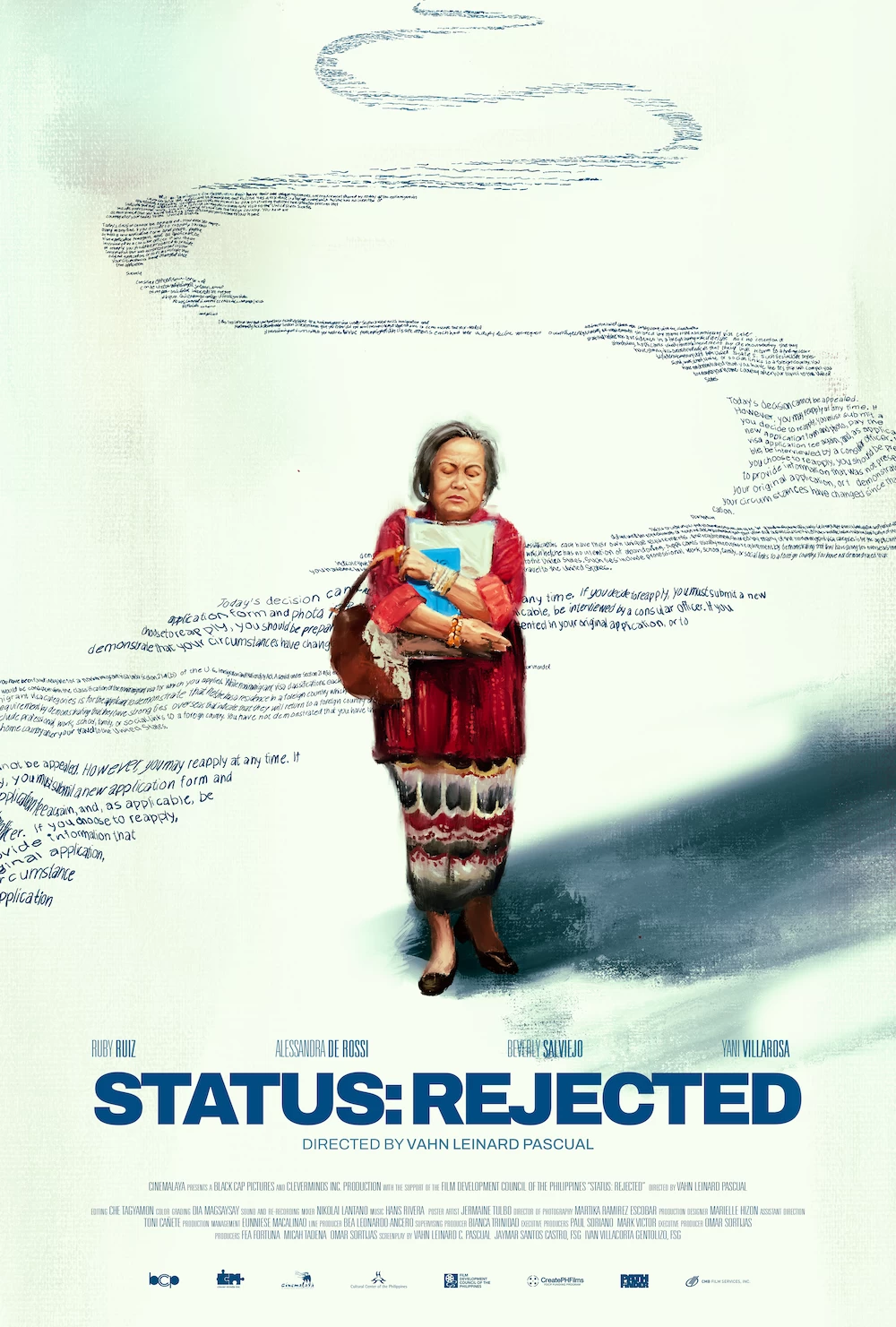
Too old, too ordinary, too easily forgotten? 'Status: Rejected' has a message for women


By Neil Ramos

Published Nov 11, 2026 06:23 pm

At A Glance

  • Alessandra de Rossi, Ruby Ruiz, and Beverly Salviejo talk about rejection, aging, romance, and self-worth in "Status: Rejected," a film about a 69-year-old woman seeking love and belonging.
Rejection comes in many forms. Sometimes it's a job or opportunity you didn't get. Sometimes it's being made to feel unattractive, being ignored, or realizing that the people closest to you no longer seem to notice you.
For many women, especially those who have reached a certain age, rejection can feel like a constant reminder that they are no longer society's idea of desirable, important, or worth paying attention to. It can make them question whether there is still room for romance, new dreams, and exciting possibilities in their lives.
The stars of “Status: Rejected” know what it feels like to be turned down, underestimated, and made to feel less than they are.
“Rejection is a regular Monday for me,” said Alessandra de Rossi, who plays Anna, a single mother in the film.
“Naku, lalo na rito sa showbiz, it’s something that you have to learn to live with,” said Ruby Ruiz, who portrays 69-year-old widow Virginia “Biring” Divinagracia.
Beverly Salviejo, who plays Biring’s friend Tessie, put it more bluntly: “Lalo na kung pangit ka! Talagang makakarinig ka!”
The three actresses have found their own ways of dealing with rejection.
Alessandra said she does not confront people who reject her. Instead, she tries to win them over.
Ruby has learned to stand her ground.
“I’ve learned to stay strong. Be confident in my own skin and my own capabilities. Yes, masakit, pero I realized na walang mangyayari sa mga pangarap ko kung magpapadala ako,” she said.
Beverly, meanwhile, used to keep quiet whenever people made her feel small. She no longer does.
“Hindi ako palasalita lalo na noong bago pa lang ako, pero ngayon, I voice out na. Nagsasabi ako kapag feeling ko minamaliit ako,” she said.

BINI Mikha apologizes for driving blunder, takes responsibility before LTO


By Neil Ramos

Published Nov 12, 2026 08:53 am


BINI's Mikha Lim has taken responsibility for her controversial cellphone use while driving, apologizing publicly after personally appearing before the Land Transportation Office (LTO) ahead of her scheduled hearing.

The singer admitted that livestreaming behind the wheel was careless and irresponsible, saying she was prepared to face the penalties for her violation.

Her appearance at the LTO office on Wednesday, November 11, came after the agency issued her a show cause order and suspended her driver's license following the incident, which drew criticism from netizens.

According to LTO Assistant Secretary Markus Lacanilao, Mikha went to the agency ahead of her scheduled November 20 appearance, a move he considered a show of good faith.

The BINI member also reportedly acknowledged her mistake during their meeting with LTO representatives.

In a public statement, Mikha expressed remorse over her actions and admitted that there was no justification for using a cellphone while driving.

"I want to sincerely apologize for my actions. There is absolutely no excuse for using my phone while behind the wheel. It was careless and irresponsible," she said.

She also confirmed that she had already reported to the LTO and was prepared to undergo the agency's due process.

"I take full accountability for what happened. I have already reported to the LTO and am going through due process to face the proper penalties for my violation," she added.

The controversy erupted after Mikha was criticized for livestreaming while driving, with netizens raising concerns about the potential danger posed by using a cellphone behind the wheel.

The LTO is expected to issue its resolution on the case within a week, according to Lacanilao.

Describing the incident as a wake-up call, Mikha said the experience had made her more conscious of the importance of discipline and road safety.

"This has been a big lesson for me to be much more mindful, disciplined, and responsible moving forward. Road safety rules exist to protect everyone, and something we need to take seriously," she said.

She ended her statement with a promise to learn from the incident and become more responsible moving forward.

"I promise to learn from this and do better," Mikha said.

No lavish Christmas parties: DBM tells government agencies to curb spending on raffles, giveaways


Published Nov 11, 2026 04:52 pm

At A Glance

  • As year-end celebrations approach, local government units (LGUs), government departments, institutions, and corporations are being reminded to limit spending on raffle prizes, grocery baskets, and other giveaways.
As year-end celebrations approach, local government units (LGUs), government departments, institutions, and corporations are being reminded to limit spending on raffle prizes, grocery baskets, and other giveaways.
Department of Budget and Management (DBM) Secretary Kim Robert C. De Leon issued Circular Letter 2026-15 dated Nov. 9, explicitly reminding all national departments, LGUs, government-owned and/or -controlled corporations (GOCCs), government financial institutions (GFIs), state universities and colleges (SUCs), and constitutional bodies to curb spending on holiday parties.
“All government agencies and LGUs are strongly reminded to exercise judicious and prudent use of government funds in the conduct of the fiscal year (FY) 2026 year-end gatherings, celebrations, and other similar activities or events,” the circular letter read.
De Leon said the restrictions cover purchases of raffle prizes, gift and grocery baskets, shirts, jackets, and other giveaways for activities involving both employees and people outside the organization, including agency clients and customers.
“Such activities should be simple and modest in scale rather than costly or elaborate festivities, and ensure inclusivity and respect for the diverse beliefs, traditions, and economic circumstances of all government employees,” the DBM said.
The DBM cited a Commission on Audit (COA) circular that seeks to prevent excessive spending on Christmas parties, anniversaries, and other special occasions.
COA also prohibits government agencies from purchasing alcoholic beverages, cigars, and cigarettes, as well as renting expensive venues such as luxury hotels and restaurants for official functions, except during state functions and government-sponsored international events.
These spending restrictions form part of broader austerity measures across the executive branch.
Under National Budget Circular No. 602, government agencies must cut at least 20 percent of their non-essential or non-priority operating expenses under the ₱6.793-trillion 2026 national budget, including spending on travel, training, meetings, office supplies, and utilities.
Reinforced by a presidential directive, the DBM said the spending restrictions reflect government officials’ responsibility to serve the public and lead modest lives, as required under the 1987 Constitution.
“These constitutional commands of efficiency and modesty in the discharge of public office apply with particular weight to the management of public funds, especially when government resources are under strain,” the DBM said.
Under existing laws, agency heads are responsible for ensuring the proper and prudent use of public funds and enforcing rules governing government spending.
This call for fiscal prudence comes as the country braces for weather-related shocks, with the Philippine Atmospheric, Geophysical and Astronomical Services Administration (PAGASA) reporting that a very strong El Niño is expected to peak by year-end and persist through the first half of 2027.
As such, the DBM urged agencies and the public to carry out conservation and mitigation measures, including the efficient management of water resources.
These climate risks compound the country’s ongoing national energy emergency, which was declared following the escalation of the war in the Middle East that disrupted global oil supplies.

How Rare is Your Personality Type?


The mbti-64 test goes beyond the basic type and reveals a more advanced personality profile.
Learn More

In August of 2023, I started a long distance relationship with a Filipina

Profile photo for Stryker220
 ·

In August of 2023, I started a long distance relationship with a Filipina.

Like normal relationships we had the regular ebbs and flows that comes with dating. Moments of pure laughter and intimacy, and also moments of struggling to find things to talk about as well as disagreements. But nonetheless, we stuck with it, and in February of 2024, I decided to fly out and meet her. Six months later, this is my story…

Upon first landing in the Philippines, the first thing you notice is the heat. Or at least it was for me—a pasty white guy from a small town in Michigan where the Sun is just there to mock you. But, in the Philippines, the Sun is relentless, even when it isn’t there and the moon has taken its place, the heat lingers. In fact, you will often hear Filipinos say, while fanning themselves, “So hot in the Philippines…” Somebody once told me that I’d even get used to the heat; it’s been 9 months and I am sitting in front of an electric fan right now because the exertion of typing this is making me sweat more than normal.

The next thing you will find is that Filipinos drive like nothing else I have seen. And not in a good way (sorry guys, but it’s true). Sure, there’s traffic signs and lines on the road, but those are just mere suggestions, meant to be broken. People are swerving in and out of lanes, passing on the right, passing on the left, and it’s all managed by a horn system that I still cannot figure out. To be frank, it’s scary as hell. Six months in and I still haven’t seen a speed limit sign, just a sign that says “Tanduay: Drive Safely!”

Which brings us to the next topic: alcohol. It’s good, it’s strong, and it’s super cheap. So, I’ll keep this topic short, but if you ever do come here and someone offers you Tanduay, there is a reason why they drink it with water. You’ve be warned; please be careful.

Now, up until this point, I’m sure it seems like this may not be the place for you, but let me reassure you, it is so much more than just those things (and the lizards, and spiders, and ants, and cockroaches…). So, if you’re still reading this, please allow me to share with you the wonderful things about the Philippines, and why I have stayed.

First, the scenery. Whether you are in the bustling city of Manila, or in the provincial mountains of Banate, this country is so beautiful. With more than 7000 islands, it would be impossible to run of sights that amaze you. Even in places where homes are made of a mixture of concrete, bamboo, and aluminum, you can see the beauty in how hard these people have worked, just to be able to afford a place for their families to live. But, if you ever do come here, please venture past the tourist spots. There’s so much more to this country than the beautiful beaches and pristine waters.

Next, we have the people. So humble and kind, beautiful and thoughtful, the people of the Philippines are unlike any other I’ve encountered in my travels. If you are ever in need, and they are capable of giving, they will. Poverty runs deep here in this country, but unlike in other countries where poverty can make people bitter, they never let it get under their skin. It is just the way of life here.

Then there is the food. Oh my, the food! I’ll admit, I was skeptical at first of the street foods, but then I tried it…siomai, balut (a steamed fertilized egg), barbecue (which consists of chicken heads, feet, intestines, blood, and pig tongue, belly, ear…etc.), the options are aplenty. And they are all good, but in different places. So, you may go to one cart to get pig barbecue, and another to get chicken. But, my personal favorite is green mango with shrimp paste from Manila, balut from Iloilo, and lechon (roasted pig) from Banate. Anyway, if for nothing else, you should definitely visit for the food.

Lastly, I stayed for my Filipina. So kind and caring, beautiful and smart. I truly couldn’t ask for a better partner.

Wednesday, November 11, 2026

Gemini can’t write my column (yet)


Gemini can’t write my column (yet)

Ambeth R. Ocampo

Artificial intelligence (AI) drama reels are so addictive they should be regulated like prescription medicines. People who use them must be institutionalized or threatened with “tokhang.” These reels replaced my doomscrolling long ago. The first to hook me were fantasy stories with dungeons and dragons. I noticed that while the settings were Western and medieval—somewhat like “Harry Potter”—the magic powers were deployed like Chinese movies I remember from my childhood. Then there were stories of orphans or babies switched at birth who had royal wolf or dragon bloodlines exposed only when they were mocked and discriminated against. Then the scene turned to Western people fighting over wealth, power, and inheritance. Somewhere, somehow, the “Whitmore Family” and an abusive daughter-in-law always crept out of the woodwork.

AI reels contain classic Pinoy drama acts: slapping, screaming, and scheming that all lead to retribution for the poor and oppressed in the end. It is obvious these reels are made in China because people bowed and kowtowed at the drop of a hat. The same plot and script are applied to white or black actors and actresses. And just recently, I came across Asian characters speaking in Filipino! For more mature audiences, some reels contain steamy scenes with options for straight, gay, and soft-porn bestiality—the latter being between a wolf- or dragon-man and a human woman.

Conversations with Gemini are just as addictive, and I’m glad that, in my case, they always trump AI drama reels. As I have mentioned in previous columns, AI has developed at a breakneck pace from the clumsy ChatGPT of two years ago to Gemini today. Unfortunately, many people still use Gemini like Google—for basic research—but the more creative and adventurous can prompt it to do way more. For historians, AI is a boon. It can read, translate, and analyze 18th-century manuscripts in languages outside my skill set.


DOLE issues guidelines on 13th month payout


DOLE issues guidelines on 13th month payout

The minimum 13th month pay must be equivalent to one-twelfth of an employee’s salary earned for this year while those who resigned before the end of 2026 are still entitled for a proportionate pay, the Department of Labor and Employment (DOLE) clarified on Tuesday, Nov. 10, as it issued guidelines on the timely payout of that annual benefit. Read more